

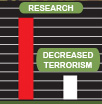
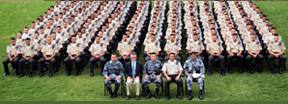


A proposal to fund Invincible Defense Technology in the United States is set forward the by U.S. Peace Congress.
Article: Fighting Terrorism in India by Singh and Leffler, Indian Armed Forces
This article was published on 08 November 2002 by IndianArmedForces.com (the publication closed – July 2006). Also reprinted by India Defence Consultants. Italian translation.
Fighting Terrorism in India
By Maj. Gen. Kulwant Singh (Retd.) and Dr. David Leffler
Terrorism is not an easy problem to solve. India has been fighting terrorism for over half a century. Since independence in 1947, the eastern states have been under the spell of insurgents, abetted by foreign countries. The disputed region of Kashmir is a powder keg, threatening to explode into conventional and possibly nuclear war any day. A viable solution may lie in India’s past-ancient Vedic knowledge that was scientifically validated in the 20th century. Now, in the 21st century, India’s ancient method of preventive defense, a form of defense called “invincible,” promises to end terrorism and conflict and set an example for the rest of the world. Is India ready to revive its illustrious past?
India has fought four major wars over the problem of the disputed POK (Pakistan Occupied Kashmir). Pakistan is unlikely to be able to win a conventional war against India. For this reason, Pakistan has allegedly resorted to sending terrorists into Kashmir, calling them freedom fighters. This holds true throughout the world: one side’s terrorist is another side’s freedom fighter. Globally, the impact of terrorism has been increasing since al-Qaeda formed alliances with existing terrorist organizations. The rise of tensions and the looming threat of nuclear war between India and Pakistan has triggered a mass exodus of foreign nationals from India as well as Pakistan.
Like many other countries, India has fought terrorism through a dynamic approach, i.e., with weaponry and military personnel. Despite its long-term military experience fighting terrorists, India is still losing the war. Terrorists continue to increase in number. Adding to the fray of foreign-based terrorists, new organizations are emerging, like the Peoples War Group (PWG). The number of such organizations and cadres who have joined them is alarming. Even with fully equipped police and para-military forces, India will not be able to completely control them. Even more alarming, defence experts predict that it is just a matter of time before terrorists attack with weapons of mass destruction which may be handheld and easy to transport and conceal.
Tensions between India and Pakistan rise and fall, and frequently, both are poised for war. If war starts, India’s strategy, as announced so far, is for a “limited offensive” to stop terrorism. The term “limited offensive” itself is misleading, as it cannot be quantified. Does it imply limiting effort in the employment of forces, the areas of offensive, use of weapon systems and so on? In any case, India’s leaders may want it to be limited, but this cannot dictated to its opponents. In all probability, once war starts, it will not be limited.
Can India eliminate terrorism by deploying military forces, as it has for the last 50 years? Again and again, history shows that the answer is “no.” Terrorism is a human problem. Therefore, it requires a human solution. The underlying cause of terrorism, war, conflict as well as other types of social violence, is accumulated social stress.
If the collective social stress driving terrorism could be prevented, such negative problems would cease. Thus, no collective stress-no terrorism, and no war.
A silent approach to achieve this prevention ideal is described in the Vedic literature. Heyam duhkham anagatam (Yog-Sutra, 2.16): “Avert the danger before it arises.”
The Yog-Sutra, 2.35 also affirms Tat sannidhau vairatyagah: “In the vicinity of Yogic influence-unifying influence, integrating influence, coherent and harmonious influence-conflicting tendencies do not arise.” These ancient principles applied in the past, and they apply today.
According to Vedic tradition, conflict resulted from ignorance-ignorance of how to prevent the build-up of collective stress. For example, the Ramayana stated that “…ignorance will have no access within eight miles from [the Yogi’s hermitage].
“The Ramayana also described the ancient city of Ayodhya. “Ayodhya” means “the city none can challenge in warfare.” Certainly, Ayodhya relied on the conventional defence technologies of its time. For instance, “It was enclosed by strong fortifications and a deep moat, which no enemy, by any expedient whatsoever, could penetrate.” Also, “Ayodhya abounded in warriors undefeated in battle, fearless and skilled in the use of arms, resembling lions guarding their mountain caves.” However, the descriptions of the enlightened, stress-free life of the inhabitants of Ayodhya may indicate that its first line of defense was the city’s freedom from collective stress. According to the Ramayana, this low stress level, based on life in harmony with Natural Law, made Ayodhya worthy of its name.
Could this ideal of preventive defence again be accomplished in India? Vedic scholar and physicist Maharishi Mahesh Yogi revived the practical components of the silent approach of Invincible Defence Technology – he calls them the Transcendental Meditation (TM) and TM-Sidhi program. These human resource-based technologies need not require or involve religious belief and practices. These meditation techniques have been practiced by members of many faiths worldwide. Extensive scientific research documents the ability of the TM and TM-Sidhi program to dissolve stress on the individual and collective levels. India could use this nourishing and non-destructive Invincible Defence Technology to reduce tensions, thereby preventing conflicting tendencies that drive terrorism.
The operative part of Invincible Defence Technology requires having a Prevention Wing of the military. This wing would comprise about 2-3% of the armed forces. The rest of the military would carry on with their usual duties. The Prevention Wing of the military would create societal coherence by practicing the TM and TM-Sidhi program in large groups morning and evening. Their collective practice would produce positive benefits for both themselves and their adversaries. Peaceful overtures would increase from all sides.
Similar coherence-creating groups have been deployed in many war zones and conflict prone areas with great success. Extensive scientific research indicates that when 1% of the population (i.e., a city), or the square root of 1% of the population (i.e., a nation) practices the more advanced TM-Sidhi program in a group, a “field effect” is created.
This effect is called the “Maharishi Effect” by scientists. Over 50 carefully controlled studies have documented and validated positive social trends such as reduced conflict and lowered crime rate. These studies have been scrutinized and published in respected peer-reviewed journals such as Social Indicators Research, Journal of Conflict Resolution, the Journal of Mind and Behavior and Journal of Crime and Justice.
This coherence-creating effect has also been documented on a global scale. When large assemblies of practitioners of the TM-Sidhi program exceeded the Maharishi Effect threshold for the world (about 7,000 at that time) during the years 1983-1985, international conflict decreased 32%, terrorist casualties decreased 72% and violence was reduced in other nations without intrusion by other governments.
Thus, the deployment of a Prevention Wing of the Military by India could be a force multiplier. It strengthens both approaches of defence-the dynamic approach of weaponry and military personnel, and the silent approach of Invincible Defence Technology. India’s defence will be perfect, or invincible, when both these approaches are combined.
India cannot solve the problem of terrorism by standard military means alone. It also needs a silent approach, which will help people focus more on peaceful means of settling differences. India’s Vedic heritage offers the ideal means to fight terrorism and prevent war. India needs to deploy a Prevention Wing of the Military immediately for lasting peace.
Editor’s Note: Articles about Invincible Defence Technology, published in Defence India, Defense Review, India Defence Consultants, Indian Defence Review, Indian Strategic Review, The Modern Tribune, The Daily Excelsior, Defence Talk, Security and Political Risk Analysis Bulletin, The Seoul Times, Aljazeera Magazine, PakTribune, Congo Forum, Sri Lanka Guardian, Pakistan Daily, The Bottom Line, Arab News, Middle East Online, Hi Pakistan, Soldier of Africa, Frontier India Strategic & Defense, Sentinel Review, Congo Watch, Beirut-Online, India Defence Consultants, The Pakistani Spectator, Senegambia News, Fiji Daily Post, News From Bangladesh, Muslim, Intent, United News Network, News Wing, Muslim World Today, Sinhala, MEPeace, Southern Asian Outlook, Northern News Lines, Sudan Watch, Blitz, New Age Islam, The Earth Times, Newstrack India, Uganda Watch, The Morung Express, Chowk, and Islam And Muslims are available at: https://davidleffler.com/links-worldwide.
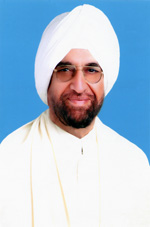 |
Maj. Gen. (Dr.) Kulwant Singh, UYSM, Retd. received his Ph.D. and M.Sc. in Defence Studies from Chennai University. He also has a postgraduate diploma in Human Resource Development from Indira Gandhi National Open University (IGNOU) in New Delhi. Dr. Singh has a postgraduate diploma in Management from the Regional College of Management and Technology (RCMT). He qualified for the prestigious Higher Command Course at College of Combat and is a graduate of the Defence Service Staff Collage. He fought in combat and led India’s fight against India’s intransigent terrorism problem for nearly 30 years. Maj. Gen. Singh was awarded the Uttam Yudh Sewa Medal, the second highest decoration for senior officers during operations in Sri Lanka as part of IPKF (Indian Peace Keeping Force). Today he is leading an international group of generals and defense experts that advocates Invincible Defence Technology. Dr. Singh lives in New Delhi, India. |
 |
Dr. David Leffler received his Ph.D. on the topic of Invincible Defence Technology from Union Institute & University. His other academic degrees include: a B.A. in Education, an M.A. in the Science of Creative Intelligence from Maharishi University of Management and an M.M. in Education from New Mexico State University. He was a member of the U.S. Air Force for eight years. Dr. Leffler is the Executive Director at the Center for Advanced Military Science (CAMS) at Maharishi University of Management. He also serves as a Peer Member at The Union Institute and is a member of the U.S. Naval Institute. Dr. Leffler has given presentations on Invincible Defence Technology at the Russian Air Force Academy, the Russian Academy of Sciences, and defense-related institutions in the United States. |
© 2002 David R. Leffler and Kulwant Singh. All rights reserved.
Invincible Defense Technology – Townsend Letter – Unconventional Conflicts Call for Unconventional Solutions
From the October 2002 Townsend Letter for Doctors and Patients, 911 Tyler Street, Port Townsend, WA, 98368, phone (360) 385-6021, www.townsendletter.com, info@townsendletter.com. Reprinted with permission.

Unconventional Conflicts Call for Unconventional Solutions
Years ago as a newsman in the Middle East, I vividly recall a Tel Aviv press conference given by a top Israeli intelligence officer in the wake of several bloody terrorist attacks. In answer to a question, the officer said that Israeli security, as good as it was, could not stop every terrorist on a suicide mission. We can stop many, but not all, he said.
Those words have sobering relevance for America, where terrorism has come ashore in shocking magnitude, and anthrax has become a household word.
The U.S. is no Israel when it comes to security. We are patently vulnerable. We cannot even stop the murderous rampages of crazed students or ex-employees within our own ranks.
Remember the hate-filled teenagers on a suicide mission who perpetrated the Columbine High School killings in 1999? Afterward, on Oprah’s TV show, famous Wyoming defense attorney Jerry Spence compared such events to cauldrons of scalding water beneath Yellowstone Park that explode in roaring geysers.
Acts of terror are indeed geysers of violence. They erupt from cauldrons of unremedied stress on individual, ethnic, religious, and international levels.
A nation applies the means it has to protect its citizens. But heightened security, imprisonment, anti-terrorist coalitions, military muscle, asset “freezing” or targeted assassinations cannot stop every fanatic determined to carry out a warped mission in the name of God.
Conventional means cannot totally defend against an unconventional enemy that can hardly be found, much less eliminated, and that can burrow and plot right beneath our noses.
And conventional strategies do not eliminate the root causes of violence and terrorism. Often, the strategies create more violence and more terrorists.
Are these approaches to conflict resolution analogous to the modern medical paradigm of treating chronic disease? The prevailing medical strategy is to bomb the symptoms with chemo or drugs, blast them with radiation, or cut them out with surgery.
AND IGNORE THE ROOT CAUSES.
Anyone who reads this esteemed journal knows that conventional medicine has a dismal record with these strategies against chronic disease.
Call it what you may but successful treatment and elimination of disease requires alternative, complementary, holistic or integrative approaches.
Better yet, an approach that emphasizes prevention instead of disease management.
We need to adopt a similar approach to conflict resolution. We need to think in terms of eliminating root causes and preventing the birth and growth of a terrorist.
One highly unusual approach for accomplishing this has been largely ignored because people have difficulty understanding or accepting it. Yet in more than fifty studies published in scientific journals, including Yale University’s Journal of Conflict Resolution and the Journal of Mind and Behavior, the method has been documented to powerfully reduce violence and criminal activity and even calm open warfare.
The concept involves groups of advanced practitioners of the Transcendental Meditation (TM) technique. Here’s how it works: Just as radio or TV transmitters beam signals through an unseen electromagnetic field, groups of meditators generate a strong wave of coherence and positivity through an underlying field of collective consciousness. Stress and tension diminishes. The larger the group, the greater the effect.
This amazing technique was demonstrated in the summer of 1993, in Washington D.C., where 4,000 meditators sat down and closed their eyes to lower crime. An independent board of eminent criminologists documented a 25 percent reduction in criminal violence.
A decade before, during the war in Lebanon, large assemblies of meditators repeatedly caused battlefield casualties to drop dramatically. (See sidebar on Creating Peace Through Meditation).
The number of experts needed to achieve such effects is relatively small. A group equaling a mere square root of one percent of a given population creates enough “good vibes” to do the job. For the world at large, 7,000 meditators in one location can bring about positive trends.
The problem is sustaining such groups. Typically, TM meditators leave their jobs and pay their own travel and lodging expenses to participate in large group efforts. Sooner or later, they must return to work, families, and obligations. When they depart, the group numbers fall. The coherence effect diminishes.
After the September 11 attacks, the TM organization called for meditators to gather in Fairfield, Iowa, the home of Maharishi University of Management, the institution named for the founder of Transcendental Meditation. The call went out in order to raise existing numbers of meditators in Fairfield to the level of the square root of one percent of the U.S. population – about 1,800 – and provide a buffer of coherence and protection for the country. For about two weeks, this number was exceeded, but then decreased as many meditators returned home.
Ideally, military units or unemployed individuals should be trained as “peace makers” in coherence groups funded by governments. But until that happens, Maharishi Mahesh Yogi, who discovered this “technology of consciousness,” is working urgently to create a huge permanent group of not just 7,000, but 40,000 trained experts in India. Such a large group, he predicts, could “completely root out terrorism forever” and generate such a strong influence of harmony in world consciousness that negative trends will not arise.
Maharishi left his native India in 1958 to bring his message to the West. And ever since, he has pursued a single-minded mission to use meditation to end conflict and suffering on our long-suffering planet. He has persistently sought the support of visionary leaders in government and finance for his revolutionary approach.
In full-page newspaper ads during the bombing of Serbia in 1999, he warned of the potential for destruction that could come to any country at any time, including the U.S.
“Can you imagine if bombs began to fall on Washington D.C., and to destroy the high-rises of the money markets of New York?” he said. “When our house is in uncontrollable flames, it is too late to dig a well to get the water. Better to prevent the house from catching fire in the first place.”
Maharishi once again appealed for support after September 11.
Admittedly, the idea of fighting terrorism with meditation sounds crazy. But the idea of an Internet would have seemed crazy, too, just a few years ago. Now, we communicate across oceans and access a universe of information simply by typing into some invisible field.
You might also think that group prayer for patients at a great distance couldn’t possibly be effective. Yet medical studies show it works, even when patients are unaware that they are “targets” of prayer. Healing is enhanced. Heart patients recover faster. And, according to one recent study, prayer even helped a group of infertile women become pregnant!
You can’t see the field into which people are praying, yet something tangible is going on through an intangible field.
These phenomena are hard to understand. That doesn’t make them crazy, though. At one time, meditation was considered “mystical.” Now, doctors routinely prescribe it. That’s because research shows meditation reduces stress and improves health. Hundreds of studies confirm real benefits for individuals, including better energy, learning ability, job productivity, and happier relationships. Corporations are even offering – and paying for – their employees to learn meditation.
The revelation that group meditation reduces turbulence in society and improves community or global health is simply an extension of the individual practice of meditation. This “super-radiance effect” stimulates the invisible field of collective consciousness that permeates everything.
Scientists are indeed beginning to recognize a “non-local” field of global consciousness into which intentions can have effects at great distance. This is a new paradigm, an exciting and boundless frontier. We should explore this territory, for it may hold the secret for planetary peace. If wars start in the minds of men, then peace logically should start there as well.
With all the conventional methods we utilize to protect life, liberty, and freedom, we should also be open to trying new, creative ideas, no matter how unconventional they seem. The times demand it. Only new seeds will bring forth new crops.
Sidebar: Creating Peace Through Meditation
Major research studies on the coherence-creating effects of Transcendental Meditation (TM) include:
Middle East Hostilities Reduced
Casualties during peak hostilities in Lebanon dropped by 70 percent during seven extended periods when large meditation groups assembled in Israel, Lebanon, Europe and the U.S., in 1983-84. Cooperation between warring parties increased by 66 percent. The odds of these results occurring by chance or any explanation other than the meditation were calculated at one in ten million trillion! (Journal of Conflict Resolution, 1988, 32: 776-812, and 1990, 34:756-768).
Reduced Violent Crime
A trend of increasing crime in Washington D.C. was reversed during a two-month demonstration in 1993 involving 800 to 4,000 meditators. Violent crime dropped by 24 percent, according to FBI statistics. The likelihood this could be attributed to chance was less than 2 in 1 billion, and could not be attributed to other causes. (Social Indicators Research, 1999, 47: 153-201).
Similarly, large TM groups in Manila, New Delhi and Puerto Rico corresponded with significant declines in violent crimes. Alternative explanations could not account for the results. (Journal of Mind and Behavior, 1987, 8: 67-104).
For more information on TM and its coherence-creating effect visit the web sites www.tm.org or www.permanentpeace.org.
Article © copyright 2002 by Martin Zucker
Medical writer Martin Zucker is a former Associated Press foreign correspondent. His most recent book is Preventing Arthritis (G. P. Putnam’s Son’s, New York). Zucker, who has been meditating for 25 years, can be reached at martin1937 @ earthlink [dot] net.
Transcendental Meditation Proposed As Homeland Defense
Transcendental Meditation Proposed As Homeland Defense — Article published in U.S. Medicine, a major national magazine for health professionals based in Washington, DC. Major General Singh, Dr. John Hagelin and other scientists advocate deployment of Invincible Defense Technology.
Unconventional Conflicts Call for Unconventional Solutions
Unconventional Conflicts Call for Unconventional Solutions by Martin Zucker. Medical writer Martin Zucker is a former Associated Press foreign correspondent. His article appeared in the October 2002 Townsend Letter for Doctors and Patients and was reprinted by Indian Armed Forces.