Eine Alternative: Anmerkungen

Posted on May 1st, 1999

Diese Tabelle ist Teil der Arbeit “An alternative to military violence and fear-based deterrence: Twenty years of research on the Maharishi Effect” by (available in English on this website by clicking here) von Dr. David R. Leffler, Dr. Kurt Kleinschnitz, & Dr. Kenneth G. Walton (1999, May 1). Die englische Version dieses Papiers erschien zuerst in Kosovo Peace und eine deutsche Übersetzung erschien kurz darauf in Kosovo Frieden. Später wurde die englische Version in veröffentlicht Security and Political Risk Analysis (SAPRA).

logo

SAPRA India

Anmerkungen

Eine Alternative zu militärischer Gewalt und einer Angst erzeugenden Verteidigung: Zwanzig Jahre Erforschung des Maharishi-Effekts

1. Giulio Douhet, The Command of the Air, Air [dt.: Das Kommando in der Luft], übersetzt von Dino Ferrari (Washington, D.C.: U.S. Government Printing Office, USAF Office of History, 1983), p. 30.

2. George C. Wilson, “Defense plan has many holes,” [dt.: Der Vrteidigungsplan hat viele Löcher] Air Force Times, April 15, 1996, p. 62.

3. Ingomar Hauchler and Paul M. Kennedy, Global trends – the World Almanac of Development and PeacePeace [dt.: Weltweite Trends – der Weltalmanach für Frieden und Entwicklung] (New York: The Continuum Publishing Company, 1994), p. 179.

4. Stockholm International Peace Research Institute, SIPRI Yearbook 1995 Armaments, Disarmament and International Security [dt.:Stockholmer Internationales Friedensforschungsinstitut, Jahrbuch 1995, Sektion: Rüstung, Abrüstung und internationale Sicherheit] (New York: Oxford University Press, 1995).

5. Stockholm International Peace Research Institute, SIPRI Yearbook 1996 Armaments, Disarmament and International Security [dt.:Stockholmer Internationales Friedensforschungsinstitut, Jahrbuch 1996, Sektion: Rüstung, Abrüstung und internationale Sicherheit] (New York: Oxford University Press, 1996).

6. Associated Press, “Record number of conflicts threaten peace, group says,” [dt.: Rekordzahl von Konflikten bedrohen den Frieden, sagt die Gruppe] Des Moines Register, January 3, 1996, p. 5.

7. Stockholm International Peace Research Institute, SIPRI Yearbook 1997 Armaments, Disarmament and International Security [dt.: Stockholmer Internationales Friedensforschungsinstitut, Jahrbuch 1995, Sektion: Rüstung, Abrüstung und internationale Sicherheit] (New York: Oxford University Press, 1997).

8. Brigitte Sauerwein, “The Undeterrables,” [dt.: “Die Unabschreckbaren”] International Defense Review, Vol. 3 (1993), p. 183.

9. George C. Wilson, “It’s Called WMD but its meaning is trouble,” [dt.: “Es wird WMD genannt, aber seine Bedeutung ist Ärger”] Navy Times , March 20, 1995, p. 31.

10. “WASHINGTON – USA Faces Chilling Reality of Terrorist Threat” [dt.: “Die USA sehen sich der furchterregenden Realität von Bedrohungen durch Terroristen gegenüber], USA Today, Thursday March 28, 1996, p. 10A.

11. G-2, Military, Vol. 11, No. 7 (December 1994), p. 3.

12. G-2, Military, Vol. 10, No. 8 (January 1994), p. 2.

13. Fred Reed, “Nukes for ‘nut cases’ seems to be here,” [dt.: “Atomwaffen für Verrückte sind vorhanden”] Air Force Times , April 26, 1993, p. 54.

14. Maharishi Mahesh Yogi, Maharishi’s Absolute Theory of Defence [dt.: Maharishis Absolute Theorie der Verteidigung] (Maharishi Vedic University, India: Age of Enlightenment Publications, 1996).

15. David Frawley, Gods, Sages and Kings: Vedic Secrets of Ancient Civilization [dt. Götter, Weise und Könige: Die Vedischen Geheimnisse einer alten Zivilisation] (Salt Lake, Utah: Passage Press, 1991).

16. Maharishi Mahesh Yogi, Maharishi Mahesh Yogi on the Bhagavad Gita: A New Translation and Commentary Chapter 1-6 [dt.: Maharishi Mahesh Yogis über die Bhagavadgita: Neue Übersetzung und Kommentar für Kapitel 1-6, dt. Verlag Kamphausen, 1999], (Baltimore, Maryland: Penguin, 1969).

17. John S. Hagelin, “Is Consciousness the Unified Field? A Field theorist’s perspective” [dt.: “Ist Bewusstsein das Einheitliche Feld? Aus der Perspektive eines Feld-Theoretikers”], Modern Science and Vedic Science, Vol. 1, No. 1 (January 1987), pp. 28-87.

18. Maharishi Mahesh Yogi, Maharishi’s Absolute Theory of Defence [dt.: Maharishis Absolute Theorie der Verteidigung], (India: Age of Enlightenment Publications, 1996).

19. Institute of Science, Technology, and Public Policy, “More Prisons and Police Won’t Stop Crime,” [dt.: “Mehr Gefängnisse und Polizei werden die Kriminalität nicht stoppen”], (Fairfield, Iowa: Maharishi University of Management, Policy Brief Report No. 95:2 Crime Prevention March 16, 1995), pp. 1 – 3.

20. Robert Martinson, “What works? Questions and Answers About Prison Reform,” [dt.: “Was funktioniert? Fregaen und Antworten zur Strafvollzugsreform”] The Public Interest, Vol. 35, (1974), pp. 22-54.

21. Hagelin, “Is Consciousness the Unified Field?” [dt.: “Ist Bewusstsein das Einheitliche Feld? Aus der Perspektive eines Feld-Theoretikers”].

22. Bertram M. Schwarzschild, “Anomaly Cancellation Launches Bandwagon for Superstring Theory of Everything,” [dt.: “Aufhebung der Anomalie started den Siegeszug für eine Superstring Theorie für alles”] Physics Today , Vol. 38, No. 7, (July 1985), pp. 17-20.

23. M. Mitchell Waldrop, “String as a Theory of Everything,” [dt.: “String als eine Theorie für alles”], Science, Vol. 229, No. 4719, (20 September 1985), pp. 1251 – 1253.

24. Hagelin, “Is Consciousness the Unified Field?” [dt.: “Ist Bewusstsein das Einheitliche Feld? Aus der Perspektive eines Feld-Theoretikers”].

25. Jonathan Shear, The Inner Dimension Philosophy and the Experience of Consciousness [dt.: Die Philosophie der inneren Dimension und die Erfahrung des Bewusstseins] (New York: Peter Lang Publishing, Inc., 1990).

26. Ron Jevning, Robert K. Wallace, and Mark Biedebach, “The Physiology of Meditation: A Wakeful Hypometabolic Integrated Response,” [dt.: “Die Physiologie der Meditation: Eine wache, hypometabolische, integrierte Reaktion”] Neuroscience and Biobehavior Review, Vol. 16, No. 3, (1992), pp. 415-424.

27. J. Miszczak and J. Achimowicz, “Hybrid Analysis of Spontaneous Brain Activity in Different States of Conscious Experience,” in Roger A. Chalmers, Geoffrey Clements, Hartmut Schenkluhn et al, eds., Scientific Research on the Transcendental Meditation Program: Collected Papers, [dt.: “Hybridanalyse spontaner Hirnaktivität in verschiedenen Bewusstseinszuständen”], (Vlodrop, the Netherlands: Maharishi International University Press, 1983), Vol. 4, pp. 2267-2273.

28. Charles N. Alexander, Robert W. Cranson, Robert W. Boyer et al ., “Transcendental Consciousness: A Fourth State of Consciousness Beyond, Sleep, Dreaming, and Waking“, [dt.: “Tranbnszendentales Bewusstsein: Ein Vieter Bewusstseinszustand jenseits von Schlafen, Träumen und Wachen”], in Jayne Gackenbach, ed., Sleep and Dreams: A Sourcebook, (New York: Garland, 1987), pp. 282-315.

29. ebda.

30. Ron Jevning, Robert K. Wallace, and M. Biedebach, “The Physiology of Meditation.” [dt.: “Die Physiologie der Meditation: Eine wache, hypometabolische, integrierte Reaktion”]

31. Patanjali, Yoga Sutras of Patanjali, translated by R. Prasada Patanjali [dt.: Die Yoga Sutras von Patanjaki],übersetzt von by R. Prasada (New Delhi, India: Oriental Books Reprint Corporation, 1978).

32. David W. Orme-Johnson and Barbara Granieri, “The Effects of the Age of Enlightenment Governor Training Courses on Field Independence, Creativity, Intelligence, and Behavioral Flexibility,” “, [dt.: “Die Wirkungen des Ausbildungskurses zum Gouverneur des Zeitalters der Erleuchtung auf Feldunabhängigkeit, Kreativität, Intelligenz und Verhaltensflexibilität”] in David W. Orme-Johnson and John T. Farrow, eds., Scientific Research on the Transcendental Meditation Program: Collected Papers, (Livingston Manor, New York: MIU Press, 1977), Vol. 1, pp. 713 – 718.

33. David W. Orme-Johnson, Robert K. Wallace, and Michael C. Dillbeck, “Longitudinal Effects of the TM-Sidhi Program on EEG Phase Coherence,” [dt.: “Longitudinalwirkungen des TM-Sidhi-Programms auf EEG-Phasenkohärenz”], in Roger A. Chalmers, Geoffrey Clements, Harmut Schenkluhn et al, eds., Scientific Research on the Transcendental Meditation Program: Collected Papers, (Vlodrop, the Netherlands: MIU Press, 1980), Vol. 3, pp. 1678-1686.

34. Robert K. Wallace, The Maharishi Technology of the Unified Field: The Neurophysiology of Enlightenment [dt.: Die Maharishi-Technologie des Einheitlichen Feldes: Die Neurophysiologie der Erleuchtung], (Fairfield, Iowa: MIU Neuroscience Press, 1986).

35. Robert K. Wallace, The Physiology of Consciousness [dt.: Die Physiologie des Bewusstseins], (Fairfield, Iowa: MIU Press, 1993).

36. Lawrence H. Domash, “The Transcendental Meditation Technique and Quantum Physics: Is Pure Consciousness a Macroscopic State in the Brain?,” [dt.: “Die Technik der Transzendentalen Meditation und Quantenphysik: Ist Reines Bewusstsein ein makroskopischer Quantenzustand im Gehirn?”], in David W. Orme-Johnson and John T. Farrow, eds., Scientific Research on the Transcendental Meditation Program: Collected Papers, (Livingston Manor, New York: MIU Press, 1977), Vol. 1, pp. 652-670.

37. John S. Hagelin, “Is Consciousness the Unified Field.” [dt.: Ist Bewusstsein das Einheitliche Feld?”]

38. James Jeans, The Mysterious Universe (revised edition) Universe [dt.: Das geheimnisvolle Universum], (überarbeitete Ausgabe) (New York: Macmillan, 1932).

39. Eugene Wigner, Symmetries and Reflections [dt.: Symmetrien und Reflektionen], Massachusetts: M.I.T. Press, Boston, 1970).

40. David Ballin Klein, The Concept of Consciousness: A Survey [dt.: Das Konzept des Bewusstseins: Ein Überblick] (Lincoln, Nebraska: University of Nebraska Press, 1984), reference cited is facing the book title page.

41. Larry Dossey, Recovering the Soul: A Scientific and Spiritual Search Search [dt.: Die Wiederentdeckung der Seele: Eine wissenschaftliche und spirituelle Suche], (New York: Bantam, 1989), p. 125.

42. Bernard d’Espagnat, “The Quantum Theory and Reality,” [dt.: “Die Quantentheorie und die Wirklichkeit”], Scientific American, Vol. 241, No. 5 (November 1979), pp. 158-181.

43. Victor J. Stenger, “The Myth of Quantum Consciousness,” [dt.: “Der Mythos des Quantenbewusstseins”], The Humanist, Vol. 53, No. 3, (May/June 1993), pp. 13-15.

44. Kai J. Druhl and Kurt W. Kleinschnitz, “Superradiance as a Model for the Collective Dynamics of Human Consciousness,” [dt.: “Superstrahlung als Modell für die kollektive Dynamik des menschlichen Bewusstseins”], (Fairfield, Iowa: Maharishi University of Management, Report No. 91-001, 1991).

45. Maharishi Mahesh Yogi, Life Supported By Natural Law [dt.: Leben – unterstützt durch das Naturgesetz], (Washington, D.C: Age of Enlightenment Press, 1986).

46. Hagelin, “Is consciousness the Unified Field?” [dt.: “Ist Bewusstsein das Einheitliche Feld?”]

47. ebda.

48. John S. Hagelin, “Restructuring Physics From Its Foundation In Light of Maharishi’s Vedic Science,” [dt.: “Die Restrukturierung der Physik von ihrer Grundlage her aus dem Blickwinkel von Maharishis Vedischer Wissenschaft”], Modern Science and Vedic Science, Vol. 3, No. 1, (1989), pp. 3 – 72.

49. David W. Orme-Johnson and Paul Gelderloos, “Topographic EEG Brain Mapping During “Yogic Flying,” [dt.: “Topographische EEG-Gehirnkartenaufzeichnung während des Yogischen Fliegens”] International Journal of Neuroscience , Vol. 38, No. 3 – 4, (1988), pp. 427 – 434.

50. Frederick T. Travis, “Testing a Field Model of Social Interactions,” [dt.: “Test für ein Feldmodell sozialer Wechselwirkungen”], Journal of the Iowa Academy of Science, Vol. 95, (1988), pp. A56-A57.

51. Frederick T. Travis and David W. Orme-Johnson, “EEG Coherence and Power During Yogic Flying,” [dt.: “EEG-Kohärenz und -Stärke während des Yogischen Fliegens”], International Journal of Neuroscience, Vol. 54, No. 1 – 2, (1990), pp. 1 – 12.

52. Michael C. Dillbeck and Edward C. Bronson, “Short-term Longitudinal Effects of the Transcendental Meditation Technique on EEG Power and Coherence,” [dt.: Kurzzeit- Longitudinalwirkungen der Technik der Transzendentalen Meditation auf die EEG-Stärke und -Kohärenz”] International Journal of Neuroscience , Vol. 14, (1981), pp. 147 – 151.

53. Michael C. Dillbeck, David W. Orme-Johnson, and Robert K. Wallace, “Frontal EEG Coherence, H-Reflex Recovery, Concept Learning, and the TM-Sidhi Program,” [dt.: Frontale EEG-Kohärenz. Hoffmann-Reflex-Erholung, konzeptuelles Lernen und das TM-Sidhi-Programm”], International Journal of Neuroscience , Vol. 15, (1981), pp. 151 – 157.

54. Sanford I. Nidich, Robert A. Ryncarz, Allan I. Abrams et al., “Kohlbergian Cosmic Perspective Responses, EEG Coherence, and the Transcendental Meditation and TM-Sidhi program,” [dt.: “Kohlbergs Reaktionen aus einer kosmischen Perspektive, EEG-Kohärenz und das Programm der Transzendentalen Meditation und der TM-Sidhis”], Journal of Moral Education, Vol. 12, No. 3, (October 1983), pp. 166 – 173.

55. David W. Orme-Johnson, Robert K. Wallace, Michael C. Dillbeck et al , “Improved Functional Organization of the Brain Through the Maharishi Technology of the Unified Field as Indicated By Changes In EEG Coherence and Its Cognitive Correlates: A Proposed Model of Higher States of Consciousness,” [dt.: “Verbesserte funktionale Organisation des Gehirns durch die Maharishi Technologie des Einheitlichen Feldes, wie durch Veränderungen in der EEG-Kohärenz und ihren kognitiven Korrelaten angezeigt”], in David W. Orme-Johnson and John T. Farrow, eds., Scientific Research on the Transcendental Meditation Program: Collected Papers, (Vlodrop, the Netherlands: MIU Press, 1986), Vol. 4, pp. 2245-2266.

56. David W. Orme-Johnson and Christopher T. Haynes, “EEG Phase Coherence, Pure Consciousness, Creativity, and TM-Sidhi Experiences,” [dt.: “EEG-Phasenkohärenz, Reines Bewusstsein, Kreativität und TM-Sidhi-Erfahrungen”], International Journal of Neuroscience, Vol. 13, (1981), pp. 211-217.

57. David W. Orme-Johnson, Michael C. Dillbeck, Robert K. Wallace et al ., “Intersubject EEG Coherence: Is Consciousness a Field?,” [dt.: “Intersubjektive EEG-Kohärenz: Ist Bewusstsein ein Feld?”], International Journal of Neuroscience, Vol. 16, No. 3/4, (1982), pp. 203-209.

58. Nirmal D. Pugh, Kenneth G. Walton, and Kenneth L. Cavanaugh, “Can Time Series Analysis of Serotonin Turnover Test the Theory that Consciousness Is a Field?,” [dt.: “Kann Zeitreihenanalyse des Serotoninumsatzes die Theorie testen, ob Bewusstsein ein Feld ist?”], Society for Neuroscience Abstracts , Vol. 14, (1988), p. 372.

Anmerkung des Herausgebers: Seit der Veröffentlichung dieses Papiers wurde diese Studie hier veröffentlicht:

Walton KG, Cavanaugh, KL, & Pugh , ND (2005): Effect of group practice of the Transcendental Meditation program on biochemical indicators of stress in non-meditators: A prospective time series study. Journal of Social Behavior and Personality, 17(1), 339-373. Für eine Zusammenfassung siehe: Research Relevant to use of the Transcendental Meditation Program in the Military.

59. Robert O. Pihl, Simon N. Young, P. Harden et al., “Acute Effect of Altered Tryptophan Levels and Alcohol on Aggression in Normal Human Males,” [dt.: “Akute Wirkungen vceränderten Tryptophan-Niveaus und Alkoholspiegels auf die Aggressivität bei normalen männlichen Versuchspersonen”], Psychopharmacology, Vol. 119, (1995), pp. 353-360.

61. H. Akaike, “Information Theory and an Extension of the Maximum Likelihood Principle,” [dt.: Informationstheorie und die Ausdehnung des maximalen Ähnlichkeitsprinzips”], in B. N. Petrov and F. Csake, eds., Second International Symposium on Information Theory, (Budapest, Hungary: Akademiai Kiada, 1973), pp. 267-281.

61. K. L. Cavanaugh, N. D. Pugh, K. G. Walton, “Effects of the Transcendental Meditation (TM) Program on Cortisol and Other Biochemical Indicators of Societal Stress: A Causal Analysis,” [dt.: “Wirkungen des Programms der Transzendentalen Meditation auf Cortisol und andere biochemische Indikatoren für Stress: Eine Ursachenanalyse”], Society for Neuroscience Abstracts, Vol. 24, (1998), p. 1434. Editor’s Note: Siehe auch:

Walton KG, Cavanaugh, KL, & Pugh , ND (2005): Effect of group practice of the Transcendental Meditation program on biochemical indicators of stress in non-meditators: A prospective time series study. Journal of Social Behavior and Personality, 17(1), 339-373. For a summary see: Research Relevant to use of the Transcendental Meditation Program in the Military.

62. Richard Szafranski, “Neocortical Warfare? The Acme of Skill,” [dt.: Neokortikale Kriegsführung? Der Gipfel der Kunst”], Military Review , Vol. 74, No. 11, (November 1994), pp. 41-55.

63. Richard Strozzi Heckler, “In Search of the Warrior Spirit,” [“Auf der Suche nach dem Kriegergeist”], East West, Vol. 20, No. 10, (October 1990), p. 92.

64. Military Police Center for Education and Training, Salvador, State of Bahia, Brazil, Document No. AJ/59/02/83, 3 Feb. 1988.

65. Markus Schuler, Project Director: “Stress Prevention Program,” [dt.: Stresspräventionsprogramm”] [Videoaufnahme] (Sao Paulo, Brazil: Maharishi Institute of Health and Ayur-Ved, 1989). [Anmerkung des Herausgebers: See: Brazilian Military Research on Invincible Defense]

66. Government of State of Piaui, Brazil, (Military Police General Command Document No. 037-PM-3187, 14 Dec. 1987). [Anmerkung des Herausgebers: See: Brazilian Military Police Pictures]

67. T. Haratani and T. Henmi, “Effects of Transcendental Meditation (TM) On Mental Health of Industrial Workers,” [dt.: “Wirkungen der Transzendentalen Meditation (TM) auf die geistige Gesundheit von Industriearbeitern”], Japanese Journal of Public Health, Vol. 37, No. 10, (1990), p. 729.

68. T. Haratani and T. Henmi, “Effects of Transcendental Meditation (TM) On Mental Health of Industrial Workers,” Japanese Journal of Industrial Health, Vol. 32, No. 7, (1990), p. 177.

69. David W. Orme-Johnson, “Medical Care Utilization and the Transcendental Meditation Program,” [dt.: “Nutzung von medizinischen Leistungen und das Programm der Transzendentalen Meditation”], Psychosomatic Medicine , Vol. 49, No. 1, (1987), pp. 493-507.

70. J. O. Ottoson, “Transcendental meditation,” [dt.: Transzendentale Meditation], Socialstyrelsen [National Health Board of Sweden] Report D: nr SN 3 – 9 – 1194/73 (1977).

71. Jaan Suurküla, “The Transcendental Meditation Technique and the Prevention of Psychiatric Illness,” [dt.: “Die Technik der Transzendentalen Meditation und die Vorbeugung von psyciatrischen Erkrankungen”], in Roger A. Chalmers, Geoffrey Clements, Harmut Schenkluhn et al, eds., Scientific Research on the Transcendental Meditation Program: Collected Papers , (Vlodrop, the Netherlands: Maharishi International University Press, 1977), Vol. 2, pp. 896-897.

72. Robert E. Herron, Steve L. Hillis, Joseph V. Mandarino et al., “The Impact of Transcendental Meditation on Government Payments to Physicians in Quebec,” [dt.: Die Wirkung der Transzendentalen Meditation auf Regierungszahlungen an Ärzte in Quebec”], American Journal of Health Promotion, Vol. 10, No. 3, (1996), pp. 208-216.

73. Martin van Creveld, Technology and War – From 2000 B. C. to the Present – A Revised and Expanded Edition [dt.: Technologie und Krieg – Von 2000 v. Chr, zur Gegenwart – Eine überarbeitete und erweiterte Ausgabe] (New York: Free Press, 1991), p. 220.

Alternative to Military Violence – Table I: Institutional Affiliation of Maharishi Effect Investigators

Posted on May 1st, 1999

Table I: Institutional Affiliation of Maharishi Effect Investigators

American University of Beirut, Beirut, Lebanon

2. George Washington University, Washington, D.C.

3. Harvard University, Cambridge, Massachusetts

4. Macquarie University, North Ryde, Australia

5. Maharishi College of Natural Law, Netherlands [Editor’s note: this college is now located in India.]

6. Maharishi European Research University Research Institute, Mentmore, England [Editor’s note: this institute no longer exists, click here for details]

7. Maharishi European Research University, Seelisberg, Switzerland

8. Maharishi International University, Fairfield, Iowa

9. Massachusetts Institute of Technology, Cambridge, Massachusetts

10. Memphis State University, Memphis, Tennessee

11. Southern Illinois University, Carbondale, Illinois

12. The Union Institute, Cincinnati, Ohio

13. University of Minnesota, Minneapolis, Minnesota

14. University of New South Wales, Australia

15. University of Twente, Netherlands

16. University of Washington, Seattle, Washington

Other institutions

1. Institute for Research on Consciousness and Human Development, Cambridge, Massachusetts

2. Scientific Systems, Cambridge, Massachusetts

3. Central Bank of Barbados, Bridgetown, Barbados

Back to article

An Alternative to Military Violence…20 Years of Research on the Maharishi Effect – SAPRA India

Posted on May 1st, 1999

The English version of this paper first appeared in Kosovo Peace and a German translation was published shortly after in Kosovo Frieden. Later the English version was published in Security and Political Risk Analysis (SAPRA).

logo

SAPRA India

An Alternative to Military Violence and Fear-Based Deterrence: Twenty Years of Research on the Maharishi Effect

Abstract

Regardless of its military might, the current availability of powerful, easily-concealed weapons makes it difficult for any nation to ensure peace at home or abroad. Moreover, there is growing concern that fear-based strategies of defense and peace-making cannot create or maintain lasting peace. Against this dismal backdrop, recent research documents the effectiveness of a new peace-creating technology which is profound in its concept, affordable, and easily implemented. Over forty presented or published studies on this technology, which was derived from ancient Vedic knowledge by Maharishi Mahesh Yogi, confirm its ability to reduce conflict, promote international cooperation, reduce societal disorder, and improve quality of life. The research is so compelling that, for the first time in modern history, alternative, nonthreatening strategies for securing peace can be realistically proposed.

Contents

Introduction
The Maharishi Effect
Review of Maharishi Effect Research
A Proposed Mechanism for the Maharishi Effect
Military Use of the Maharishi Effect: Deployment of a Military Prevention Wing
Conclusion

Introduction

Victory smiles upon those who anticipate the change in the character of war, not upon those who wait to adapt themselves after the changes occur. (Endnote 1)

-General Giulio Douhet, pioneering Italian military airpower advocate

Preventive defense is perhaps our most important tool for protecting American interests from the special dangers that characterize the post-Cold War era. Preventive defense seeks to keep potential dangers to our security from becoming full-blown threats. (Endnote 2)

-Former U.S. Secretary of Defense William Perry, in the overview of the Annual Report to the President and the Congress.

Since World War II the fear-based deterrence strategies used by most nations may have prevented another world war. However, they have not prevented the increase of lesser wars and outbreaks of violence in most parts of the world. According to figures produced by the Hamburg University Research Unit on Wars, Armament, and Development (AKUF), over 186 wars have occurred since 1945. (Endnote 3)In 1994 there were 31 major armed conflicts in 27 locations around the world. (Endnote 4) The Stockholm International Peace Research Institute also claims that there were 30 major armed conflicts in 1995. (Endnote 5) However, that same year the conservatively oriented U.S. National Defense Council Foundation counted a record 71 conflicts occurred world-wide. (Endnote 6) In 1996, 27 major armed conflicts occurred world-wide. (Endnote 7) Although most of these conflicts were civil wars or ethnic hostilities, thousands of lives have been lost.

The survival and progress of a nation depend on the effectiveness of its national defense. However, it is clear today that even the world’s best military equipment and preparedness have not enabled current strategies of deterrence to totally protect any nation, especially from internal uprisings.

The word deterrence comes from the Latin root meaning “fear.” In theory, war is deterred by instilling fear in potential enemies. To this end, militaries have amassed tremendous destructive potential. While it is true that military might incites fear in foes, unfortunately it also does so in friends and even in the nation’s own populace. People feel threatened by military deployments, even when these are for humanitarian missions, as was evident in Somalia. Fear generated by such threats encourages increases in military budgets and stockpiling of armaments, further inflaming fear and hatred. Military buildups themselves, therefore, become the seeds of future violence and war. For this reason, no military organization committed to defense solely through destructive power is likely to generate a peaceful atmosphere, even in its own country.

Given this understanding, and the current threat of increasing violence and war, the traditional theory of deterrence is being questioned. A recent subheading to an editorial in International Defense Review reads, “A hard core of terrorists and civil warriors is proving resistant to traditional means of deterrences.” (Endnote 8) The recent wave of terrorism and civil war reflects the shift of conflict and violence to a level where it is difficult to hold any person, group, or nation accountable. Former U.S. Secretary of Defense William Perry recently pointed out that a dictator with weapons of mass destruction could threaten to launch missiles loaded with nerve gas or anthrax germs against a neighboring country if the country allowed in U.S. troops, and that such a twist on deterrence would undercut the whole strategy of rushing in to cool regional conflicts before they get out of hand. (Endnote 9) Strategies of deterrence or space-based missile defense systems can not protect against the growing threat of nuclear terrorism. Although the CIA claims that extremist groups have not yet obtained nuclear materials, (Endnote 10) at least 46 nuclear weapons are thought to be missing from the former Soviet arsenal (Endnote 11) and it is reported that nuclear weapons are for sale on the black market. (Endnote 12) Extremely destructive nuclear weapons can easily be delivered by a single terrorist in a backpack device, an artillery shell, a small boat, truck, or plane. (Endnote 13) The Tokyo subway attack and the bombings of the World Trade Center, the Oklahoma City Federal Building, the U.S. Air Force barracks in Saudi Arabia, the American embassies in Africa, and the many bombings in Northern Ireland demonstrate that even the most affluent and civilized countries are susceptible to attacks by terrorists or rogue elements with concealed weapons. Obviously strategies of deterrence have not prevented these attacks. On the other hand, a strategy that eliminates fear and hatred and directly fosters goodwill might be more effective against such threats.

To date, research on the Maharishi Effect indicate that the technologies producing it generate cooperation and friendliness rather than suspicion and hatred. For this reason, this article takes seriously the suggestion by Maharishi Mahesh Yogi (hereafter referred to by his title, “Maharishi,” as per common usage) that a military “prevention wing” within each country is an effective new strategy for creating and maintaining peace. (Endnote 14) The primary mission of these prevention wings would be to implement the wide ranging applications of the Maharishi Effect in a defense setting. Based on the existing research, it can be predicted that implementation of this technology would lead to: 1) a reduction in armed conflict; 2) a reduction of terrorist activities; 3) an increase of good will between nations; 4) a reduction of political instability; 5) a reduction in violent crime and social disorder; 6) an improvement in national economic strength; and 7) an improvement in national quality of life.

The Maharishi Effect

When a small, but sufficient, proportion of a population regularly experiences transcendental consciousness (defined below), through the Transcendental Meditation® (TM) or TM-Sidhi programs, an influence of progress and harmony spreads through the whole society. This phenomenon was named the Maharishi Effect after Maharishi, who first predicted it. Both the TM technique and the more advanced TM-Sidhi program were derived by Maharishi from the ancient Vedic tradition. The Vedic tradition is thought to be the oldest recorded tradition of knowledge in the world. (Endnote 15) The TM technique is a natural and effortless mental procedure practiced 15 to 20 minutes twice daily which fosters experience of a fourth (after sleeping, dreaming and waking) major state of consciousness called “transcendental” consciousness. This self-referral experience in which consciousness is aware of itself is held to be the least excited state of consciousness, deeply restful but awake and alert. (Endnote 16), (Endnote 17) The TM-Sidhi program adds other procedures which cultivate the ability to act while established in transcendental consciousness. The practice of these programs does not require changes of lifestyle or religious beliefs. Research to date indicates measurable results from the Maharishi Effect can be generated through this technology in two related ways: 1) when approximately one-percent (or more) of the population practices the Transcendental Meditation program (9 published or presented papers); or, 2) when the square root of one-percent of the population practices the more advanced TM-Sidhi program as a group (38 published or presented papers).

Review of Maharishi Effect Research

The Maharishi Effect was first noticed in the early 1970s when the population practicing the TM program swelled in many cities world-wide, and anecdotal evidence on the positive changes began to accumulate. The first study of the Maharishi Effect began in 1974 when psychologists Borland and Landrith (Table II: 8) reported decreases in crime rate in cities where 1% of the population had learned the TM technique. Since 1974, 49 investigators representing 16 universities, two research institutes, and the Central Bank of Barbados (see Table I) have replicated and extended the original findings. The researchers used a variety of experimental designs, variables and populations to evaluate the Effect. The Effect was documented at the following scales: on cities (13 papers or presentations), on states (4 published or presented papers), nationally (19 published or presented papers), a Maharishi Effect group in one nation affecting trends in other nations (13 published or presented papers), and globally (3 published or presented papers). Results are remarkably consistent. Researchers not only measured the effect as local populations practiced the Maharishi Effect technology, but they also tested its validity by sending groups of TM-Sidhi experts to trouble-spots around the world and monitoring the results. In Lebanon, Iran, Zimbabwe (the former Rhodesia), Kampuchea, and Nicaragua, for example, dramatic positive changes occurred upon arrival and during the stay of the groups. Following departure of the groups, violence generally rebounded to about the level it was before the group arrived (Table II: 44).

This review presents a comprehensive picture of the Maharishi Effect. Table II summarizes all Maharishi Effect papers, either published or presented at notable conferences, that could be located through computer searches and questioning authors about other papers or presentations they might be aware of. Three studies were located that had been begun, but not completed, and are not included. Two studies involving group practice of the TM-Sidhi program in small neighborhoods are not included. Results on such a small portion of society were felt to be questionable. The papers or presentations in Table II are listed alphabetically by first author, and, in the body of the paper, numbers in parentheses refer to the number of the study or presentation in the table.

It may be easiest to understand the Maharishi Effect by examining its influence in four areas: war intensity, international relations, crime rate, and other quality of life variables. Seven papers or presentations report that implementation of the technologies producing the Maharishi Effect decreases the intensity of war (Table II: 1, 2, 13, 15, 41-43). Research to date reports mainly on application of the Maharishi Effect to the war in Lebanon. The results include increased progress towards peaceful resolution of the Lebanese war, and decreases in: war deaths, war injuries, war intensity, property damage, hostile acts, international conflict, and terrorist induced casualties. For example, a study conducted in the town of Baskinta, Lebanon found when 1% of the population learned the TM technique, the frequency of shelling, the amount of property damage, and the number of casualties decreased significantly, as compared to four Lebanese towns near Baskinta with comparable demographics (Table II: 1). The changes were often dramatic. For instance, over 800 incoming artillery rounds hit Baskinta during the previous two years. After it reached 1% the number dropped to zero, even though the rate continued to climb in the five control cities.

Again, the impact of the Maharishi Effect on the war in Lebanon was examined by Davies (Table II: 13) and later Davies & Alexander (Table II: 15). Seven large assemblies, over a two-and-a-half year period, were predicted to have an influence on war intensity. A trained Lebanese rater, blind to the purpose of the experiment, reviewed reports from eight international news sources and the regional Foreign Broadcast Information Service. The results were striking: a 71% reduction in war deaths, a 68% reduction in war injuries, a 48% reduction in the overall level of conflict, and a 66% increase in cooperation among antagonists (p< .00001 for each variable). These comparisons controlled for other variables (for example, holidays, announced events, seasonality, or other trends) which might have independently influenced war intensity. Based on a dependent time series analysis controlling for these variables, combined data from these seven assemblies gave an unprecedented level of significance for the effect, p< 10 -19.

In another study of the Lebanon war (Table II: 41) a plot of the war intensity versus Maharishi Effect group size clearly shows the inverse relation between the two (Figure 1). In this study, the outcomes resulting from a Maharishi Effect group of variable size were predicted and lodged with an independent review board before the group was formed. Results were surprisingly close to those predicted. These results strongly suggest the Maharishi Effect is a viable approach to reducing war intensity and fostering peace.


Figure 1
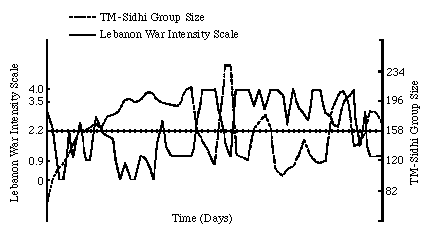
Figure 1 graphic

Figure 1 – Daily Time Series of the TM-Sidhi Group Size and the Lebanon War Intensity Scale. These two plots show the tendency toward an inverse relation between TM-Sidhi group size and war intensity in Lebanon. (Figure after Orme-Johnson (study 41).)


Decreases in politically motivated violence attributed to this technology have been reported for countries besides Lebanon. Deaths world-wide due to terrorism were reported to decline 72% during three large assemblies (p<.025; Table II: 42).

In the second area of consideration, six papers or presentations report evidence for improved international relations due to the Maharishi Effect. Reported effects include increased cooperation among antagonists (Table II: 13), increased number of cooperative events (Table II: 15), and reduced verbal hostilities (Table II: 44). Public statements by the U.S. President about the former U.S.S.R. and its General Secretary became more frequent and more positive as the size of the U.S. TM-Sidhi group increased (p<.0019; Table II: 30). The actions of the U.S.S.R. toward the U.S. improved 2- to 4-months after the U.S. TM-Sidhi group reached 1,700, the threshold number predicted to make a measurable difference in the affairs of the nation.

Another effect of profound military and diplomatic significance observed in fourteen published or presented papers (Table II: 2-4, 8, 12, 13, 15, 28-30, and 41-44) is that Maharishi Effect groups in one country are reported to improve social indicators in other countries. For example, assemblies in the U.S., Holland, Italy, and Israel were reported to reduce war intensity and improve economic and quality of life variables in Lebanon (Table II: 2, 13, 15, 41-42, and 44). Unemployment, inflation, violent death, number of strikes, and other quality of life variables in Canada were reported improved by a U.S. Maharishi Effect group (Table II: 3, 4, and 8). Such research suggests that, in the future, strategists could use Maharishi Effect groups to remedy problems in hot spots like Kosovo and Iraq without actually having to cross national boundaries.

Maharishi has long held that war is the result of collective stress reaching such a high intensity that it must explode into violence. (Endnote 18) Moreover, in his view, criminal violence within the nation, and other signs of social disorder, derive from the same source. Thus, though the consideration moves from the international sphere to the internal affairs of nations, the underlying principle remains the same. Reduction of this collective stress through the Maharishi Effect technology may simultaneously explain decreases in war intensity and violent crime, as well as improvements in international relations and progress within the nation. Thus, although the bulk of Maharishi Effect research concerns variables at the city, state or national levels, these are thought to be directly relevant to national and international conflict.

Decrease of crime has been reported in 22 Maharishi Effect papers or presentations (Table II: 3-4, 6, 7, 14, 16-24, 33, 35, 37, 41-42, 45-47). Cities experienced an 8.2% to 23% decrease in crime rates during Maharishi Effect interventions (Table II: 16, 34). In Washington, D.C., for example, over an eight-week period in the summer of 1993 (Table II: 33), a public demonstration of the technology, predicted in advance and widely publicized, produced crime rates 23% below predicted trends. Cities or states experienced decreases in crime rates, such as that observed in Merseyside, England where crime decreased by 16% while increasing by 20% in the rest of counties (Table II: 35). Nations experienced from .78% to 12% decreases in crime rates. One study of 80 randomly chosen U.S. cities, containing 47% of the U.S. population, reports that crime trends were 18% below conservatively predicted levels when TM program participation reached 1% over the years 1972 to 1978 (Table II: 24). Such reported changes in crime rate could indicate transformation of a society to a direction away from crime or toward a lower level of stress, and, therefore, improved mental health in the society. The number of papers or presentations, and the experimental significances associated with each, together make the influence of the Maharishi Effect on crime by far the largest of the known approaches to crime reduction. Other approaches, such as increasing police patrols, increasing penalties and incarceration rates, and programs for prevention of drug and alcohol use, have been shown to have little effect. (Endnote 19), (Endnote 20) Papers or presentations have reported consistent results in cities and nations around the world, from Iowa City, Iowa to Manila, the Philippines to New Delhi, India.

Crime trends were typically studied using standardized data obtained from the police or national agencies, and in both short- and long-term, extending in some studies across many years. In many studies, trends in cities or nations during a Maharishi Effect intervention were compared to long-term baseline trends for those nations. Box-Jenkins time series analysis, transfer function analysis, cross-legged panel analysis, chi-square, multi-variate analysis, and other techniques have been employed by investigators. There are examples where the impact could be seen even in the raw data, as in Figures 1 and 2. In other studies, random selection of Maharishi Effect and control cities was employed. Studies by Hagelin, et al. and Orme-Johnson et al. (Table II: 33 and 41), made specific predictions in advance and these predictions were lodged with independent review boards of experts, who also approved the statistical methods in advance of the study. The variety of designs and the consistency of experimental outcomes give credence to the underlying theory of decreasing stress and increasing social order used to explain the Maharishi Effect.


Figure 2
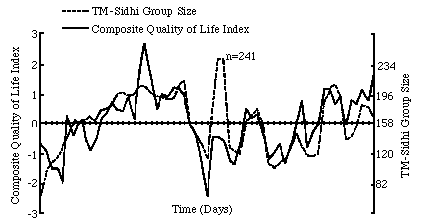
Figure 2 graphic

Figure 2 – Daily Time Series of the TM-Sidhi Group Size and the Composite Quality of Life Index. These two plots show the direct relation between TM-Sidhi group size and a quality of life index. (Figure after Orme-Johnson (study 41).)


Investigators have examined the impact of the Maharishi Effect on a large number of variables other than crime which are related to the quality of life (see Table II), including improved economy (reduced inflation, reduced unemployment, increased wages, increased stock market values, decreased poverty and increased family income), reduced suicides, decreased traffic fatalities, decreased cigarette consumption, decreased incidence of communicable diseases, decreased death rate, increased number of degrees conferred, increased number of patents issued, decreased drug abuse, decreased number of civil suits, decreased divorce rate, decreased alcohol consumption, and many others. Figure 2, from a study of the impact of an Israel Maharishi Effect group on quality of life shows the direct correlation between group size and a composite index of quality of life. Such composites of many quality of life variables would show lower effects of a given independent variable if many independent variables were responsible for producing them. However, in this case, the effect of numbers of participants in the Maharishi Effect technologies was more highly significant for the composite index than for any individual measure. This appears to further corroborate the theory that the Effect is due to one independent variable and that this operates on a level that pervades all of society, a level that may be as basic as consciousness itself.

A Proposed Mechanism for the Maharishi Effect

The Maharishi Effect is unlike any other phenomenon in the social sciences. It behaves as if it were a field effect. A minute fraction, as small as the square root of one percent, of a population practicing the TM-Sidhi program in a group improves trends in society. The results and significance levels obtained in some studies are unprecedented in the social sciences. Furthermore, virtually every study found significant changes in the predicted direction, and changes in many dependent variables (e.g., crime rate, accident rate, economic variables) were repeatedly replicated in different locations and by different researchers using different research designs. The majority of these studies controlled for known or suspected confounding variables. Current theories in sociology cannot explain such changes as the 71% decrease in war fatalities produced by this technology at a distance, as observed in the Davies study (Table II: 13), or results of the twelve other papers or presentations in which the Maharishi Effect in a nation was produced by a group outside the country. To explain such unusual results requires an uncommon explanation. Hagelin, (Endnote 21) a noted unified field theorist, proposes a mechanism for the Maharishi Effect based on the unified field.

Much of current research in high-energy physics is predicated upon the existence of a unified field. This unified field gives rise to all four known forces of nature (weak force, strong force, electromagnetism, and gravity). The unified field is unmanifest and unbounded in the sense that it is abstract to, and yet includes, all time and space. (Endnote 22), (Endnote 23)Physical theorists hold that the unified field embodies the property of complete self-interaction or self-referral-it interacts only with itself to produce all of creation. These self-interacting dynamics give rise to all laws of nature and all manifest phenomena. Unified field theories are a triumph of modern physics, and research in this field has been honored with several Nobel prizes. If a technology of defense based on the unified field were possible, it would revolutionize defense strategy. The unified field is generally thought, however, to be beyond the reach of any physical technology.

The Maharishi Effect is proposed to be mediated by a field effect influence, without direct interaction between those from whom the influence originates and the society that is influenced. This influence is taken as evidence for the existence of a field of consciousness, or, alternatively, as evidence for a subtler form of communication between individuals than currently understood by Western science. (Endnote 24) In the West, most scientists and the public at large take consciousness to be the by-product of the electrophysiological functioning of the nervous system. Consciousness is thus associated with each single nervous system, and isolated-not shared. Each person experiences the world through his or her own individual consciousness. In this perspective there is no need for a field understanding of consciousness. However, many Eastern traditions teach that consciousness is a shared rather than an individual phenomenon. (Endnote 25) No one is isolated from the larger field of consciousness-a completely opposite perspective. Maharishi holds that the influence mediating the Maharishi Effect is generated by practitioners of the TM technique experiencing a state of transcendental consciousness. This proposed fourth state of consciousness is often described as a state of “restful alertness.” It appears to have psychophysiological characteristics distinct from the usual three states of consciousness, waking, dreaming and deep sleep (see for review Endnote 26). Studies conducted at the Military Institute of Aviation Medicine, Warsaw, Poland, (Endnote 27) and in many other places (Endnote 28) reveal indications of deep physiological rest. A wakeful and ordered state of brain functioning was observed along with increased regularity and intensity of EEG alpha and theta activity in frontal and central regions of the brain. Later research further indicates that transcendental consciousness is associated with breath suspensions and increased EEG coherence (see for review Endnote 29, Endnote 30).

The TM-Sidhi program adds a set of advanced mental procedures to the basic TM technique. These are based on the ancient Yoga Sutras of Patanjali. (Endnote 31) Research on the TM-Sidhi program has reported significant additional gains in neurophysiological integration and cognitive-behavioral performance over those found utilizing the TM technique alone. Orme-Johnson & Granieri (Endnote 32) report increases in creativity, field independence, IQ, and behavioral flexibility after six-months experience with the TM-Sidhi program. Orme-Johnson, Wallace & Dillbeck (Endnote 33) report significant increases in frontal EEG coherence after three months of TM-Sidhi practice as compared to controls practicing the TM technique alone. Additionally, a large number of studies have documented a variety of other benefits from the TM-Sidhi program (see for review Endnote 34, Endnote 35).

This more powerful program was introduced by Maharishi in 1976 to neutralize negative tendencies and promote positive trends in society. He predicted that a small number of people, about the square root of 1% of the population, practicing the program together in one location, would create an improved quality of life. He based this prediction on discussions with physicists about the coherent effects observed in physical systems such as the laser. (Endnote 36) According to physicist Hagelin, (Endnote 37) the increased amplitude of the effect in group practice could be due to the superposition principle. The field effect created by groups of individuals experiencing transcendental consciousness is notably similar in character to physical superradiance phenomena. Similarities include the generation of the effect by emitters in a small volume, an intensity proportional to N squared, long-range propagation, a decrease of intensity over distance, radial direction pattern, etc.

Leading physicists such as Jeans (Endnote 38) and Wigner (Endnote 39) have long noted the fundamental role played by consciousness in natural phenomena. Planck, who won the Noble prize in physics in 1918, said, “I regard consciousness as fundamental. I regard matter as derivative from consciousness.” (Endnote 40) Other eminent physicists have hinted at this unification of consciousness and physics, as in Schroedinger’s “one mind,” Eddington’s “mind stuff,” and Pauli’s “unity of all beings.” (Endnote 41) Bernard d’Espagnat, a leading quantum physicist, writes, “the doctrine that the world is made up of objects whose existence is independent of human consciousness turns out to be in conflict with quantum mechanics and with facts established by experiment.” (Endnote 42) Although details of a consciousness-based unified field theory are still emerging, and the theories do have critics, (Endnote 43) it is reasonable to suppose nature is fundamentally united, not divided into separate fields in which mental phenomena reside apart from the rest of existence.

The mechanism for the Maharishi Effect must engage a deep level of nature’s functioning, perhaps a level where the unified field of physics and consciousness are one. Certainly, classical explanations for the effect are very unlikely. (Endnote 44) Maharishi (Endnote 45) holds that the proposed unified field is described in the ancient Vedic literature of India. It is called turiya chetana or simply turiya, which he translates as transcendental consciousness. He further contends that individuals can subjectively experience and investigate the unified field by practicing the TM and TM-Sidhi programs. Physicists like Hagelin (Endnote 46) also postulate the unified field envisioned by physical theorists is the same as consciousness in a pure undifferentiated state, that is, transcendental consciousness. Hagelin (Endnote 47), (Endnote 48) offers the following lines of argument. 1) The qualities of each have been found to be the same (i.e., self-referral or self-interacting, unbounded, unmanifest, invincible, etc.). 2) They each appear to possess an identical organization of symmetries. 3) Each is said to determine the fundamental patterns by which intelligence functions. 4) Logical parsimony forbids the existence of two such fundamental fields at the basis of creation. However, detailed analyses of a role of the unified field in the Maharishi Effect have yet to be formulated.

To produce the changes observed in society, the group practice of the TM-Sidhi program must influence the individual members of society. A number of studies support this logic. Proposed field effects of consciousness have been studied on the level of individual physiology through measures of EEG coherence, intersubject EEG coherence (coherence between subjects), serotonin metabolism, and subjective experience of bliss. Changes in EEG coherence associated with large groups practicing the TM-Sidhi program have been reported by Orme-Johnson & Gelderloos, (Endnote 49) Travis, (Endnote 50) and Travis & Orme-Johnson. (Endnote 51) Increased phase coherence of the EEG has been measured during TM practice, signifying that different parts of the brain are working together in a more orderly manner. Increased EEG coherence during meditation correlates with higher IQ, creativity, moral reasoning, and neurological efficiency, (Endnotes 52 through 56) suggesting that such effects at a distance have practical significance.

Research on intersubject EEG coherence by Orme-Johnson, Dillbeck, Wallace, & Landrith (Endnote 57) further indicates that when many people practice the TM-Sidhi program together in one place, this coherence-generating effect is enhanced. The experiment revealed that on six separate days when about 2500 experts over one thousand miles away practiced the TM-Sidhi program together in one place, increases in intersubject EEG coherence were measured compared to times when the large group was not practicing the TM-Sidhi program (control days). Experimental subjects were blind to the purpose of the research and to the times when the large group practiced the program.

Impact of group practice of the TM-Sidhi program on individual physiology was addressed on the biochemical level in research by Pugh, Walton & Cavanaugh.(Endnote 58) Their initial study revealed that on high attendance days at the large, permanent TM-Sidhi assembly in Fairfield, Iowa, there were indications of higher production and breakdown of the neurotransmitter serotonin in non-meditators several miles away.(Endnote 58) Serotonin, a neurochemical associated with well-being or happiness, is known to reduce human aggression and hostility.(Endnote 59) In this diet-controlled study of effects of group practice of the TM-Sidhi program, linear transfer function methods of time series analysis, modified by the use of the Akaike information criterion, a method to minimize subjective bias in model selection,(Endnote 60) were utilized. Daily mean temperature, a potential confound, was included as a second variable in the model. A later phase of the study(Endnote 61) found that changes in the stress hormone cortisol were opposite to those of serotonin, that is, when the number of practitioners in the TM-Sidhi group went up, there was not only an associated increase in the serotonin metabolite in non-practitioners living and working miles from the group but also an associated decrease in cortisol. Granger causality tests verified the presence of a statistical causal ordering between group size and these biochemical variables, consistent with a causal effect of the TM-Sidhi group on these biochemicals related to stress and well-being.(Endnote 61)

From the Vedic perspective, the explanation for the Maharishi Effect is simple. Consciousness, like the unified field in physical theory, is the stuff from which all the universe is made. Individual consciousness arises from this greater field, but it is the greater field which connects all individuals together, much as waves arise from and are connected by the underlying ocean. Transcendental consciousness is the individual’s experience of this ocean. Repeated experience of this during practice of the TM and TM-Sidhi programs cultivates the higher qualities of consciousness not only in the individuals engaged in the practice, but also for others in the vicinity as well. The larger the number participating in the practice, and especially the larger the number participating in group practice of these programs, the larger the effect on society. Enlivened consciousness produces corresponding improvements in physiology and behavior. Such an effect-at-a-distance is usually understood by modern science in terms of a field, and thus a detailed understanding of the effect from the Vedic perspective may lead to a detailed understanding in terms of modern science.

Military Use of the Maharishi Effect: Deployment of a Military Prevention Wing

Military strategists voice the opinion that it is time for new strategies of defense. Colonel Szafranski, (Endnote 62) professor of national security studies at the U.S. Air University’s Air War College, writes:

We suspect that it might be valuable to pursue ways to subdue an enemy without fighting. It might bear fruit. After all, physical fighting is costly, with the winner and the loser both paying great expenses in blood and treasure.

Richard Heckler, (Endnote 63) an instructor for “The Trojan Warrior Project” for the U.S. Army Special Operations Division, speaks to this issue when he says:

We are in desperate need of a warrior who draws his or her power from an expanded awareness rather than from a stance of fear or aggression. This warrior could make the U.S. secure without making other countries feel insecure.

The technologies producing the Maharishi Effect appear to fill this need. Because of the documented beneficial effects, the ease of implementation, the rapidity of the influence, and their humanitarian appeal, Maharishi’s Vedic technologies may represent a new scientific advance directly relevant to national defense. The research above indicates a very small percentage of the population, a fraction of the size of a military organization, can influence the trends of society, steering the whole population in a harmonious and progressive direction. What current or proposed technology can begin to match the expected benefits to be gained by establishing a military prevention wing to apply this technology? Benefits to the military’s own country appear most far-reaching, but situations can be imagined where such a group could be profitably used outside the country, in or near existing or potential trouble spots, for example.

Compared to the cost of deploying a fully-armed military force to hot-spots like Kosovo and Iraq, the cost for a prevention wing is small. Expenses for establishing such a wing are largely non-recurring.

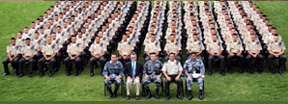
A few leaders around the world are beginning to implement the Prevention Wing program, and report success within their military organizations. Recently, over 26,000 Brazilian military police officers learned the TM technique. Significant improvements in discipline and health were documented, although Maharishi Effect research, per se, is not known to have been carried out. In a study involving 6,300 military police officers and 100 cadets, disciplinary measures for officers decreased 69% and for cadets decreased 35% after learning the TM program. Doctor’s visits decreased 26% for officers and 55% for cadets. (Endnote 64), (Endnote 65) Also, 289 meditating cadets in the Police Academy of Piauí, Brazil, likewise showed significant improvements in behavior, attitude and health as well as academic performance. (Endnote 66)

These studies are supported by many previous findings of health benefits in the civilian sector. For example: by a longitudinal study of industrial workers of Sumitomo Heavy Industries conducted by the National Institute of Industrial Health of the Japanese Ministry of Labor and the St. Marianna Medical Institute, (Endnote 67), (Endnote 68) by a field study of insurance statistics of practitioners of the TM technique, (Endnote 69) by a nationwide epidemiological study by Socialstyrelsen, the National Health board of Sweden, (Endnote 70), (Endnote 71) and by a study of physicians’ payments for enrollees in the provincial health plan of Quebec. (Endnote 72) The reduction of health care cost estimated from these studies continues for at least seven years after learning the TM technique. After five to seven years of near linear decline, costs are approximately 50% of their initial level. Thus, health cost savings across five years would by themselves come close to full payback for the military organization. Improvements in work performance would add more savings.

The military is traditionally the most orderly and disciplined institution in society. According to military historian Martin Van Creveld (Endnote 73) “[o]nce the potential usefulness of a new concept is recognized, no organization is better placed than the armed forces to guide its development and bring it to fruition.” For this reason, it may be appropriate for military organizations to create prevention wings and use them to maintain coherence in the collective consciousness of their nation and the world. Many military bases already have enough personnel to create the Maharishi Effect for the whole world. The other duties of military personnel would be only modestly affected; practice of the TM and TM-Sidhi programs requires only 2-3 hours per day.

Conclusion

What better success for a military than to win a conflict without fighting? The research reviewed here suggests this goal, sought since ancient times, can now be achieved through application of the technology of the Maharishi Effect. As further inferred from these studies, this technology also may be an effective defense against the expanding spectrum of terrorist threats to national as well as international security. As more military organizations gain experience with it, the technology of the Maharishi Effect may well become the preferred means to prevent or end military violence around the world.


Notes

1. Giulio Douhet, The Command of the Air, trans. Dino Ferrari (Washington, D.C.: U.S. Government Printing Office, USAF Office of History, 1983), p. 30.

2. George C. Wilson, “Defense plan has many holes,” Air Force Times, April 15, 1996, p. 62.

3. Ingomar Hauchler and Paul M. Kennedy, Global trends-the World Almanac of Development and Peace (New York: The Continuum Publishing Company, 1994), p. 179.

4. Stockholm International Peace Research Institute, SIPRI Yearbook 1995 Armaments, Disarmament and International Security (New York: Oxford University Press, 1995).

5. Stockholm International Peace Research Institute, SIPRI Yearbook 1996 Armaments, Disarmament and International Security (New York: Oxford University Press, 1996).

6. Associated Press, “Record number of conflicts threaten peace, group says,” Des Moines Register, January 3, 1996, p. 5.

7. Stockholm International Peace Research Institute, SIPRI Yearbook 1997 Armaments, Disarmament and International Security (New York: Oxford University Press, 1997).

8. Brigitte Sauerwein, “The Undeterrables,” International Defense Review, Vol. 3 (1993), p. 183.

9. George C. Wilson, “It’s Called WMD but its meaning is trouble,” Navy Times, March 20, 1995, p. 31.

10. “WASHINGTON-USA Faces Chilling Reality of Terrorist Threat,” USA Today, Thursday March 28, 1996, p. 10A.

11. G-2, Military, Vol. 11, No. 7 (December 1994), p. 3.

12. G-2, Military, Vol. 10, No. 8 (January 1994), p. 2.

13. Fred Reed, “Nukes for ‘nut cases’ seems to be here,” Air Force Times, April 26, 1993, p. 54.

14. Maharishi Mahesh Yogi, Maharishi’s Absolute Theory of Defence (Maharishi Vedic University, India: Age of Enlightenment Publications, 1996).

15. David Frawley, Gods, Sages and Kings: Vedic Secrets of Ancient Civilization (Salt Lake, Utah: Passage Press, 1991).

16. Maharishi Mahesh Yogi, Maharishi Mahesh Yogi on the Bhagavad Gita: A New Translation and Commentary Chapter 1-6, (Baltimore, Maryland: Penguin, 1969).

17. John S. Hagelin, “Is Consciousness the Unified Field? A Field theorist’s perspective,” Modern Science and Vedic Science, Vol. 1, No. 1 (January 1987), pp. 28-87.

18. Maharishi Mahesh Yogi, Maharishi’s Absolute Theory of Defence (India: Age of Enlightenment Publications, 1996).

19. Institute of Science, Technology and Public Policy, “More Prisons and Police Won’t Stop Crime,” (Fairfield, Iowa: Maharishi University of Management, Policy Brief Report No. 95:2 Crime Prevention March 16, 1995), pp. 1-3.

20. Robert Martinson, “What works? Questions and Answers About Prison Reform,” The Public Interest, Vol. 35, (1974), pp. 22-54.

21. Hagelin, “Is Consciousness the Unified Field?”

22. Bertram M. Schwarzschild, “Anomaly Cancellation Launches Bandwagon for Superstring Theory of Everything,” Physics Today, Vol. 38, No. 7, (July 1985), pp. 17-20.

23. M. Mitchell Waldrop, “String as a Theory of Everything,Science, Vol. 229, No. 4719, (20 September 1985), pp. 1251-1253.

24. Hagelin, “Is Consciousness the Unified Field?”

25. Jonathan Shear, The Inner Dimension Philosophy and the Experience of Consciousness (New York: Peter Lang Publishing, Inc., 1990).

26. Ron Jevning, Robert K. Wallace, and Mark Biedebach, “The Physiology of Meditation: A Wakeful Hypometabolic Integrated Response,” Neuroscience and Biobehavior Review, Vol. 16, No. 3, (1992), pp. 415-424.

27. J. Miszczak and J. Achimowicz, “Hybrid Analysis of Spontaneous Brain Activity in Different States of Conscious Experience,” in Roger A. Chalmers, Geoffrey Clements, Hartmut Schenkluhn et al, eds., Scientific Research on the Transcendental Meditation Program: Collected Papers, (Vlodrop, the Netherlands: Maharishi International University Press, 1983), Vol. 4, pp. 2267-2273.

28. Charles N. Alexander, Robert W. Cranson, Robert W. Boyer et al., “Transcendental Consciousness: A Fourth State of Consciousness Beyond, Sleep, Dreaming, and Waking,” in Jayne Gackenbach, ed., Sleep and Dreams: A Sourcebook, (New York: Garland, 1987), pp. 282-315.

29. Ibid.

30. Ron Jevning, Robert K. Wallace, and M. Biedebach, “The Physiology of Meditation.

31. Patanjali, Yoga Sutras of Patanjali, translated by R. Prasada (New Delhi, India: Oriental Books Reprint Corporation, 1978).

32. David W. Orme-Johnson and Barbara Granieri, “The Effects of the Age of Enlightenment Governor Training Courses on Field Independence, Creativity, Intelligence, and Behavioral Flexibility,” in David W. Orme-Johnson and John T. Farrow, eds., Scientific Research on the Transcendental Meditation Program: Collected Papers, (Livingston Manor, New York: MIU Press, 1977), Vol. 1, pp. 713-718.

33. David W. Orme-Johnson, Robert K. Wallace, and Michael C. Dillbeck, “Longitudinal Effects of the TM-Sidhi Program on EEG Phase Coherence,” in Roger A. Chalmers, Geoffrey Clements, Harmut Schenkluhn et al, eds., Scientific Research on the Transcendental Meditation Program: Collected Papers, (Vlodrop, the Netherlands: MIU Press, 1980), Vol. 3, pp. 1678-1686.

34. Robert K. Wallace, The Maharishi Technology of the Unified Field: The Neurophysiology of Enlightenment (Fairfield, Iowa: MIU Neuroscience Press, 1986).

35. Robert K. Wallace, The Physiology of Consciousness (Fairfield, Iowa: MIU Press, 1993).

36. Lawrence H. Domash, “The Transcendental Meditation Technique and Quantum Physics: Is Pure Consciousness a Macroscopic State in the Brain?,” in David W. Orme-Johnson and John T. Farrow, eds., Scientific Research on the Transcendental Meditation Program: Collected Papers, (Livingston Manor, New York: MIU Press, 1977), Vol. 1, pp. 652-670.

37. John S. Hagelin, “Is Consciousness the Unified Field.”

38. James Jeans, The Mysterious Universe (revised edition) (New York: Macmillan, 1932).

39. Eugene Wigner, Symmetries and Reflections (Massachusetts: M.I.T. Press, Boston, 1970).

40. David Ballin Klein, The Concept of Consciousness: A Survey (Lincoln, Nebraska: University of Nebraska Press, 1984), reference cited is facing the book title page.

41. Larry Dossey, Recovering the Soul: A Scientific and Spiritual Search (New York: Bantam, 1989), p. 125.

42. Bernard d’Espagnat, “The Quantum Theory and Reality,” Scientific American, Vol. 241, No. 5 (November 1979), pp. 158-181.

43. Victor J. Stenger, “The Myth of Quantum Consciousness,The Humanist, Vol. 53, No. 3, (May/June 1993), pp. 13-15.

44. Kai J. Druhl and Kurt W. Kleinschnitz, “Superradiance as a Model for the Collective Dynamics of Human Consciousness,” (Fairfield, Iowa: Maharishi University of Management, Report No. 91-001, 1991).

45. Maharishi Mahesh Yogi, Life Supported By Natural Law (Washington, D.C: Age of Enlightenment Press, 1986).

46. Hagelin, “Is consciousness the Unified Field?”

47. Ibid.

48. John S. Hagelin, “Restructuring Physics From Its Foundation In Light of Maharishi’s Vedic Science,” Modern Science and Vedic Science, Vol. 3, No. 1, (1989), pp. 3-72.

49. David W. Orme-Johnson and Paul Gelderloos, “Topographic EEG Brain Mapping During “Yogic Flying,” International Journal of Neuroscience, Vol. 38, No. 3-4, (1988), pp. 427-434.

50. Frederick T. Travis, “Testing a Field Model of Social Interactions,” Journal of the Iowa Academy of Science, Vol. 95, (1988), pp. A56-A57.

51. Frederick T. Travis and David W. Orme-Johnson, “EEG Coherence and Power During Yogic Flying,” International Journal of Neuroscience, Vol. 54, No. 1-2, (1990), pp. 1-12.

52. Michael C. Dillbeck and Edward C. Bronson, “Short-term Longitudinal Effects of the Transcendental Meditation Technique on EEG Power and Coherence,” International Journal of Neuroscience, Vol. 14, (1981), pp. 147-151.

53. Michael C. Dillbeck, David W. Orme-Johnson, and Robert K. Wallace, “Frontal EEG Coherence, H-Reflex Recovery, Concept Learning, and the TM-Sidhi Program,” International Journal of Neuroscience, Vol. 15, (1981), pp. 151-157.

54. Sanford I. Nidich, Robert A. Ryncarz, Allan I. Abrams et al., “Kohlbergian Cosmic Perspective Responses, EEG Coherence, and the Transcendental Meditation and TM-Sidhi program,” Journal of Moral Education, Vol. 12, No. 3, (October 1983), pp. 166-173.

55. David W. Orme-Johnson, Robert K. Wallace, Michael C. Dillbeck et al, “Improved Functional Organization of the Brain Through the Maharishi Technology of the Unified Field as Indicated By Changes In EEG Coherence and Its Cognitive Correlates: A Proposed Model of Higher States of Consciousness,” in David W. Orme-Johnson and John T. Farrow, eds., Scientific Research on the Transcendental Meditation Program: Collected Papers, (Vlodrop, the Netherlands: MIU Press, 1986), Vol. 4, pp. 2245-2266.

56. David W. Orme-Johnson and Christopher T. Haynes, “EEG Phase Coherence, Pure Consciousness, Creativity, and TM-Sidhi Experiences,” International Journal of Neuroscience, Vol. 13, (1981), pp. 211-217.

57. David W. Orme-Johnson, Michael C. Dillbeck, Robert K. Wallace et al., “Intersubject EEG Coherence: Is Consciousness a Field?,” International Journal of Neuroscience, Vol. 16, No. 3/4, (1982), pp. 203-209.

58. Nirmal D. Pugh, Kenneth G. Walton, and Kenneth L. Cavanaugh, “Can Time Series Analysis of Serotonin Turnover Test the Theory that Consciousness Is a Field?,” Society for Neuroscience Abstracts, Vol. 14, (1988), p. 372. Editor’s Note: Since the publication of this paper, this study was published here:

Walton KG, Cavanaugh, KL, & Pugh , ND (2005): Effect of group practice of the Transcendental Meditation program on biochemical indicators of stress in non-meditators: A prospective time series study. Journal of Social Behavior and Personality, 17(1), 339-373. For a summary see: Research Relevant to use of the Transcendental Meditation Program in the Military.

59. Robert O. Pihl, Simon N. Young, P. Harden et al., “Acute Effect of Altered Tryptophan Levels and Alcohol on Aggression in Normal Human Males,” Psychopharmacology, Vol. 119, (1995), pp. 353-360.

61. H. Akaike, “Information Theory and an Extension of the Maximum Likelihood Principle,” in B. N. Petrov and F. Csake, eds., Second International Symposium on Information Theory, (Budapest, Hungary: Akademiai Kiada, 1973), pp. 267-281.

61. K. L. Cavanaugh, N. D. Pugh, K. G. Walton, “Effects of the Transcendental Meditation (TM) Program on Cortisol and Other Biochemical Indicators of Societal Stress: A Causal Analysis,” Society for Neuroscience Abstracts, Vol. 24, (1998), p. 1434. Editor’s note: See also: Walton KG, Cavanaugh, KL, & Pugh , ND (2005): Effect of group practice of the Transcendental Meditation program on biochemical indicators of stress in non-meditators: A prospective time series study. Journal of Social Behavior and Personality, 17(1), 339-373. For a summary see: Research Relevant to use of the Transcendental Meditation Program in the Military.

62. Richard Szafranski, “Neocortical Warfare? The Acme of Skill,” Military Review, Vol. 74, No. 11, (November 1994), pp. 41-55.

63. Richard Strozzi Heckler, “In Search of the Warrior Spirit,” East West, Vol. 20, No. 10, (October 1990), p. 92.

64. Military Police Center for Education and Training, Salvador, State of Bahia, Brazil, Document No. AJ/59/02/83, 3 Feb. 1988.

65. Markus Schuler, Project Director: “Stress Prevention Program,” [Videotaped Documentary] (Sao Paulo, Brazil: Maharishi Institute of Health and Ayur-Ved, 1989). [Editor’s note: See: Brazilian Military Research on Invincible Defense]

66. Government of State of Piaui, Brazil, (Military Police General Command Document No. 037-PM-3187, 14 Dec. 1987). [Editor’s note: See: Brazilian Military Police Pictures]

67. T. Haratani and T. Henmi, “Effects of Transcendental Meditation (TM) On Mental Health of Industrial Workers,” Japanese Journal of Public Health, Vol. 37, No. 10, (1990), p. 729.

68. T. Haratani and T. Henmi, “Effects of Transcendental Meditation (TM) On Mental Health of Industrial Workers,” Japanese Journal of Industrial Health, Vol. 32, No. 7, (1990), p. 177.

69. David W. Orme-Johnson, “Medical Care Utilization and the Transcendental Meditation Program,” Psychosomatic Medicine, Vol. 49, No. 1, (1987), pp. 493-507.

70. J. O. Ottoson, “Transcendental meditation,” Socialstyrelsen [National Health Board of Sweden] Report D: nr SN 3-9-1194/73 (1977).

71. Jaan Suurkla, “The Transcendental Meditation Technique and the Prevention of Psychiatric Illness,” in Roger A. Chalmers, Geoffrey Clements, Harmut Schenkluhn et al, eds., Scientific Research on the Transcendental Meditation Program: Collected Papers, (Vlodrop, the Netherlands: Maharishi International University Press, 1977), Vol. 2, pp. 896-897.

72. Robert E. Herron, Steve L. Hillis, Joseph V. Mandarino et al., “The Impact of Transcendental Meditation on Government Payments to Physicians in Quebec,” American Journal of Health Promotion, Vol. 10, No. 3, (1996), pp. 208-216.

73. Martin van Creveld, Technology and War-From 2000 B. C. to the Present-A Revised and Expanded Edition (New York: Free Press, 1991), p. 220.

Author: David R. Leffler (The Union Institute, Cincinnati, Ohio),
Kurt W. Kleinschnitz (Maharishi Vedic School, Philadelphia, Pennsylvania),
Kenneth G. Walton (Maharishi University of Management, Fairfield, Iowa),
Date: 1 May 1999

Schautafel II: Der Maharishi-Effekt–Wissenschaftliche Untersuchungen und Tagungsbeiträge

Posted on May 1st, 1999

Diese Tabelle ist Teil der Arbeit “An alternative to military violence and fear-based deterrence: Twenty years of research on the Maharishi Effect” (available in English on this website by clicking here) von Dr. David R. Leffler, Dr. Kurt Kleinschnitz, & Dr. Kenneth G. Walton (1999, May 1). Die englische Version dieses Papiers erschien zuerst in Kosovo Peace und eine deutsche Übersetzung wurde kurz darauf in veröffentlicht Kosovo Frieden. Später wurde die englische Version in Security and Political Risk Analysis (SAPRA) veröffentlicht.

logo
SAPRA India

Eine Alternative zu militärischer Gewalt und einer Angst erzeugenden Verteidigung: Zwanzig Jahre Erforschung des Maharishi-Effekts

Schautafel II: Der Maharishi-Effekt – Wissenschaftliche Untersuchungen und Tagungsbeiträge

 Nr. Referenz Untersuchungsablauf Ergebnisse
1 Abou Nader, T. M., Alexander, C. N., & Davis, J. L. (1984). Collected Papers, (Vol. 4, pp. 2623-2633). Fünf libanesische Dörfer in der Kriegsregion mit jeweils etwa 10 000 Einwohnern wurden über einen Zeitraum von Oktober 1978 bis März 1984 untersucht. Von ihnen erreichte ein Dorf, namens Basinka, im Juli 1982 en Schwellenwert von 1%TM-Ausübenden. Vierteljährliche statistische Daten zum Krieg wurden von der objektivsten Zeitung im Libanon bezogen. Die Unterschiede zwischen Basinka und den Kontroll-Dörfern erreichten eine Signifikanz von p<0,005. • Kriegsbeschuss nahm ab (p< 0,005).

• Die Zahl der Kriegsopfer sank (p<0,005).

• Rückgang von kriegsbedingtem Sachschäden an Eigentum trotz Zunahme der Intensität der Kampfhandlungen in der Region (p<0,005).

• Stopp von Gewalttätigkeiten in Basinka im Unterschied zu Kontrollstädten (p<0,00001).

2 Alexander, C. N., Abou Nader, T. M., Cavanaugh, K. L., Davies, J. L., Dillbeck, M. S., Kfoury, R. J., & Orme-Johnson, D. W. (1984). Collected Papers , (Vol. 4, pp. 2687-2714). TM-Sidhi-Gruppen versammelte sich 1984 dreimal für 2 Wochen in den USA, im Libanon und in Jugoslawien – jede von ihnen in der prognostizierten Grössenordnung zur Erzeugung eines Effekts auf die Ereignisse im Libanon. Nach den Ergebnissen aufwendiger Studien mit Zeitserieninterventions-Analyseverfahren erreichte jede der drei Versammlungen eine signifikante Wirkung mit- in der aufgeführten Reihenfolge – p<0,0038, p<0,000036 und p0,016. Die Signifikanz der Wirkung aller drei Versammlungen zusammen lag bei p<0,000046. • Bemerkenswerte Zunahme positiver Kundgaben von Staatsoberhäuptern und positiver Ereignisse im Libanon über einen Durchschnitt von 2,34 Punkten (auf einer Skala von +4 bis -4) über einem Basisniveau der Negativität von -0,82 (p<0,000046).

• Abnahme der Kriegstoten um 55 %, einen Durschnitt von 3,6 pro Tag (p<0,00036).

• Rückgang der Kriegsverletzungen um 38%.

• Wertsteigerung der Währung um 93 Cents pro Woche während der Versammlungen, aber Wertsenkung für die gesamte 6-Monats-Untersuchungsperiode um 0,13 Cents pro Woche (p<0,01).

3 Assimakis, P. D. (1989). Dissertation Abstracts International, 50(5), 2203B. Die Wirkung der MIU-TM-Sidhi-Gruppe auf gewaltsame Todesfälle, Unfallopfer und Zigarettenkonsum sowie auf die Häufigkeit von Streiktagen in den Jahren 1972 – 1986 wurde durch Zeitserien-Analyseverfahren ausgewertet. • Rückgang gewaltsamer Todesfälle aufgrund von Verkehrsunfällen, Totschlag, Mord und Selbstmord um 4,1 % (p<0,01).

• Abnahme von Todesfällen aufgrund von Unfällen um 5,1 % (p<0,005).

• Rückgang des Zigarettenkonsums um 10,1 % (p<0,001).

• Abnahme von Streiktagen (Verlust von Arbeits-tagen aufgrund von Streiks) um 18,8 % (p<0,001).

4 Assimakis, P. D. & Dillbeck, M. C. (1995). Psychological Reports, 76, 1171 – 1193. Die Wirkung der MIU-TM-Sidhi-Gruppe auf die Lebensqualität in Kanada wurde für die Jahre 1983 bis 1985 durch Zeitserienanalyse der wöchentlichen Daten (n=156 Wochen) ausgewertet. Für den Zeitraum von 78 Wochen aus der Gesamt-Untersuchungsperiode von 156 Wochen überschritt die MIU-Gruppe die Schwellenwertmarke. • Rückgang der Rate gewaltsamer Todesfälle (p<0,001).

• Verbesserung der Lebensqualität (p<0,0001).

• Der Einfluss der TM-Sidhi-Gruppe verlief nicht linear – eine Vergrösserung der Gruppe um 635 Personen erzeugte eine 4,1%-Verminderung gewaltsamer Todesfälle in Kanada.

5 Beresford, M. S., & Clements, G. (1983). Collected Papers, (Vol. 4, pp. 2616 – 2622). Der Gesamtaktienindex für Grossbritannien wurde für die Jahre 1982 – 1983 untersucht. Zeitserienanalyse wurde verwandt, um die Wirkung einer britischen TM-Sidhi-Gruppe auszuwerten. • Anstieg des Gesamtaktienindexes von Grossbritannien während Zeiträumen, in denen die Gruppe die Schwellenwertmarke überschritt, und kurz danach.
6 Borland, C., & Landrith, G. S. III. (1976). Collected Papers , (Vol. 1, pp. 639 – 648). Die Veränderung in der Kriminalitätsrate in 11 US-amerikanischen Städten mit einer Einwohnerzahl über 25.000 in den Jahren von 1972-1973 wurde mit Veränderungen in vergleichbaren Kontrollstädten verglichen, indem Daten vom FBI Uniform Crime Report für diese Jahre ausgewertet wurden. o Rückgang der Kriminalitätsrate um 16 %, verglichen mit den 11 gleichgearteten Kontrollstädten (p<0,001).

• Abnahme der Kriminalitätsrate innerhalb der Städte um 8,2 % im Vergleich zu den Vorjahren 1971-1972.

7 *Burgmans, W. H. P. M., Burgt, A. T. van der, Langenkamp, F. P. Th., & Verstegen, J. G. (1983). Collected Papers , (Vol. 4, pp. 2566 – 2582). ** Siehe auch: Sijben, W., (1983): Titel wie Burgmans et al., Dissertation, Collected Papers, Bd.4, A Taste of Utopia, Universität von Twente, Holland: Kriminalitäts- und Unfallsrate fiel, als eine TM-Sidhi-Gruppe in Holland während dreier getrennter Zeiträume in den Jahren 1971 – 1982 die Schwellenwertmarke überschritt. Eine Studie im Rückblick unter Verwendung von Zeitserienanalyse über die Entwicklung von Kriminalitäts- und Unfallrate in den Jahren 1971 bis 1981, die auf den monatlich veröffentlichten Zahlen des niederländischen Bundesamtes für Statistik beruhte, o Eine niederländische TM-Sidhi-Gruppe überschritt die geforderte Schwellenwertmarke dreimal in den Jahren 1971 bis 1981.

• Rückgang der Kriminalitätsrate jedesmal, wenn die TM-Sidhi-Gruppe die Marke übertraf (p<0,02).

• Abnahme der Unfallrate jedesmal, wenn die Gruppe die Marke überschritt

8 Cavanaugh, K. L. (1987). Proceeding of the American Statistical Association, Business and Economics Statistics Section (pp. 799 – 904). Monatliche Zahlen des “Misery-Indexes” (Elendsindex) von Okun (eine Zusammenfassung der Inflations- und Arbeitslosenraten) der USA und Kanadas wurden für die Jahre 1979 bis 1988 ausgewertet unter Verwendung der linearen Transferfunktionsmethode von Liu. Die Erhebungenergaben starke Einwände gegen die Null-Hypothese, dass der Maharishi-Effekt keinen Einfluss erzeugte. • Der Misery Index (Elendsindex) in den USA fiel um 39,9 %, als die MIU-Gruppe die Schwellenwertmarke überschritt (p<0,01).

• Der Miseryindex in Kanada fiel um 29,3 %, als die MIU-Gruppe über den Schwellenwert kam (p<=,00004).

9 Cavanaugh, K. L., & King, K. D. (1988). Proceedings of the American Statistical Association, Business and Economics Statistics Section (pp. 491 – 496). Der US-Misery-Index sowie die Entwicklung des Geldmarktes und der Rohstoffpreise wurden mittels einer linearen Transferfunktionsmethode ausgewertet. Alle drei, zusammengenommen, ergaben eine Signifikanz mit p<1,6 x 10⁻¹² und zeigten so eine statistische bedeutende Wirkung der Gruppe auf die nationale Wirtschaft der USA an. • Im Zeitraum von 1979 bis 1988 verbesserten sich jedesmal dann, wenn die MIU-Gruppe die Schwellenwertmarke übertraf, die wirtschaft-lichen Trends in den USA.

• Der Miseryindex (Elendsindex) fiel um 36,1 % (p<8,7 x 10⁻⁷

• Signifikante Wachstumsrate der Geldmenge (p<0,00001).

• Rückgang der Wachstumsrate der Preise für Rohstoffe um 13 % (p<0,000026).

10 Cavanaugh, K. L., King, K. D., & Ertuna, C. (1989). Proceedings of the American Statistical Association, Business and Economics Statistics Section, (pp. 565 – 570). Okuns “Misery Index” (Elendsindex) wurde für die Jahre 1980 und 1988 in den USA mit Hilfe eines Multipler-Input-Transferfunktionsmodells ausgewertet als Anzeiger für Wachstum des Geldmarktes, Veränderung der Wachstumsrate der Rohstoffpreise und Veränderungsrate der industriellen Produktion. • Die Abnahme des US-Elendsindexes von seinem Höhepunkt im Jahre 1980 bis ind as Jahr 1988 hinein bewegte sich parallel zur Entwicklung des Maharishi-Effektes.

• Im Jahre 1988 war der Elendsindex um 40 % von seinem Höhepunkt im Jahre 1980 gesunken, wovon 31,1 % des Rückgangs der MIU-Gruppe zuzuschreiben waren (p<3,2 x 10⁻⁹).

• Nach dem Berechnungsmodell bewirkte jede zusätzliche Zahl von 100 Teilnehmern in einer TM-Sidhi-Gruppe jeweils einen weitere Abnahme der Inflation und Arbeitslosigkeit um 0,31 %.

 # Referenz Untersuchungsablauf Ergebnisse
11 Cavanaugh, K. L., King, K. D., & Titus, B. D. (1989). Proceedings of the Midwest Management Society (Chicago, IL: Midwest Management Society), 183 – 190. Die Wirkung des MIU-Gruppenprogramms der TM-Sidhis auf die beiden verschwisterten “miseries” (Elendserscheinungen) Inflation und Arbeitslosigkeit wurde unter Verwendung von Multipler-Input-Zeitserienanalyseverfahren für die Auswertung von US-Wirtschaftsdaten im Zeitraum 1979-1988 untersucht. Starke statistische Hinweise für eine Ursachen-Beziehung wurden vorgetragen. • Ein Wachstum in der Grösse der TM-Sidhi-Gruppe führte zu messbar verbesserten Wirtschaftsbedingungen.

• Inflation und Arbeitslosenrate fielen zusammen um 4,65 Punkte, etwa 40 % (p<0,01).

• Die Gruppenpraxis des TM-Sidhi-Programms hatte eine stärkere signifikante Wirkung auf Arbeitslosigkeit und Inflation als eine der anderen üblichen Erklärungen, Wachstum der Geldmenge oder angebotsorientierte Erschütterungen.

12 Cavanaugh, K. L., Orme-Johnson, D. W., & Gelderloos, P. (1984). Collected Papers, (Vol. 4, pp. 2715 – 2729). Der “Weltindex” von 1.100 Sicherheiten von 19 Ländern wurde durch Verwendung von Transferfunktionsanalyse ausgewertet, um eine diesbezügliche Wirkung einer Gruppe von 7.000 TM-Sidhi-Experten, die sich für die Dauer von drei Wochen versammelt hatte, zu überprüfen. Der Weltaktienindex wuchs in einem auf Jahresfrist umgerechneten Prozentsatz von 85%, während sich die Rate in dem Drei-Wochen-Zeitraum vor und nach der Versammlung bei -1% bewegte (p<0,005).
13

Davies, J. L. (1988). Dissertation Abstracts International, 49(8), 2381A.

*Anmerkung des Herausgebers: Nachdem dieses Papier von SAPRA veröffentlicht wurde, wurde diese Studie zur Wirkungsanalyse veröffentlicht. Bitte sehen Sie:

Davies, J. L. and C. N. Alexander. “Alleviating political violence through reducing collective tension: Impact Assessment analysis of the Lebanon war.” Journal of Social Behavior and Personality (2005, 17: 285-338).

Eine Datenbank von Artikeln – bezogen auf die Ereignisse im Libanon – aus zahlreichen Medienquellen, die vom Libanesischen Informations- und Forschungszentrum in Washington, D.C., erstellt worden war, wurde verwandt, um im Zeitraum von 1983 bis 1985 die Wirkung von sieben grossen TM-Versammlungen , die in unterschiedlicher geographischer Distanz zum Libanon abgehalten wurden, auf die Vorgänge im Libanon auszuwerten. Eine Wirkungsanalyse nach Box-Jenkins ergab eine Gesamtsignifikanz von p<0,0001 für die TM-Intervention und von p<0,01 für jede individuelle Versammlung. • Zunahme der Kooperation zwischen Gegnern um 66% (p<4 x 10⁻⁷ ).

• Abnahme der Kriegsintensität um 48%
(p<3×10⁻⁹).

• Rückgang der Kriegstoten um 71%
(p<5 x 10⁻⁷).

• Abnahme der Kriegsverletzungen um 68%
(p<5×10⁻⁷).

14 Davies, J. L., & Alexander, C. N. (1983). Collected Papers, (Vol. 4, pp. 2549 – 2563). Eine TM-Sidhi-Gruppe mit 2.500 Teilnehmern versammelte sich 1979 für den Zeitraum von 6 Wochen in Massachusetts. Wie vor Beginn der Versammlung schon angekündigt wurde der Maharishi-Effekt mit Hilfe von T-tests untersucht. Dabei wurden auch die Trends im selben Monatszeitraum der vorangegangenen 8 Jahren in Massachusetts und den USA als Ganzem mit den neuen Daten verglichen. Zeitserienanalyse wurde auch für den ‘Standard & Poor’s Composite Index of stock prices‘ verwandt. • Rückgang der Rate der Verkehrstoten in den USA um 6,5 % (p<0,0001).

• Abnahme der Gewaltverbrechensrate in den USA um 3,5 % (p<0,02).

• Rückgang von Transporttodesopfern in den USA um 20,8% (p<0,05).

• Rückgang von Unfalltodesopfern um 4,0%.

• Anstieg des Standard & Poor’s Index um 5,0% (p<0,035) und des Dow Jones um 4,8%.

• Abnahme von Verkehrstoten in Massachusetts um 19% (p<0,05)

• Rückgang der Gewaltverbrechensrate in Massachusetts um 10% (p<0,00001).

• Abnahme von Flugzeugunglücken in Massachusetts um 83 % (p<0,001).

15

Davies, J. L., & Alexander, C. N. (1989).

Vortrag auf der 85. Jahrestagung der American Political Science Association, Atlanta, GA.

Der Libanonkrieg war in den Jahren 1983 bis 1985 einer der virulentesten und heftigsten Konfliktherde unter 60 weltweit. Für einen Zeitraum, der 11% des genannten Gesamtzeitraums ausmachte, trafen sich TM-Sidhi-Gruppen mit ausreichender Grösse für eine Wirkung auf die Kriegshandlungen an 7 getrennten Orten mit unterschiedlicher geographischer Distanz zum Kriegsschauplatz im Libanon. Die kombinierte statistische Signifikanz aller Indikatoren, zusammengenommen, lag bei p<9x 10-20 . • Abnahme der Heftigkeit der Kriegshandlungen um 48%, der Kriegstoten um 71% und Verletzungen um 68%, Zunahme der Kooperation um 66%.

• Wirkungen von Temperatur, Ferien, Feiertagen, der Möglichkeit, dass die Kurse erst aufgrund des Hören guter Nachrichten zustande kamen, existierender Trends im Libanon, der Medienberichterstattung, einer verfälschenden Selektion von Daten oder Untersuchungsperiode, Voreingenommenheit, zufälligen Koinzidenzien, Jahreszeitenzyklen und direkten Wechselwirkungen zwischen Kurs und Nation konnten alle in der Studie ausgeschlossen werden.

16

Dillbeck M. C. (1978).

Paper presented at the Midwest Sociological Society Meeting, Omaha, Nebraska.

Dillbeck hat ein statistisches Verfahren für die Analyse von Kriminalitätsraten geschaffen und dieses auf 108 US-amerikanische Städte angewandt. Weiterhin konzentrierte er sich dann auf den Bezirk von Kansas City, in dem 4 von 23 Metropolen den Schwellenwert von 1% TM-Ausübenden während der Jahre 1971 bis 1975 erreichten. Lineare Regressionsanalyse wurde verwandt, um Kriminalitätstrends für die unmittelbare Zukunft – basierend auf frühere Entwicklungen und Daten – vorherzusagen und um die 1-Prozent-Städte mit den übrigen Städten zu vergleichen. • Rückgang der Kriminalitätsrate um 17,3 % in den Städten, die 1 % TM-Praktizierende erreichten, wohingegen die Kriminalität in den übrigen (Kontroll-)Städten um 12,8 % zunahm (p<0,001).

• Die Kriminalitätsrate blieb in den folgenden Jahren um 14,5 % niedriger in den 1 Prozentstädten, während die in den verbleibenden (Kontroll-) Städten um 11,6 % zunahm (p<0,001).

17 Dillbeck, M. C. (1988). (abstract) Journal of the Iowa Academy of Science, 95(1), A56. Die Transferfunktionsanalyse nach Box-Jenkins wurde zur Auswertung der Wirkung auf die wöchentlichen Trends gewaltsamer Todesfälle durch Totschlag / Mord, Selbstmord und Verkehrsunfälle für den Zeitraum 1982 bis 1985 genutzt. • Gewaltsame Todesfälle aufgrund von Totschlag (Mord, Selbstmord und Verkehrsunfällen) nahmen in den Jahren 1982-1985 jedesmal dann ab, wenn die Gruppengrösse der MIU für den Maharishi-Effekt den dafür erforderlichen Schwellenwert überschritt.
18 Dillbeck, M. C. (1990). Social Indicators Research, 22, 399 – 418. Die autoregressive, integrierte Analyse sich verändernder Durchschnittswerte (‘Box-Jenkins autoregressive integrated moving averages analysis’) und die Transferfunktionsanalyse – beide nach Box-Jenkins – wurden verwandt, um die Wirkung der MIU-TM-Sidhi-Gruppe auf die wöchentliche US-amerikanische Rate gewaltsamer Todesfälle aufgrund von Verkehrsunfällen, Mord/Totschlag und Selbstmord über den Zeitraum von 1979 bis 1985 auszuwerten. • Todesfälle durch Gewalt nahmen um 5,5% auf grund des Einflusses der TM-Sidhi-Gruppe ab. In diesem Sinne gingen 63% der gesamten Abnahme der Todesfälle durch Gewalt auf das Konto der TM-Sidhi-Gruppenpraxis (p<.0001).

• Dieses Berechnungsmodell zeigt, dass jeder zusätzliche Teilnehmer der nationalen TM-Sidhi-Gruppe jährlich insgesamt 3,8 Menschenleben gerettet hatte, die ansonsten einen gealtsamen Tod gefunden hätten.

19 Dillbeck, M. C., Banus, C. B., Polanzi, C., & Landrith III, G. S. (1988). The Journal of Mind and Behavior, 9(4), 457 – 485. Studie 1: 16o nach dem Zufallsprinzip ausgewählte US-amerikanische Städte in 4 verschiedenen Grössenkategorien, die 26% der US-amerikanischen Stadtbevölkerung umfassten, wurden hinsichtlich der Wirkung der TM-Teilnahme während der Jahre 1967-1978 auf die FBI Kriminalitätsstatitistik untersucht, indem “cross-lagged panel analysis” verwandt wurde, um einen Ursachenbezug zu ermitteln. Im Jahre 1976 hatte die Teilnahme in diesen Städten 0,45% erreicht.

Studie 2: 80 nach dem Zufallsprinzip ausgewählte grosse metropolitanische Regionen (“standard metropolitan areas”), die 47% der US-Einwohner von Metropolen umfassten, wurden mit Verfahren der Multiplen Regressionsanalyse studiert. Im Jahre 1976 hatte die TM-Teilnahme in diesen metropolitanischen Regionen 0,33 erreicht.

Studie 3: Zeitserienanalyseverfahren wurden verwandt, um die Wirkung einer TM-Sidhi-Gruppe auf die wöchentlichen Gesamtzahlen der Gewaltverbrechen im Bundesstaat Dakota (D.C.) über einen Zeitraum vom Oktober 1981 bis Oktober 1983 auszuwerten.

• Die ursächliche Rolle der TM-Teilnahme hinsichtlich des Rückgangs in Entwicklungen der Kriminalitätsraten konnte mit einer hochrangigen Verlässlichkeit in einer Studie von 16o nach dem Zufallsprinzip ausgewählten US-amerikanischen Städten (p<0,01 für die Hälfte der Jahre, p<0,05 für die verbleibenden Jahre) festgestellt werden.

• Ebenfalls konnte eine ursächliche Rolle der TM-Teilnahme für die Entwicklung der Kriminalitätsrate mit an Sicherheit grenzender Wahrscheinlichkeit in einer Studie von 80 nach dem Zufallsprinzip selektierten grossen Metropolitan-Regionen (p<0,01 für jedes Jahr ab 1972) nachgewiesen werden.

• Rückgang der Gewaltkriminalität um 0,295 Ereignisse pro TM-Sidhi-Teilnehmer bzw. ein Gesamtrückgang von 2.929 Gewaltverbrechen über die zwei jahre, wobei die Grösse der TM-Sidhi-Gruppe durchschnittlich 321 Personen umfasste (p<0,001).

• Die Analyse legt nahe, dass 76,6 % des Rückgangs an Gewaltverbrechen in D.C. inden Jahren 1981-1983 auf die Wirkung der TM-Sidhi-Gruppe zurückzuführen war.

20 Dillbeck, M. C., Cavanaugh, K. L., & Berg, W. P. (1983). Collected Papers, (Vol. 4, pp. 2583 – 2588). 3.000 TM-Sidhi-Experten versammelten sich in Neu Delhi, Indien, im November 1980. Die Gruppengrösse nahm in den folgenden Monaten bis März 1981 ab, als die Schwellenwertmarke nicht mehr erreicht wurde. Zeitserienanalyse wurde eingesetzt, um unter Verwendung täglicher Kriminalitätsdaten die Intervention zu untersuchen. • Rückgang der Kriminalität um 11 %, verglichen mit vorhergehenden Trends (p<0,0001).
 # Referenz Untersuchungsablauf Ergebnisse
21 Dillbeck, M. C., Cavanaugh, K. L., Glenn, T., Orme-Johnson, D. W., & Mittlefehldt, V. (1987). Journal of Mind and Behavior, 8(1), 67 – 104. Zeitserienanalyse wurde genutzt, um die Wirkung von fünf gesonderten Interventionen (Versammlungen) auf der Grundlage des Maharishi-Effekts auf die Kriminalitätsentwicklung auszuwerten. In Neu Delhi ging die Kriminalitätsrate zurück. In Puerto Rico war die Wirkung einer Gruppe von 185 Teilnehmern signifikant. In den Philippinen nahm die Kriminalität ab und die allgemeine Lebensqualität zu. Im amerikanischen Bundesstaat Rhode Island nahm die Lebensqualität während der Versuchsperiode zu und fuhr fort sich zu verbessern, als viele der Einwohner mit der TM-Praxis begannen. • Rrückgang der Kriminalitätsrate in Delhi, Indien, um 11% (p<0,0001).

• signifikante Abnahme der Kriminalität in Puerto Rico, als dort eine Gruppe entstand und Anstieg der Kriminalitätsrate nach deren Abreise (p<0,025).

• Rückgang der Kriminalitätsrate um 12 % in den Philippinen (p<0,005)

• Anstieg der Lebensqualität in den Philippinen (p<0,025)

• Verbesserung der Lebensqualität auch in Rhode-Island (p<0,01)

• Lebensqualität in Rhode Island hielt sich auf höherem Niveau in der auf die Intervention folgenden Zeit (p<0,01)

22 Dillbeck, M. C., Foss, A. P. O. Zimmermann, W. J. (1993). Collected Papers, (Vol. 4, pp. 2521 – 2531). 300 TM-Sidhi-Experten gingen im Zeitraum vom 12. Juni zum 12. September 1978 nach Rhode Island. Indem Delaware, ein ähnlicher Bundesstaat, zur Kontrolluntersuchung genommen wurde, wurden jeweils in einer Zeitserienanalyse der monatlichen Daten von 1974 bis 1980 die Kriminalitätsrate, die Unfalltotenrate durch Kraftverkehr die Rate der Verkehrsunfälle durch Kraftfahrzeuge, die allgemeine Sterberate, der Bierkonsum, der Zigarettenkonsum, die Arbeitslosen-rate und die Luftverschmutzung ausgewertet, um die Wirkung des Maharishi-Effekts zu ermitteln. • Die Lebensqualität – wie durch ein Lebensqualitätsindex bestimmt, der die Kriminalitätsrate, die Verkehrstotenrate und die Unfallrate durch Kraftfahrzeuge, die Sterberate, den Bier- und den Zigarettenkonsum, die Arbeitslosenrate und die Umweltverschseuchung umfasste – verbesserte sich signifikant – und zwar während )p<0,01) und auch im Folgezeitraum nach (p<0,005) der Intervention.
23 Dillbeck, M. C., Landrith III, G. S., & Orme-Johnson, D. W. (1981). Journal of Crime and Justice, 4, 25 – 45. Die Autoren verglichen alle 24 US-amerikanischen Städte, die im Jahre 1972 1 % TM-Ausübender hatten, mit 24 Kontrollstädten, die ihnen wegen der gleichen Bevölkerungsstruktur, der Collegebesucher und ähnlicher Geographie zugeordnet wurden. Die Kriminalitätsraten der Jahre 1967 bis 1971 dienten als Daten der Kontrollperiode, die der Jahre 1972 bis 1977 als Daten des Untersuchungszeitraum. 10 demographische Faktoren wurden in die bivariante Analyse der Kovarianz des Abwärtskurve der Kriminalitätsrate und des unvermittelten Rückgangs der Kriminalitätsrate im Jahre 1973 miteinbezogen. • Fall der Kriminalitätsrate um 14 % in den Maharishi-Effekt-Städten, verglichen mit den Kontrollstädten (p<0,01)

• In den nachfolgenden fünf Jahren verblieben die Kriminalitätstrends in den 1%-Städte auf einem durchschnittnlich um 3,8 % niedrigeren als dem vorhergesagten Niveau

24 Dillbeck, M. S., Landrith III, G. S., Polanzi, C., & Baker, S. R. (1982). Collected Papers, (Vol. 4, pp. 2515 – 2520). Um eine ursächliche Verbindung zwischen der TM-Partizipation und dem Rückgang der Kriminalitätsraten in zwei verschiedenen Studien zu übeprüfen, wurde das Verfahren der kreuzvalidierten Panel-Korrelation angewandt. In der einen Studie handelte es sich um 160 nach dem Zufallsprinzip ausgewählte Städte , in der zweiten um 80 nach dem Zufallsprinzip ausgewählte metropolitanische Regionen, die über 47 % der in US-Metropolen lebenden Einwohner mit einschloss. Die Studien kontrollierten bei der statistischen Auswertung die Beeinflussung der Ergebnisse durch andere, nicht im Zusammenhang mit der Untersuchungshypothese stehende Variablen und verwandten lineare Regressionsverfahren zur Vorhersage der Kriminalitätsentwicklung aus den zugrunde gelegten Daten der Kriminalitätsraten der Jahren 1964 bis 1971. Belege für eine Ursächlichkeit der TM-Ausübung für die Veränderung der Kriminalitätsraten für die 160 Städte auf einer Jahr-zu-Jahr-Basis übertrafen p<0,05 in drei und p<0,01 in 3 von insgesamt 7 Jahren Untersuchungszeitraum. In den 80 metropolitanischen Regionen übetrafen sie p<0,01 für alle 7 Jahre. • Während der Jahre 1972-1978 lagen die Kriminalitätstrends in den gesamten Vereinigten Staaten durchschnittlich um 18 % unter den mit hilfe konservativer Methoden vorhergesagten Werten, was auf die TM-Ausübung zurückgeführt werden kann.
25 Dillbeck, M. C., Larimore, W. E., & Wallace, R. K. (1984). Collected Papers, (Vol. 4, pp. 2589 – 2599). Die MIU-TM-Sidhi-Gruppe lag im Jahre 1982 17mal über der für die USA benötigten Schwellenwertmarke von 1.520 Teilnehmern. Unterbrochene Zeitserienanalyse wurde verwandt, um die Gruppenwirkung auf US-amerikanische Verkehrsunfälle zu ermitteln. Auf der Ebene von 1.520 Teilnehmern wurde eine Signifikanz bei p<0,014 festgestellt. Bei noch höheren Teilnahmewerten (1.600 T., die 10 mal erreicht wurden) lag die Signifikanz bei p<0,005. • Die Zahl der Verkehrstoten fiel für die gesamten USA um 2,8 pro Tag, wenn die MIU-TM-Sidhi-Gruppe den Schwellenwert überschritt (p<0,014).

• Die Zahl der Verkehrstoten in den USA nahm um 7,5 pro Tag an einem Tag ab, als 100 weitere Teilnehmer sich zu einer Gruppengrösse, die leicht hinter 1.520 Teilnehmern zurückblieb, addierten.

26 Dillbeck, M. C., Mittlefehldt, V., Lukenbach, A. P., Childress, D., Royer, A., Westsmith, L., & Orme-Johnson, D. W. (1984). Collected Papers, (Vol. 4, pp. 2678 – 2686). Eine TM-Sidhi-Gruppe erreichte den prognostizierten Schwellenwert von 185 Teiln. für Puerto Rico während April, Mai und Juni 1984. Für die Kategorie 1 der Kapitalverbrechen wurden die Kriminalitätsdaten der Jahre 1969-1984 unter Verwendung von Zeitserieninterventions-analyse ausgewertet, um die Wirkung der Gruppe zu überprüfen. • Rückgang der Kriminalität in Puerto Rico um im Durchschnitt 649 Verbrechen pro Monat unter die vorhergesagten Werte, als die Schwellenwertmarke für die TM-Sidhi-Gruppe übertroffen wurde (p<0,025).

• Die Kriminalität blieb unter den vorhergesagten Werten für 4 weitere Monate nach Beendigung der Versammlung – übereinstimmend mit dem bereits für die grosse US-amerikanische Versammlung im Jahre 1984 vorhergesagten Effekt (p<0,025).

27 Dillbeck, M.C., & Rainforth, M.V. (1996). Proceedings of the American Statistical Association, Social Statistics Section, (pp. 38 – 43). Studie 1: Für die Anwendung in Lius und Hansssens linearer Transferfunktion wurde zunächst ein verhaltensbezogener Index – basierend auf monatlichen Daten der Jahre 1970 bis 1986 über US-amerikanische Todesfälle im Kraftverkehr, Selbstmorde, Totschläge und Morde, Todesfälle durch Unfälle, meldepflichtige Krankheiten, Alkohol-und Zigarettenkonsum errechnet und als abhängige Variable eingestuft und analysiert, während die Teilnahme am TM-Sidhi-Programm (siehe hier die tägliche Anzahl der Teilnehmer) als unabhängige Variable gewertet wurde.

2. Studie: Die Datensammlung und -Analyse von Studie 1 wurde hier noch einmal für Kanada durchgeführt.

• Eine signifikante Wirkung, 36,1 %, des Schwellenwertes der unabhängigen Variable (Quadratwurzel aus 1 % der US-Bevölkerung) auf die verhaltensbezogene Lebensqualität in den USA konnte festgestellt werden.

• Eine ähnliche statistisch signifikante Wirkung, 31,6 %, konnte bei der Wiederholung des Versuchsentwurfs für Kanada ermittelt werden.

28

Gelderloos, P., Cavanaugh, K. L., & Davies, J. L. (1990). Proceedings of the American Statistical Association, Social Statistics Section, 1990, pp. 297 – 302. 

Anmerkung der Redaktion: Siehe auch:

Cavanaugh, K. L., Gelderloos, P., & Dillbeck, M. C. (2018). Group practice of the Meditation-Sidhi program and improved U.S.-Soviet relations. Journal of Maharishi Vedic Research Institute, 8, 125-164.

Simultane Transferfunktionsmodelle wurden verwandt, um die Us-Sowjet-Beziehungen in den Jahren 1979-1986 zu untersuchen. Eine Inhaltsanalyse von Artikeln des Zürichprojektes wurde durchgeführt unter Verwendung der Kodierungsregeln von Azar. Die Analyse erbrachte p<0,00001 für eine positive Wirkung des Programms der Transzendentalen Meditation und der TM-Sidhis auf die US-Sowjet-Beziehungen. Sowohl monatliche als auch wöchentliche Daten wurden ausgewertet – mit vergleichbarem Ergebnis. • Die US-Aktionen gegenüber der UdSSR verbesserten sich mit einer Verzögerung von drei Monate, nachdem die MIU-TM-Sidhi-Gruppe die Schwellenwert-marke überschritt.

• Die US-Aktionen gegenüber den UdSSR verbesserten sich innerhalb eines Spielraums von zwei Monaten, nachdem die Gruppe die Grösse von 1.700 Teilnehmern überschritt.

• Die UdSSR-Aktionen gegenüber der USA verbesserten sich innerhalb eines Spielraums von 2 bis 4 Monate, nachdem die TM-Sidhi-Gruppe die Anzahl von 1.700 erreichte.

29 Gelderloos, P., Frid, M. J., Goddard, P. H., Xue, X., & Löliger, S. A. (1988). Social Science Perspectives Journal, 2(4), 80 – 94. Zeitserien-Auswertung der Wirkung der MIU-TM-Sidhi-Gruppe, gemessen an den 347 öffentlichen Kommentaren von Prräsident Reagan über die Sowjetunion im zeitraum April 1985 bis September 1987. Neutrale Klassifizierer in Unkenntnis über die Untersuchungs-hypothese klassifizierten den Inhalt jedes Untersuchungsobjektes. Die gemeinsame Signifikanz der Wirkungen der Kohärenzgruppe lag bei p<0,007. • Die öffentlichen Äusserungen des US-Präsidenten über die UdSSR wurden um ein Mittel von 4 Punkten auf einer 14-Punkte-Skala zunehmend positiver (p<0,024 in zeitlicher Kongruenz mit der Gruppe, p< 0.002 für die verzögerte Wirkung nach 3 Wochen).
30 Gelderloos, P., Frid, M. J., & Xue, X. (1989). Journal of the Iowa Academy of Science, 96(1), A33. Alle 478 öffentlichen Kundgaben des US-Präsidenten über die UDSSR im Zeitraum 1984-1987 wurden auf einer Krieg-Friedens-Skala eingeschätzt. Die Zeitserienanalyse der Vietrtelswertver-teilungen der Teilnehmeranzahl der MIU-TM-Sidhi-Gruppen ergab eine signifikante Beziehung mit der Positivität der Äusserungen des Präsidenten. Diese zwei Ergebnisse waren, zusammen genommen, hochsignifikant – und zwar jeweils zum gegebenen Zeitpunkt mit 0 Wochen Unterschied und auch mit einer Zeitverzögerung von 3 Wochen (p<0,0007). • Die öffentlichen Äusserungen des US-Präsidenten über die UDSSR und ihren Generalsekretär wurden in dem Masse positive, in dem die Gruppengrösse des Maharishi-Effektes zunahm (p<0,0019 für alle Zeitsegmente von 3, 5 und 8 Wochen zusammen nach Zustandekommen des Effektes)

• Mehr Äusserungen über die UDSSR konnten innerhalb eines zeitlichen Spielraums von 2 Wochen verzeichnet werden, wenn die Gruppenteilnehmeranzahl über der zweiten Quartile lag (p<0,0087).

 # Referenz Untersuchungsablauf Ergebnisse
31 Goodman, R.S. (1997). Proceeding of the 1997 Annual Meeting of the American Political Science Association, Washington, D.C.) Studie 1: Eine Maharishi-Effekt-Interventionsversammlung unter der Bezeichnung “Nationales Demonstrationsprojekt” (NDP) fand in der US-amerikanischen Hauptstadt statt. Vorankündigungen mit Prognosen über die Wirkung dieses Projektes wurden zuvor Regierungsmitgliedern und den Medien übermittelt. Dem Forschungsvorhaben sowie dem geplanten Untersuchungsablauf war vor Beginn des Projekts von einer unabhängigen Kommission zur Kontrolle des Projekts aus Kriminologen, Soziologen und Politikwissenschaftlern von sechs unabhängigen Universitäten sowie Stadtpolitikern und Verantwortlichen der Polizeibehörde zugestimmt worden. Die erste Studie nutzte Zeitserienanalyseverfahren (‘time series structural break analysis’).

Studie 2: ARIMA Zeitserientransferfunktionsanalyse wurde verwandt, um die Wirkung grosser Gruppen, die TM und das TM-Sidhi-Programm ausüben, wobei diese als unanbhängige Variable eingestuft wurde, auf die Clinton-, Reagan- und Bush-Administration zu ermitteln.

• eränderten Trend in der vorhergesagten Richtung zu grösserer Positivität, nachdem das NDP begann. Die p-Werte sind ein-schwänzig:

• Clintons Zustimmungsrate zeigte im Mittel eine
Zunahme (p=5.29 x 10⁻⁸)

• Auch die Medienpositivität gegenüber Clinton zeigte im Mittel eine Zunahme (p=0,01)

• Rückgang bei psychiatrischen Notrufen (p=0,009)

• Abnahme der Beschwerden gegenüber der Polizei (p=0,01)

• Rückgang der Unfalltoten (p=0,05)

• Verbesserung des Indexes für Lebensqualität
(p = 3.22 x 10⁻⁵)

• Die Daten im Zwei-Wochen-Abstand zeigten eine statistisch signifikante Zunahme der Zustimmungsrate und der Medienpositivität gegenüber Clinton (von p=0,03 bis p=0,005). Monatliche Daten über Bush und Reagan (für Reagan konnte die Medienpositivität nicht ermittelt werden) zeigten ähnliche Resultate (p=0,035 bis p=4,09 x 10⁻¹⁸).

• Analyse der US-Wechselwirkungen mit anderen Ländern (Kooperation im Mittel, WEIS-Datenset) während der Reagan-Administration zeigte eine signifikante Wirkung der TM-Sidhi-
Gruppe (p=4,82 x 10⁻¹²).

• Zunahmen in der Grösse der TM-Sidhi-Gruppe waren assoziiert mit- im Mittel – Zunahmen der Kopperation der USA mit anderen Ländern (p<0,01 für signifikante Folgezeiträume der unanbhängigen Variablen).

32 Gowing, S. G. (1986). (BSW thesis) Zeitserienanalyse wurde verwandt, um die Wirkung von über der Schwellenwertmarke liegenden Maharishi-Effekt-Ereignissen im Januar 1983 auf gesamtaustralische Trends (n=400) und für April 1984 auf Trends im australischen Neusüdwales (n=192) zu ermitteln. • Rückgang der Verkehrstoten um 13,9 %, in absoluten Zahlen: um 34 Todesfälle (p<0,0005)

• Rückgang der Arbeitslosenrate um 8,3 %, in absoluten Zahlen: 39,230 menschen fanden eine Arbeitsstelle (p<0,0005)

• Zunahme des Aktienwertes um 1% pro Tag während der Versuchsperiode (p<0,025).

33 Hagelin, J. S., Orme-Johnson, D. W., Rainforth, M., Cavanaugh, K., & Alexander, C. N. (in press). Social Indicators Reseach, 47, 153-201. Eine Maharishi-Effekt-Interventionsversammlung unter der Bezeichnung “Nationales Demonstrationsprojekt” (NDP) fand in der US-amerikanischen Hauptstadt statt. Vorankündigungen mit Prognosen über die Wirkung dieses Projektes wurden zuvor Regierungsmitgliedern und den Medien übermittelt. Das Projektprotokoll, dem vorher von einer unabhängigen Kommission zur Begleitung und Überprüfung des wiss. Versuchs zugestimmt worden war, legte die Untersuchungsperiode für die Zeit vom 7. Juni bis 30. Juli 1993 fest. Zeitserienanalyse wurde in der Studie verwandt. • Rückgang der Kriminalitätsrate um 20.1% unter vorhergesagte Werte, als die TM-Sidhi-Gruppe ihr Maximum erreichte
(p<2 x 10⁻⁹ für die wöchentlichen Daten)

• Temperatur- oder Wochenendeffekte oder auch vorhergehende Trends der Daten konnten für die Veränderungen nicht geltend gemacht werden.
Die öffentliche Zustimmung für den US-Präsidenten veränderte sich plötzlich von einem negativen zu einem positiven Trend, wie vorher angekündigt (p<0,00002)

34 Hatchard, G. (1977). Collected Papers, (Vol. 2, pp. 1199 – 1204). 40 Vorstadtbereiche Clevelands wurden untersucht, um eine Beziehung zwischen Kriminalitätsrate und TM-Ausübung für die Jahre 1972 bis 1976 zu übeprüfen. Rückgänge der Kriminalität in den Jahren von 1973-1974, 1974 bis 1975 und 1975-1976, den Jahren, in denen einige Vorstadtbereiche 0,5 % der Ausübenden des TM-Programms überschritten hatten, waren mit p-Werten in der Grössenordnung von – nach Jahren (siehe oben) – p<0,001, p<0,01 und p<0,001 statistisch signifikant. • 4 von 40 Vorstadtbereichen Celevelands erreichten im Jahr 1974 die 1%-Marke.

• In den 1 %-Vorstädten fiel die Kriminalitätsrate um 8,1 % im Jahre 1974, verglichen mit 1973, während sie in den übrigen Vorstädten um im Mittel 4,0 % zunahm.

• Weiterhin fiel in den 1 % -Wohnbezirken die Kriminalitätsrate um weitere 7 % im Zeitraum 1974-1975, während sie im Durchschnitt um 5,7 % in den übrigen Vorstädten zunahm (p<0,01).

35 Hatchard, G. D., Deans, A. J., Cavanaugh, K. L. , & Orme-Johnson, D. W. (1996). Psychology, Crime and Law, 2(3) 165 – 174. Die Zeitserienanalyse von monatlichen Kriminalitätsdaten und der Kohärenzgruppengrösse in den Jahren 1978 bis 1991 zeigte einen Phasenübergang, der im März 1988 auftrat, als die Gruppengrösse zum ersten Mal die Schwellenwertmarke überschritt (p<0,00006). • Rückgang der Kriminalitätsrate um 16 % in Merseyside, aber Zunahme um jeweils 20 % im übrigen England wie auch Wales

• Merseyside bewegte sich von seinem Rang in der Skala der kriminalitätsintensivsten Grossstadtbereiche mit der dritthöchsten Kriminalitätsrate zur zweitniedrigsten Kriminalitätsrate.

• 170 000 weniger Verbrechen als durch die Kriminalisten prognostiziert wurden in Merseyside in einem Zeitraum von 3-1/2 Jahren gemeldet.

• Einsparungen daraus für die Regierung werden mit $850 Millionen Dollar projektiert.

36 Landrith III, G. S., & Dillbeck, M. C. (1983). Collected Papers , (Vol. 4, p. 2479 – 2486). Alle US-amerikanischen 1%-Städte mit Einwohnerzahlen grösser als 10.000 (n=21) wurden mit Kontroll-Städten, in denen weniger als 0,07 % der Einwohner TM ausübten, entsprechend Ähnlichkeiten in Geographie, Einwohnern und Collegeschülerzahlen gepaart. Die Studie bezog zehn verschiedene demographische Variablen in die Auswertung ein und verglich die Raten der Jahre 1972 bis 1977 mit jenen der Kontrollstädte und die Raten der Jahre 1967 bis 1971 mit jenen derselben Stadt. Eine multivariate T-Test-Analyse der Daten ergab eine statistische Signifikanz von p<0,005. • Rückgang der Selbstmordrate in den 1%-Städten um 3,2 %, hingegen Anstieg um 2,7 % in den Kontrollstädten (p<0,001).

• Abnahme der Unfallrate in den 1 %-Städten um 1,8 %, aber Zunahme um 5,2 % in den Kontrollstädten (p<0,001).

37 Lanford, A. G. (1984a). Collected Papers, (Vol. 4, pp. 2600 – 2608). Eine Zeitserienanalyse von wöchentlichen Totschlags-/Mordzahlen in Washington, D.C., für den Zeitraum von August 1980 bis November 1983 (n=173) wurde für eine Schwellenwertmarke von 400 TM-Sidhi-Experten, die für 38 Wochen von insgesamt 76 Untersuchungswochen erreicht wurde. • Die Rate der Tötungsdelikte fiel um 0,9 pro Woche, d.h. eine ABNAHME VON 22 %, wenn die Schwellenwertmarke erreicht wurde (p<0,02).
38 Lanford, A. G. (1984b). Collected Papers, (Vol. 4, pp. 2609 – 2615). Die Zeitserienanalyse von wöchentlichen Aktienpreisdaten in den Jahren 1980-1983 (n=173) für in Washington, D.C., angesiedelte Unternehmen wurde hinsichtlich des Erreichens der Schwellenwertmarke von 400 TM-Sidhi-Experten,die 38 Wochen von 76 Wochen erreicht wurde, oder auch der MIU-TM-Sidhi-Gruppe durchgeführt. • Die Aktenoreise für in Washington, D.C., angesiedelte Unternehmen legten im Durchschnitt um $ 2,46 während jener Wochen zu, in denen entweder die lokale TM-Sidhi-Gruppe die angegebene Schwellenwertmarke überschritt (p<0,01) oder die MIU-Gruppe den Schwellenwert erreichte (p<0,0005).
39 Leffler, D.L. (1997). [dt.:Ein Vedischer Ansatz für die militärische Verteidigung: Verminderung von Stress durch Feldeffekte des Bewusstseins]. Dissertation / Doktorarbeit, The Union Institute, 1997). Die Studie wertete die Wirkung der Gegenwart und danach der Abwesenheit einer TM-Sidhi-Gruppe von 100 bis 150 Teilnehmern im grossstädtischen Raum von Cleveland, Ohio, auf die Fähigkeit des Polizeipersonals aus, Stress wahrzunehmen und zu melden. • Die Punktzahlen entsprechend der Toronto Alexithymia Scale nahmen während der Intervention durch die TM-Sidhi-Gruppe ab und im auf die Intervention folgenden Zeitraum wieder zu.
40 Lubeck, M.R. (1997). Titel noch nicht vorhanden. Dissertation, Maharishi University of Management, 1997). Die Wirkung der TM-Sidhi-Gruppe an der M.U.M. und der Ausübenden des TM-Programms im Gesamtbereich der USA wurde unter Verwendung von Zeitserienanalyse und ‘structural break analysis’-Verfahren ausgewertet. Die Studie berechnete die Beziehung zwischen Verkehrstodesfällen, Einzelhandelsverkaufszahlen und in Fahrtwegen zurückgelegten Kraftfahrzeugkilometern zu Kohärenzeffekten durch Überschreiten der kritischen Teilnehmerschwellenwertmarke der TM-Sidhi-Gruppe an der MUM und durch die Ausübung des Programms der Transzendentalen Meditation in allen Teilen der USA. • Vorläufige Ergebnisse der Strukturanalyse zeigen an, dass es immer, wenn die Zahl der Ausübenden prognostizierten Schwellenwertmarken erreichte, es einen signifikanten Rückgang der Verkehrstotenrate war, ohne dass dafür eine Abnahme der zurückgelegten verkehrskilometer verantwortlich gemacht werden konnte. Auch zeigte die Untersuchung der Beziehung zwischen Verkaufszahlen im Einzelhandel und Kraftfahrzeugkilometern eine Veränderung an, wenn die Grösse der Tm-Sidhi-Gruppe über die Marke kam: Trotz Zunahme desHandels trat eine wesentlich geringere Zunahme von Verkehrstoten auf. Ganz allgemein gab es im Mittel einen Rückgang um 5 %, wenn die kritische Marke für eine US-Kohärenzwirkung der Gruppe und der TM-Ausübenden überschritten wurde (p<0,001).
 # Referenz Untersuchungsablauf Ergebnisse
41 Orme-Johnson, D. W., Alexander, C. N., Davies, J. L., Chandler, H. M., & Larimore, W. E. (1988). Journal of Conflict Resolution, 32(4), 776 – 812. Im Sommer 1983 wurde in Israel eine Maharishi-Effekt-Gruppe etabliert. Die Anzahl der Teilnehmer variierte täglich von ihrem niedrigsten Wert mit 65 Teilnehmern zu einem hohen Wert von 241 Teilnehmern. Zeitserienanalyse und Transferfunktionsanalyse wurden gleichzeitig für 6 Variablen und drei zusammengesetzte Indikatoren für Lebensqualität angewandt und die Ergebnisse verglichen. • Die Heftigkeit der Kriegshandlungen nahm um 45 % ab (p<0,0045).

• Rückgang der Kriegstoten um 76 % (p<0,02) von einem Mittel von 40 Toten pro Tag zu 9,7 Toten pro Tag

• Rückgang der Kriminalitätsrate in Israel um 12 % (p<0,0016) von durchschnittlich 608 kriminellen Delikten pro Tag auf 535 Delikten pro Tag

• Abnahme der Kriminalität in Jerusalem um 8,8% (p<0,023) von im Mittel 46,7 Delikten pro Tag zu 42,6 pro Tag.

• Rückgang der Feuerausbrüchen um 30 % (p<0,024) von durchschnittlich 3,9 auf 2,5 pro Tag

• Zusammengefasst genommen, verbesserte sich die Lebensqualität in Israel um 1,3 Einheiten der Standardabweichung (p<0,0001), um 0,75 im Libanon (p<0,02) und um 0,94 in Jerusalem (p<0,003).

42 Orme-Johnson, D. W., Cavanaugh, K. L., Alexander, C. N., Gelderloos, P., Dillbeck, M. C., Lanford, A. G., & Abou Nader, T. M. (1987). Collected Papers, (Vol. 4, pp. 2730 – 2762). Ein Experiment, um den Einfluss des Maharishi-Effektes auf weltweite Trends zu überprüfen und auszuwerten, wurde im Dezember 1983 für den Zeitraum von drei Wochen durchgeführt. Eine Gruppe von über 7,000 TM-Sidhi-Experten versammelte sich an der MIU in Iowa. Statistische Signifikanz wurde in jeder Kategorie erreicht, wie vor Beginn der Konferenz vorhergesagt. Für die Bewertung der Positivität der Staatsoberhäupter wurde Inhaltsanalyse eingesetzt, für die Analyse der Kriegsereignisse im Libanon ebenfalls Inhaltsanalyse, für die Ermittlung der Werterhöhung von Aktien Regressionsanalyse, für die Auswertung der Verkehrstotenraten weltweite Chi-Quadrat-Verfahren, für Flugzeugsunglücke und die hieraus resutierenden Todesfälle Versicherungstabellen-Analyse, für Patentanmeldungen Chi-Quadrat-Verfahren, für Infektionskrankheiten ‘Rate a-randomization’-Tests, für die Kriminalitätsraten Zeitserienanalyse. • Die Staatsoberhäupter kehrten mit Erfolg negative Trends in ihren eigenen Nationen um (p<0,004).

• Zunahme positiver Weltereignisse und Rückgang negativer Weltereignisse (p<0,002).

• Im Libanon wurde während des laufenden Experiments ein grosser Fortschritt zu einer friedlichen Lösung für den Krieg erzielt, der allerdings später wieder verloren ging (p<0,006).

• Der Weltaktienindex nahm während der Versammlung um 0,77 Punkte pro Tag zu, fiel aber im Zeitraum vor der Versammlung und in der Zeit nach Beendigung der Versammlung um 0,14 Punkte ab (p<0,001).

• Verkehrstotenanzahl lag um 18 % niedriger, als vorher prognostiziert(p<0,0001).

• Die Rate der Flugzeugunglücke und der aus diesen resultierenden Toten erreichte weltweit den niedrigsten Stand, der jemals berichtet wurde.

• Zunahme der Patentanmeldungen weltweit um 15,2 % (p<0,0001).

• Infektionskrankheitsraten gingen in jenen Ländern, die darüber Aufzeichnungen führen, nämlich den USA und Australien, nachweislich zurück, nämlich um 33 % (p<0,0001 ).

• Rückgang der Kriminalitätsrate in Hauptstädten (p<0,000001).

43

Orme-Johnson, D. W., Dillbeck, M. C., Alexander, C. N., Chandler, H. M., & Cranson, R. W. (1989). Zusammenfassung unter demselben Titel Orme-Johnson, et. al. Collected Papers Vol. 5, Orme-Johnson, D. W., Dillbeck, M. C., Alexander, C. N., Chandler, H. M., and Cranson, R. W.

*Anmerkung des Herausgebers: Nachdem dieses Papier geschrieben wurde, wurde diese Studie zur Wirkungsanalyse veröffentlicht. Sehen:
ORME-JOHNSON, D. W., DILLBECK, M. C., and ALEXANDER, C. N.: 2003, ‘Preventing terrorism and international conflict: Effects of large assemblies of participants in the Transcendental Meditation and TM-Sidhi programs’. Journal of Offender Rehabilitation, 36, pp. 283-302.

Während der Jahre 1983-1985 fanden drei grosse Versammlungen statt, in denen die Schwellenwertmarke des Maharishi-Effektes für die gesamte Welt (n=7.000) nahezu erreicht wurde. Zeitserienanalyse zusammen mit einer Inhaltsanalyse weltweiter Nachrichten, wie in der New York Times aund der London Times, wiedergegeben. Die Rand Corporation-Datenbank wurde hinzugezogen, um internationale Konflikte zu untersuchen (p<0,025, p<0,005 und p<0,01 wurde diesbezüglich für jede der drei Versammlungen errechnet) und internationalen Terrorismus auszuwerten (p<0,025). Die Zeitserien-analyse des Weltindexes der Aktienpreise ergab p<0,025. • Rückgang internationaler Konflikte um 33 % (p<0,025)

• Abnahme terroristischer Vorfälle um 72 % (p<0,025)

• Anwachsen des Internationalen Weltaktienindexes des Capitols (p<0,025)

• Der Maharishi-Effekt setzte rapide ein.

• Der Maharishi-Effekt beeinflusste Trends in Tausenden von Kilometern Entfernung.

• Rückgang der Gewalttätigkeit in Nationen ohne die Einwirkung fremder Regierungen.

44 Orme-Johnson, D. W., Dillbeck, M. C., Bousquet, J. G., & Alexander, C. N. (1983). Collected Papers, (Vol. 4, p. 2532 – 2548). Im Jahre 1978 wurde eine Gesamtzahl von 1.400 TM-Sidhi-Experten für zehn Wochen in fünf Weltkrisenherde – im Libanon, Iran, Rhodesien, Kambodia und Nicaragua – geschickt, um dort den Maharishi-Effekt hervorzurufen. 14.567 Konfliktereignisse waren für 1978 in der Conflict and Peace Data Bank, der weltgrössten Datenbank für diese Kategorie, festgehalten worden. Eine Analyse (‘contingency table analysis’) der COPDAB-Daten gegenüber einer 10-wöchigen Kontrollperiode, einem Ein-Jahres-Grundniveau und einem 10-Jahres-Grundniveau zeigten alle eine Verbesserung. Die Zeitserienanalyse ergab, dass das Projekt einen starken, statistisch signifikanten Effekt weltweit hinterliess. Forscher berichteten, dass ein ein bemerkenswerten Rückgang von Gewaltakten und Ungeordnetheit nach Ankunft der Gruppen verzeichnet werden konnte und generell eine Rückkehr zu früheren Trends nach ihrer Abreise. • Verbesserung weltweiter Trends, verglichen mit einer zehn-wöchigen Kontroll-Baseline.

• Feindselige Ausschreitungen nahmen, proportional gemessen, in den betreffenden Nationen selbst um 3,5 % ab (p<0,01)

• Kooperative Ereignisse, nahmen, proportional gemessen, in den betreffenden Nationen um 13,2 % zu (p<0,007).

• Die Anzahl der kooperativen Vorgänge erhöhte sich um 115 %. Verglichen mit dem Grundniveau eines Jahres, verbesserten sich auch die weltweiten Trends (p<0,001). Proportional gemessen

• nahmen feindselige Handlungen um 8,4 % ab.

• verringerten sich verbale feindselige Kundgaben um 5,7 %.

• nahmen kooperative Ereignisse um 14,1 % zu. Verglichen mit einem 10-Jahres-Basisniveau verbesserten sich ebenfalls die weltweiten Trends im Untersuchungszeitraum (p<0,001). Proportional gemessen:

• nahmen feindselige Handlungen um 2,8 % ab.

• nahmen verbale feindselige Kundgaben um 1,0% ab.

• nahmen kooperative Ereignisse um 3,8 % zu.

45 Orme-Johnson, D. W., & Gelderloos, P. (1984). Collected Papers, (Vol. 4, pp. 2634 – 2652). Die US-amerikanische Lebensqualität für die Jahre 1960 – 1983 wurde unter Verwendung eines umfassenden Indexes untersucht, der zwölf jährliche Messwerte umfasste, die sich auf die Kriminalität, Gesundheit, Wirtschaft, Erziehung und Ausbildung, Sicherheit und Ehezufriedenheit als Indikatoren für Lebensqualität bezogen. Die Maharishi-Effekt-Variable setzte sich aus dem Prozentsatz der US-amerikanischen TM-Ausübenden zusammen mit der Anzahl der Teilnehmer an der MIU-TM-Sidhi-Gruppe. Der Nachweis dafür, dass der Maharishi-Effekt ursächlich die verbesserte Lebensqualität bedingte, wurde aus kreuzvalidierten Korrelationen abgeleitet, die Prognosen für die verbesserte Lebensqualität aus der TM-Teilnahme lieferten und zeigten, dass dieser Indikator für 44 % der Varianz geltend gemacht werden konnte (p<0,0001). Die Regressionsanalyse ergab ein ähnliches Resultat mit ebenfalls p<0,0001. • Eine Umkehr der Langzeit-Abwärtskurve der US-amerikanischen Lebensqualität trat auf, als grosse Zahlen der amerikanischen Einwohner die TM erlernten und beschleunigte sich dramatisch, als die 1-Prozent-Marke (Schwellenwert) überschritten wurde.

• Die Kriminalitätsrate ging zum ersten Mal seit 20 Jahren zurück, und zwar um 0,78%, 4,3% und 7,6 % jeweils in den Jahren 1981 bis 1983, den ersten drei jahren der MIU-TM-Sidhi-Gruppe.

• Rückgang der vom Verwaltungsgericht zu klärenden Fälle um 11,5 % im Zeitraum 1982-1883

• Abnahme der Infektionskrankheiten um 7 % im Jahre 1983

• bis dahin niedrigste Rate der Säuglingssterblichkeit im Jahr 1983

• Rückgang der Selbstmordrate von ihrem Höhepunkt im Jahr 1977

• Abnahme der Krankenhauseinweisungen seit 1981

• bis dahin stärkster Rückgang des Zigartettenkonsums um 6.2 % im Jahr 1983

• steiler Rückgang des Alkoholkonsums von 1981 an

• Trendwende im Drogenkonsum mit Beginn im Jahr 1982

• Anstieg des Bruttosozialprodukts pro Kopf um 2,3 % im Jahr 1983 und damit Ende der Rezession

• scharfer Rückgang der Arbeitslosigkeit mit Beginn im Jahre 1983

• Ausgleich des Anwachsen von Armut im Jahr 1982

• Anstieg der verliehenen akademischen Grade pro Kopf ab 1982

• stetiger Rückgang der Scheidungsrate ab 1982

• dramatische Abnahme der Unfalltotenrate ab 1981

• stetige Abnahme der Todesfälle aufgrund von Brandkatastrophen ab 1975, obwohl die Anzahl der Feuerausbrüche konstant blieb.

46 Orme-Johnson, D. W., Gelderloos, P., & Dillbeck, M. C. (1988). Social Science Perspectives Journal, 2(4), 127 – 146. Die US-amerikanische Lebensqualität in den Jahren 1960-1984 wurde mit Hilfe eines Indexes berechnet, der aus 11 Jahreswerten für Kriminalität, Gesundheit, Wirtschaft, Kreativität, Stabilität von Ehen sowie innere Sicherheit zusammengesetzt war. Mit dem Maharishi-Effekt als der unabhängigen und der Lebensqualität als einer abhängigen Variable ergab die Regressionsanalyse eine hochsignifikante Wirkung mit p<0,0001. Für die Überprüfung der Wirkung der TM-Sidhi-Gruppe war die Regressionsanalyse für die Jahre, die auf 1976 folgten mit p<0,002 statistisch signifikant. Kreuzkorrelationsanalyse wurde angewandt, um eine Kausalität zu ermitteln, mit einem Ergebnis von p<0,05, das anzeigte, dass sich aus der TM-Meditierenden-Rate erfolgreich die Veränderungen in der Lebensqualität ableiten liessen, aber nicht umgekehrt. Die Jahre 1982 – 1984 mussten separat untersucht werden, da hier der Maharishi-Effekt-Index den Wert ,Eins’ übertraf aufgrund eines Anwachsens der MIU-TM-Sidhi-Gruppe. Die Maharishi-Effekt-Gruppe konnte für 83,2 % der Varianz der Lebensqualität verantwortlich gemacht werden mit p<0,0002. Die Tests für die Wirkung der Gruppe allein über den Zeitraum 1982-84 ergaben eine Signifikanz von p<0,0001. • Die US-amerikanische Lebensqualität, die sich seit 1960 auf einem Abwärtskurs befand, kehrte ihren Trend im Jahre 1976 um, als sich der Prozentsatz der US-Bevölkerung der TM-Ausüber signifikant erhöhte.

• Die US-Lebensqualität fuhr fort, sich proportional zur Rate der Zuwachsrate der Zahl der individuellen TM-Ausüber wie auch der Grösse der MIU-TM-Sidhi-Gruppe zu steigern und entsprach damit den Prognosen.

• Eine Umkehr der Trends positiver Lebensqualität in den USA von einer Abnahme zu einer Zunahme trat 1976 auf, als 0,4 % der Gesamtbevölkerung die TM erlernt hatte.

• Eine bis dahin nicht dagewesene Beschleunigung des Wandels in der Lebensqualität fand im Zeitraum 1982 – 1984 statt, als der Maharishi-Effekt-Index den 1%-Schwellenwert übertraf.

• Alternative Erklärungsmodelle wie die Verfügbarkeit neuer Technologien, Veränderungen in der Bevölkerungsstruktur usw. konnten ausgeschlossen werden, weil sie die Verän-derungen in der Lebensqualität nicht vorhersagen konnten.

• Alle Lebensbereiche verbesserten sich gleichzeitig als eine Funktion der Wirkungszunahme des Maharishi-Effektes und nach Überschrei-tung der 1%-Marke war die Beschleunigung der Verbesserung einzigartig.

47 Reeks, D. (1990). Dissertation Abstracts International, 51(12), 6155B. Zeitserien-Transferfunktionsanalyse wurde angewandt, um die Grösse der MIU-Maharishi-Effekt-Gruppe auf die monatliche Raten der Arbeitlosen, der Verkehrsunfälle, der Kriminalität und einen Lebensqualitätsindex zu beziehen, der sich aus den anderen dreien für die Jahre 1979-86, in denen die Gruppengrösse variierte, zusammensetzte. • Rückgang der Arbeitslosigkeit, als die Gruppengrösse zunahm (p<0,004)

• Die Kriminalität nahm ab, als die Gruppengrösse zunahm (p<0,0001).

• Rückgang der Verkehrstoten, als die Gruppengrösse zunahm (p<0,0001)

• Verbesserung der Lebensqualität (p<0,006)


Institutional Affiliation of Maharishi Effect Researchers

Posted on May 1st, 1999

This table is part of the paper “An alternative to military violence and fear-based deterrence: Twenty years of research on the Maharishi Effect” by (available in English on this website by clicking here) by Dr. David R. Leffler, Dr. Kurt Kleinschnitz, & Dr. Kenneth G. Walton (1999, May 1). The English version of this paper first appeared in Kosovo Peace and a German translation was published shortly after in Kosovo Frieden. Later the English version was published in Security and Political Risk Analysis (SAPRA).

logo
SAPRA India

Table I. Institutional Affiliation of Maharishi Effect Investigators

1. American University of Beirut, Beirut, Lebanon

2. George Washington University, Washington, D.C.

3. Harvard University, Cambridge, Massachusetts

4. Macquarie University, North Ryde, Australia

5. Maharishi College of Natural Law, Netherlands [Editor’s note: this college is now located in India.]

6. Maharishi European Research University Research Institute, Mentmore, England [Editor’s note: this institute no longer exists, click here for details]

7. Maharishi European Research University, Seelisberg, Switzerland

8. Maharishi International University, Fairfield, Iowa

9. Massachusetts Institute of Technology, Cambridge, Massachusetts

10. Memphis State University, Memphis, Tennessee

11. Southern Illinois University, Carbondale, Illinois

12. The Union Institute, Cincinnati, Ohio

13. University of Minnesota, Minneapolis, Minnesota

14. University of New South Wales, Australia

15. University of Twente, Netherlands

16. University of Washington, Seattle, Washington


Other institutions

1. Institute for Research on Consciousness and Human Development, Cambridge, Massachusetts

2. Scientific Systems, Cambridge, Massachusetts

3. Central Bank of Barbados, Bridgetown, Barbados