





Maharishi’s Supreme Military Science — A Revolutionary Change in the Character of Military Intervention
Dr. David Leffler, Ph.D.
The Union Institute
Cincinnati, Ohio, USA
Wing Commander Ravi Badhwar (Ret.)
Former Indian Air Force Pilot
New Delhi, India
Kenneth G. Walton, Ph.D.
Maharishi University of Management
Fairfield, Iowa, USA
Abstract
About the Authors:
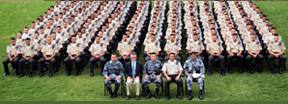
IntroductionMozambique’s decades long civil war ended, the economy improved, and the crime rate went down. President Joaquim Alberto Chissano attributes the war’s demise and these other positive trends largely to the Transcendental Meditation® (TM®) and TM-Sidhi® programmes. He and other Mozambique governmental leaders are convinced that these changes occurred because members of the Mozambique Armed Forces and police school students practiced the TM programme. The core of the TM programme is a simple meditation technique. Physicist and Vedic scholar Maharishi Mahesh Yogi founded the organization that teaches this practice. Today even more members of the Mozambique military are learning to practice this non-religious technique for about twenty minutes twice a day. Worldwide, over five million people have learned the technique. After the General Peace Agreement was signed in 1992, Maharishi Vedic University presented the TM programme to the Mozambique government as a scientifically validated means of creating order and quelling further conflict. To maintain its fragile peace, the Joint Chiefs of Staff of Mozambique implemented the TM programme in different military units of Ground, Naval and Air Forces. [i] In all, more than 16,000 people learned the TM programme, and practiced it daily in large groups. Additionally, more than 3,000 went on to learn the more powerful TM-Sidhi programme, including Yogic Flying. The goal was to achieve the Maharishi Effect, a phenomenon in which the number of people practicing the programme reaches a critical mass, creating coherence, peace and harmony throughout the nation. After the programme was underway in 1993, positive trends were noticed. Peace was maintained. Crime, which is normally expected to increase at the end of a war, actually decreased, as predicted by Maharishi Effect scientists. The next year, the military began to be demobilized. Lt. General Tobias Dai, then Commander of the Armed Forces (now the Defence Minister), noticed a sudden change. “What is very clear is that once the positive effect is created, if group practice is stopped, the previous tendencies of higher collective stress, as determined from the crime indexes and the tense situations in the country, began to rise again. In 1994, there was a remarkable decrease in coherence in the country as a result of decreased participation in the group practice of the Transcendental Meditation and TM-Sidhi Programmes…”[ii] Dai attributed the dip in coherence to the demobilization of the troops and anticipated ending of TM courses for future police officers. Dai also said in 1994 that “until now, although with several difficulties, the maintenance of peace has been possible during these 2 years, and free and just elections have been carried out…”[iii] Coherence-creating groups of meditators were re-created. A year later, the U.S. National Defense Council Foundation dropped Mozambique from the list of conflicts in the world, [iv] and stability has since been sustained. In the beginning, conventional military strategists scoffed at Mozambique’s novel strategy. However, today, due to success on many fronts, other militaries may be attracted to the new technology. After all, many of today’s “tried and proven” military technologies were yesterday’s pipe dreams. For instance, although the breech-loading rifle was far superior to muzzle loaders, it took years for armies to adopt them. Few leaders thought that Billy Mitchell could sink battleships with flying machines made of wood, cloth, and baling wire. Military history has shown that new scientific technologies can give a strategic advantage, even at a distance. For instance, the radar “shield” deployed in England during World War II maximized the fighting power of the under-sized Royal Air Force. These examples show why the Italian airpower advocate General Giulio Douhet’s strategy still applies today: “Victory smiles upon those who anticipate the change in the character of war, not upon those who wait to adapt themselves after the changes occur” [v] The quest to develop superior weapons technology has been fueling an arms race for centuries. Now another revolutionary change in the character of war could be on the horizon. In the tradition of military pioneers, military leaders might be well advised to anticipate the changes that could occur after widespread implementation of this promising human resource-based technology. There are three important components to any discipline: the observer, the process of observation, and the observed. Unlike conventional military science, Maharishi’s Supreme Military Science places emphasis on the observer. Its goal is to develop the full potential of each individual military professional. This emphasis is unique. Although conventional military training involves physical conditioning to increase performance, it does not train military personnel to develop their full potential. Instead of striving to increase human performance, militaries devote their attention largely to increasing destructive power, accuracy, and delivery speed of weaponry. This oversight presents today’s warriors with extra challenges. High-technology weaponry demands that military personnel perform at their optimum. All ranks must be in top mental as well as physical condition. Experience has shown that victory depends on taking the right action with appropriate speed and accuracy. Their minds need to remain strong and clear even when duty requires strenuous and protracted hours. Frequently, decisions must be made instantly, on an intuitive level. If these decisions and actions are incorrect, the consequences can be tragic whether in a fighting or deployed in operations other than war. For all these reasons, today all members of the armed forces are stretched in the limits of human performance. The challenge to maintain broad comprehension, perfect mind-body coordination, and lively intelligence under difficult circumstances has increased for modern military professionals. Stress is likely to be the most significant underlying factor. Stress is increasing for many reasons. For instance, “[t]he nature of warfare is changing. Lengthy military commitments designed to win conflicts are being replaced by short-term deployments intended to prevent them.” [vi] The military particularly in the United States is being called upon to maintain effectiveness despite cutbacks. [vii] Therefore, it will be necessary in such cases for already-stressed, overworked personnel to continue to do more with less. [viii] The demand for back-to-back deployments and station tenures leads to increased divorce and marital discord, and the use of tobacco, alcohol and drugs. Such manifestations of stress reduce the fitness, effectiveness and operational readiness of individuals. Increased stress in the military may take its toll in other ways. For instance, a U.S. Army survey suggests that spousal abuse is occurring in one of every three Army families each year–double the civilian rate. [ix] The Pentagon’s Readiness Task Force admits that stress is taking a heavy toll on service members and has contributed to a jump in suicides in the military. [x] Obviously, reducing or even eliminating stress and the associated performance-limiting behaviors contributes to greater individual performance and to successful military campaigns. Most hardened combat veterans as well as inexperienced troops realize that if they could be free from stress and strain they would perform more dynamically. Published research suggests that stress can be reduced through the practical components of Maharishi’s Supreme Military Science.[xi] These components involve application of simple, mental procedures known as the Transcendental Meditation (TM) and TM-Sidhi programme. The TM technique originates from the Vedic tradition. More than four million people worldwide have learned the TM technique. The goal of practicing the TM programme is not to become a passive individual but to eliminate stress and its performance limiting consequences, in part through providing a unique deep state of rest. Rest is the basis for more successful dynamic activity. Part I. Individual Benefits Provided by Maharishi’s Supreme Military ScienceThe TM programme has been adopted to reduce stress in military, governmental and other institutional settings.[xii] [xiii] [xiv] [xv] [xvi] [xvii] [xviii] For example, over 26,000 military police in a number of Brazilian states learned the TM technique between 1987 and 1988. In a study involving 6,300 military police in the State of Bahia, Brazil disciplinary measures decreased 69% for officers and 35% for cadets after learning the technique. [xix] [xx] Doctor’s visits also decreased–26% for officers and 55% for cadets. Also, community relations improved. For instance, the number of positive reports received by the military police department from the citizens of Salvador, Brazil increased 1,206% after officers were instructed in the TM programme. A study conducted on 289 cadets at the Police Academy of Piauí, Brazil showed significant improvements in behavior, attitude, health, and academic performance after learning the TM technique. [xxi] In a more direct test of the effects of the programme on performance, Sandahl, [xxii] of the National Defence Research Institute in Karlstad, Sweden, conducted a study on 15 applicants who were rejected for pilot training with the Royal Swedish Air Force (RSAF). The potential pilots were rejected by the RSAF drafting committee because of inadequate performance on the Defense Mechanism Test (DMT) but were considered suitable otherwise. Subsequently, eight of the applicants practiced the TM programme for 18 months and showed a significant improvement in DMT scores compared to a non-meditating control group. Sandahl proposed that the reduced neuroticism resulting from regular practice of the programme reflected a decrease in hidden mental turbulence, leading to better performance. Tests on other stress-related problems have been equally promising. For instance, American Vietnam War veterans suffering from post-traumatic stress disorder were randomly assigned either the TM technique or psychotherapy alone. [xxiii] The veterans who practiced the technique showed significant improvement on eight measures: alcohol problems, emotional numbness, insomnia, anxiety, post-Vietnam Stress disorder, family problems, depression, and employment record. The veterans who participated in psychotherapy alone did not show significant improvement. The practitioners of the TM technique also showed a more rapid physiological recovery from a stressful stimulus, as gauged by habituation of the skin resistance response. A number of other studies have found beneficial effects of the TM program on stress-induced neuroendocrine dysfunctions that contribute to cardiovascular and other chronic diseases (see for review [xxiv]). Also, over 24 studies have shown that the TM program fosters significant reductions in substance abuse, such as tobacco, alcohol, and all types of illegal and prescribed drugs (see for review [xxv] [xxvi] [xxvii]). Aside from these studies of stress-related change, there are other studies documenting benefits of the TM programme that could give military personnel the edge in battle. For example, a study by Reddy, Bai, and Rao showed that speed, agility, reactions, coordination, endurance, and perception improved after learning the TM programme. [xxviii] In other studies, three months of practicing the TM technique resulted in subjects showing significantly increased field independence (i.e., increased ability to focus, increased stability of spatial orientation, broader comprehension, increased resistance to distraction) compared to controls. [xxix] [xxx] Other research has measured a greater ability to assimilate and structure experience [xxxi] [xxxii] improved memory and learning ability,[xxxiii] [xxxiv] increased creativity, [xxxv] [xxxvi] and greater autonomic stability. [xxxvii] [xxxviii] Other effects include enhanced neurological efficiency,[xxxix] faster choice reaction time,[xl] improved self-confidence, [xli] increased self-reliance, [xlii] and greater inner control. [xliii] Holistic growth has been indicated by psychophysiological means such as increases in global EEG coherence,[xliv] and through psychological tests of intelligence, [xlv] moral reasoning, [xlvi] and personality. [xlvii] The aforementioned research suggests a military that adopts this proven human resource technology would be at an advantage on the battlefield. However, this strategic advantage over an adversary would not in itself intimidate the opponent. The next section will explain how combat could be reduced through this consciousness-based technology. Part II. Benefits to Society Provided by Maharishi’s Supreme Military ScienceMilitary Might Incites Fear in Friends as well as Foes“Peace through strength” has been a popular military strategy. Unfortunately, a strong military projects a threatening image, even when deployed for humanitarian missions. This was evident during the peacekeeping operation in Somalia. The military was invited in as a friendly force to restore order. Later, the outside military forces were reviled and persecuted by many civilians who had earlier pleaded for their help delivering and safeguarding their lives, food, and supplies. There is a Need for New Strategies of PreventionThe survival and progress of a nation depend on the effectiveness of its national defence. However, it is clear today that even with the world’s best military equipment and preparedness, the current defence paradigm is unable to totally protect any nation. Regardless of military strength, no nation today enjoys total freedom from the fear of politically motivated violence. Fighting in the family of nations influences every nation. Even if it is not directly a participant in hostilities, a response of fear and hatred is generated. This leads to military budget increases, stockpiling of armaments, and arousal of suspicions. In theory, since World War II, deterrence or fear-based strategies have been used to protect and promote peace. Apparently, this strategy has not worked. [xlviii] According to figures produced by the Hamburg University Research Unit on Wars, Armament, and Development (AKUF), over 186 wars have occurred since 1945. [xlix] In 1994 there were thirty-one major armed conflicts in twenty-seven locations around the world. [l] The Stockholm International Peace Research Institute (SIPRI) also claims that there were thirty major-armed conflicts in 1995. [li] That same year the U.S. National Defense Council Foundation conservatively counted a record seventy-one conflicts world-wide. [lii] In 1996, SIPRI counted twenty-seven major armed conflicts world-wide. [liii] It documented twenty-five major armed conflicts in 1997, [liv] and twenty-seven major armed conflicts in 1998 as well as in 1999. [lv] Although most of these conflicts were civil wars or ethnic hostilities, thousands of lives have been lost. However, a new strategic paradigm may be emerging. Prevention-oriented strategies are influencing military strategists. This trend parallels the increasing emphasis on prevention-oriented medicine by American Health Maintenance Organizations because it is wiser, and it costs less, to prevent illness from arising in the first place than to cure it after it occurs. This prevention orientation is beginning to affect the thinking of government and military leaders. Former U.S. Secretary of Defense William Perry spearheaded this movement when he said to a gathering at Harvard University:
Perry also emphasized that preventive defence is forward looking, not passive or philanthropic. He is quoted as saying: “It’s about hard work and ingenuity today, so that we don’t have to expend blood and treasure tomorrow” [lvii] The research being reviewed here suggests the preventive approach need not be “hard work” if the right tool is used. Studies by over 50 investigators from 17 universities and research institutes support the idea that the military could utilize the technologies available in Maharishi’s Supreme Military Science to prevent an enemy from arising. In order to comprehend how this could be done requires understanding the apparent source of war–stress in collective consciousness of society. Concept of Collective ConsciousnessTo understand the concept of collective consciousness a military example may be useful. Military units such as battalions, divisions, squadrons, wings, fleets, battlegroups, etc. are social structures. Each unit exhibits its own varying degree of orderliness and harmony that produces its own collective spirit or morale. Throughout history high morale has been a powerful strategic asset. This is especially true concerning the society the military protects. For example, contrast the morale of the U.S.A. during World War II with the lack of it during the Vietnam conflict. Similarly, Maharishi’s Supreme Military Science views society’s “morale” as an aspect or manifestation of collective consciousness, a potential strategic asset. The collective consciousness of society is proposed to be the sum of the influences created by its individual members. This collective consciousness, in turn, affects the thoughts and feelings of those same individuals. Stress in Collective Consciousness Starts WarsMaharishi’s Supreme Military Science propounds that the outbreak of collective violence or warfare is due to the build-up of stress and tension in society’s collective consciousness. If the collective consciousness is full of tension and fear, then disorder is more liable to erupt than if the prevailing mood is one of contentment. Social injustice and unfavorable economic conditions thrive in as well as contribute to chaotic environments. Unresolved religious, territorial, political, and cultural differences further contribute to unrest. Thus, the frustrated and dissatisfied population of any country contributes to its instability. The build up of this sort of friction in the nation becomes dangerous to its sovereignty, producing an unstable government that is more prone to war. The social unrest and political instability contributed to the coming to power of Adolf Hitler. Disorder can take the form of civil strife or of conflict with neighboring countries. If a war between nations, a civil war, or even a coup d’état, occurs, the possibilities of escalation may increase because, frequently, other groups or nations are tempted to take advantage of the situation. For instance, after war had broken out in Europe, Japan sought to gain new footholds in other territories besides China during World War II. Unmitigated crises before, and the reign of terror during, both World Wars are among many historical examples of collective stress driving social disorder and spilling out into nearby nations. The Maharishi Effect–1% and Square Root of 1% FormulasOver the years, many published, peer-reviewed studies have presented evidence that the practical components of Maharishi’s Supreme Military Science–the practice of the Transcendental Meditation and TM-Sidhi programme singly or in groups creates an upsurge of harmony and orderliness in society. [lviii] These changes have been theorized to occur through raising the coherence in collective consciousness. [lix] [lx] [lxi] [lxii] [lxiii] [lxiv] [lxv] [lxvi] [lxvii] [lxviii] [lxix] [lxx] [lxxi] [lxxii] [lxxiii] The societal changes such as reductions in war deaths, improvements in economic conditions, and reductions in crime, violence, accidents, and illness that the studies have shown occurred when the number of practitioners of the TM programme reached about 1% of the population in the area under study (usually a city). Studies involving participants in the more advanced TM-Sidhi programme show similar results when approximately the square root of 1% of the population practiced the technique in a group. These coherence-creating effects were predicted by Maharishi over thirty years ago. His prediction was based partly on the description of a strategic shield of “national armor” called “rashtriya kavach” described in the Vedic literature. [lxxiv] Later, scientists who validated his prediction named the phenomenon the Maharishi Effect in his honor. Today a growing number of physicists support the validity of the Maharishi Effect. The basic principle underlying this effect is often observed in physical energy systems. Invisible ShieldPhysics has identified certain internally coherent systems, such as superconductors that have the ability to shield themselves from disruptive influences. While the more usual, incoherent systems are easily penetrated by disorder from outside. One example of such an invisible or “invincible” shield is called the Meissner Effect. It takes place at the quantum level of superconductivity. In a superconductor, the coherent collective functioning of the electrons spontaneously excludes an external magnetic field. This system maintains its impenetrable status because no random or chaotic activity can take place within it. On the other hand, this phenomenon of invincibility does not occur in ordinary electrical conductors because the random activity of the incoherent and disordered electrons allows penetration by an external magnetic field.
Physics Describes the Unified FieldHistorically, the most effective means to counter a potential enemy’s military technology is to make that technology obsolete. The state-of-the-art weaponry of any age invariably harnesses more powerful and profound laws of nature. Maharishi Effect technology appears to operate from what modern physicists describe as the ultimate source of power–the unified field of all the laws of nature. Theoretical physics during the past decade has evolved to a progressively more unified understanding of the basic laws of nature, culminating in the recent discovery of completely unified field theories. These theories locate a single field of intelligence at the basis of all matter and force fields in the universe. In this field, all the known fundamental forces of nature: the weak force, the strong force, the electromagnetic force, and gravitation are unified. [lxxv],[lxxvi] Could the Unified Field be Harnessed as a Military Technology?Could this field of intelligence be tapped? Most modern scientists are puzzled by the concept of consciousness and the mind’s relationship to physics. In ancient cultures from time immemorial there was no puzzle: a coherent human mind contacts deeper levels of creation. Today, world-renowned physicists and others theorize that consciousness sprouts from the quantum mechanical level the most abstract level, the unified field. [lxxvii] [lxxviii] [lxxix] If this is correct, then the mind inherently operates at these subtle and powerful levels of nature. The results of tests of the Maharishi Effect discussed below are too far-reaching to be explained by field effects associated with any of the four basic forces of nature. For this reason, scientists involved in these studies are convinced the Maharishi Effect must operate on the most profound and powerful level–the unified field of all the laws of nature. [lxxx] [lxxxi] [lxxxii] Selected Maharishi Effect ResearchOver 50 studies suggest that by taking full advantage of the Maharishi Effect militaries could quickly create more peaceful collective consciousness in society and reducing warfare, crime, violence, and other forms of negative social behavior (For a review see [lxxxiii]). In the following paragraphs, several of these studies are reviewed. A study that was conducted in the town of Baskinta, Lebanon found that when 1% of the people were taught the Transcendental Meditation technique the number of war casualties and crises decreased significantly as compared to four towns near Baskinta with comparable demographics. [lxxxiv] There had been an average of two incoming artillery shells per day in Baskinta during the previous two years. After becoming a 1% city, the shelling stopped for the following two years even though the rate continued to climb in the five control cities with comparable demographics. Differences between Baskinta and the control villages reached a significance of p<.005. The results of this study were predicted in advance, strongly suggesting a causal influence for the Maharishi Effect in reducing conflict. In other studies, Davies [lxxxv] and later Davies & Alexander [lxxxvi] looked at how the war in Lebanon was affected by seven large assemblies that had reached the theoretically sufficient number of TM-Sidhi practitioners. The results of applying Maharishi Effect technology were striking (i.e., a 71% reduction in war deaths, a 68% reduction in war injuries, and a 48% reduction in the overall level of conflict) and cooperation among antagonists increased 66% [p<.00001 for each variable]. These data were obtained by a trained Lebanese rater, blind to the purpose of the experiment, who reviewed reports from eight international news sources and the regional Foreign Broadcast Information Service. These figures were found to be uninfluenced by controlling for holidays, announced events, seasonality, or other trends using a dependent time series analysis. Also, combined analysis of the data from these seven assemblies would normally be expected to show a statistical effect of diminishing the demonstrated results. Combining the results of all seven assemblies gave an extraordinary probability outcome (p<10 -19), consistent with the assumption that substantive and replicable variations were being assessed. Therefore, this study presents strong evidence that Maharishi Effect technology is a reliable means to reduce enmity, instability and violence on a national scale.
In this study, a Maharishi Effect group was established in Israel in the summer 1983. The number of participants varied daily from a low of 65 to a high of 241. Time series analysis and transfer function analyses were simultaneously used. The results were compared on six variables, and three composite quality of life indicators. Specific predictions of study outcomes were made in advance and lodged with an independent review board of experts. [lxxxviii] The board also approved the statistical methods in advance of the study. Results indicated that War intensity dropped 45% (p<.0045), War deaths dropped 76% (p<.02) from a mean of 40 deaths per day to 9.7 per day. Crime in Israel dropped 12% (p<.0016) from a mean of 608 per day to 535 per day. Crime in Jerusalem dropped 8.8% (p<.023) from a mean of 46.7 per day to 42.6 per day. Fires dropped 30% (p<.045) from a mean of 8 per day to 5.6 per day. Auto accident fatalities fell 34% (p<.024) from a mean of 3.9 per day to 2.5 per day. Taken together, quality of life improved by 1.3 standard deviation units in Israel (p<.0001), by .75 in Lebanon (p<.02) and by .94 in Jerusalem (p<.003). Evidence indicates that the technology of the Maharishi Effect generates cooperation and friendliness rather than suspicion and hatred. A study by Orme-Johnson, Dillbeck, Bousquet & Alexander [lxxxix] revealed that when TM-Sidhi groups went to 5 world trouble spots–Lebanon, Iran, Rhodesia (Zimbabwe), Kampuchea, and Nicaragua–where they did nothing other than to practiced the TM-Sidhi programme together in groups for 10 weeks, violence and disorder rapidly decreased in each country. During the stay there was significant local progress towards peace. After their departure, situations worsened. For the entire year (1978) 14,567 events were recorded in the Conflict and Peace Data Bank (COPDAB), the world’s largest such resource. Contingency table analysis of COPDAB data compared to a 10-week control period, a 1-year baseline, and a 10-year baseline showed significant improvement in each case. Time series analysis showed the project had a strong and statistically significant effect world-wide. Compared to a ten-week baseline, world-wide trends improved. Hostile acts between countries as well as between factions within the trouble spots decreased 16.7% (p<.002). Cooperative events, as a proportion, rose nationally by 13.2% (p<.007). Also, the type of events reported shifted significantly, from military (i.e., wars, guerrilla raids, troop deployment, security pacts, defence treaties, etc.), to non-military issues (i.e., culture, economy, political order, law, environment, etc.), with an increase of 21.8 percentage points in non-military issues. This finding could be interpreted as a shift in the society’s collective consciousness from an emphasis on destruction to an emphasis on more societal cooperation. Other evidence suggests it may not be necessary to send military coherence creating groups to the “hot spots” around the world, if the TM-Sidhi groups are sufficiently large. Orme-Johnson, Dillbeck, Alexander, Chandler & Cranson, [xc] found that three large assemblies (approaching 7,000, roughly the square root of 1% of world’s population) of practitioners of the Transcendental Meditation and TM-Sidhi programme decreased international conflicts (p<.025, p<.005 and p<.01 for each of the three assemblies) and international terrorism (p<.025) on three occasions during 1983-85. Time-series analysis using objective data on terrorism obtained from the Rand Corporation ruled out the possibility of spurious correlations due to trends and cycles in the data. Other known variables that might affect the process were also controlled for. Coherence of Brain Function a Probable Mechanism? The complete understanding of how meditating individuals or groups can create such “effects at a distance” requires more study. However, preliminary research has utilized neurophysiological and biochemical approaches to gain some insights into possible mechanisms involved. For example, increased brain wave (EEG) coherence during meditation has been correlated with higher IQ and moral reasoning. These changes in the levels of coherence occur when different parts of the brain work together in synchrony (for a review see [xci]). When large groups collectively practice the more advanced TM-Sidhi programme, increases in EEG coherence are produced in subjects far removed from the group. One experiment showed an increase in “intersubject” EEG coherence (the coherence of brain waves between different individuals) one thousand miles from the group. [xcii] A biochemical study has shown that on days when large numbers of people practiced these techniques, both practitioners and non-practitioners in the local area exhibited higher availability of serotonin, a neurochemical associated with well-being or happiness. [xciii] Low serotonin is known to play a role in human aggression and hostility. Coherent Physical SystemsMaharishi also predicted the coherence-creating effects of the Transcendental Meditation and TM-Sidhi programme on social systems before scientific studies supported his prediction. He based his prediction not only on ancient knowledge, as mentioned earlier, but also on discussions with physicists about coherent physical systems such as the laser. Laser light is more powerful than conventional light because it is more orderly and coherent. Apollo astronauts on the moon could see laser light shone from the earth at levels as low as 15 watts. [xciv] Fifteen watts is about the energy output of a night-light! However, these astronauts could not see the millions of watts of conventional light illuminating New York City at night. What made the difference? The intensity of normal light is emitted in direct proportion to the number of atoms involved. Excited atoms emit photons as they return to the ground state. Light is emitted in different directions at various frequencies creating what physicists call “incoherent light,” all mixed up. In a laser, however, a type of collective behavior emerges that is distinguished by its orderliness. The atoms are perfectly correlated with each other and no longer act independently. They operate together as one coherent and complete system. The result is that the intensity of the light emitted by a number of atoms, N, is increased tremendously, actually in proportion to N squared. If 100 atoms are perfectly in phase with one another in the laser, they will radiate with an intensity of 1002, or 10,000 times that of a single atom.
A similar coherence-creating effect is thought to be created during group practice of the TM-Sidhi programme. The influence of this coherence radiates from the group to society. A simple analogy can be used to explain it. Imagine a large tank of water that is filled with floating corks all at rest. Grasping and bobbing just one of the corks up and down in the water creates waves. These waves spread and in turn cause the other corks to start bobbing. The Maharishi Effect, the First Truly Defensive Defence SystemThe Maharishi Effect appears to strike at the most fundamental strategic point–the level where enemies arise–stress in collective consciousness. If enemies are not born there are no battles. Warfare and violence become obsolete. For this reason, Maharishi’s consciousness-based strategy may be the first truly defensive system for maintaining peace. At least militarily speaking, if a nation has no enemies it is invincible. It remains “friends” with everyone, ensuring security. History shows national invincibility is not possible through weapons or material defences alone because newer and better weapons can always be developed. Invincibility is gained, however, if all other nations are our allies. If a Maharishi Effect shield really works, as studies so far suggest it does, “Prevention Wings” of experts in this technology deployed in every nation could create a permanent shield of friendliness that would surround and protect the nation. For these simple but profound reasons, the strategic advantage that might be gained by implementing such a consciousness-based technology as an addition to existing defence systems is much greater than it might at first appear. As with any other technological breakthrough, concepts change only as the practical benefits become clearly manifest. Anticipating the Change in the Character of WarThe concept of using a military’s collective consciousness to radiate coherence and eliminate stress is hardly a widely accepted military strategy in today’s arena of military might. Defensive radar systems routinely radiate electromagnetic waves over a hundred miles, but the idea that human minds might radiate a peaceful influence which might be used to create a defence system is novel. Most people today view the human mind or consciousness as being trapped inside the head. It will take a leap of understanding for most leaders to adopt the strategy of improving collective consciousness as an effective way of preventing conflict before it has arisen. Maharishi’s Supreme Military Science Technology maybe the Most Cost-Effective, Innovative, and Humane Defence System Available.In a time of increased responsibility, increased costs of military hardware and declining military budgets in most countries, the technology discussed here is unique in its promise for meeting multiple laudable goals. First, a Prevention Wing is cost-effective. Considering the hundreds of billions of dollars spent worldwide on defence the cost of implementing this technology is minor. Once convinced, militaries adopt the latest technologies to accomplish their missions. Research suggests that this human resource technology is the most advanced and practical means to defend a nation. It is simple to implement and produces immediate results. The research suggests that any nation’s military can cheaply and quickly create global defence and a lasting peace. Furthermore, the technology is completely humane–it promotes progress and positive evolutionary trends both within the nation and in surrounding nations. Avert the Danger Before it ComesThe post-USSR world has proven to be a more dangerous place than one might have imagined. There are no well-defined opponents. Wars will be less predictable. [xcv] Nuclear weapons from the former Soviet arsenal are allegedly available on the world black market.[xcvi] Biological weapons popularly called “poor man’s nukes” are even easier to acquire. [xcvii] Current military strategies are not well designed for the possibility of even one of these winding up in the hands of rogue elements such as terrorists. New defence technologies must be evaluated and implemented to deal with such threats. Further field-testing the potential of a military prevention wing to avert dangers that have not yet come could be accomplished quickly, inexpensively, and conclusively. Such tests of coherence-creating effects of the TM and TM-Sidhi programme, and its ability to reduce collective societal stress, could be replicated in countries large and small throughout the world. History indicates the effect of introducing such “coherent systems” could prevent hostilities. Warriors since Sun Tzu have championed the idea that the supreme art of war is to win without fighting. If such prevention wings of the military continue to be successful, as they appear to have been in Mozambique, they could drastically change the character of military intervention even beyond the dreams of Douhet and Sun Tzu. In the tradition of military pioneers, today’s military leaders might consider creating their own coherence-creating groups. President Chissano of Mozambique has expressed his willingness to endorse his experiences to any government or head of state who inquires. He relates his and his countrymen’s experiences as follows, “First I started the practice of Transcendental Meditation myself, then introduced the practice to my close family, my cabinet of ministers, my government officers, and my military. The result has been political peace and balance in Nature in my country. People ask me if this is a religion. I have explained to them that I may keep my religion but I should take advantage of this science and make maximum use of it….We will not stop praying in our churches, we will not stop praying in our mosques, we will not stop praying in our synagogues, but we will make an appeal to the support of Nature through the application of this technology (of consciousness).” [xcviii] Acknowledgements:The authors very much appreciate the assistance of Lee Leffler in the proofing of this paper and Dr. Kurt Kleinschnitz, Tom Blair and Denise Rusch in the preparation of the graphs. We are indebted to Navy SEAL Ensign Daniel K. Burke, U.S. Naval Reserve (Ret.), Major Barry Cave, USA (Ret.), Lt. Col. Carl Churchill, USA (Ret.), Ron Khare, Lt. Col. Richard Neate, USAF (Ret.), Lt. Col. David Niles, USA (Ret.), Commander Fred Therrien, USN (Ret.), Dr. Robert Herron, Dr. Michael Dillbeck and Dr. Susan Vegors for contributing their expert knowledge.
End Notes:® Transcendental Meditation, TM, and TM-Sidhi are registered in the U.S. Patent and Trademark Office as service marks of the Maharishi Foundation Ltd. and are used under license.
[i] Invincibility for Every Nation and Lasting World Peace, Maharishi University of Management, The Netherlands, 1999, (available from Maharishi Global Administration through Natural Law, Station 24, 6063 NP Vlodrop, The Netherlands.
[ii] Ibid., p. 19.
[iii] Ibid., p. 19.
[iv] Messing, Jr., F. A., “National Defense Council Foundation World Conflict List,” (Alexandria, Virginia: National Defense Council Foundation, 31 Dec 95), pp. 1-6.
[v] Douhet, G. The Command of the Air, translated by Dino Ferrari. U.S. Government Printing Office, USAF Office of History, Washington, D.C., 1983, p. 30.
[vi] Adelsberger, B. Why stress is a threat–Peacekeeping missions add a new dimension. Air Force Times, May 27, 1996, p. 10.
[vii] Auster, B.B. Stretched thin–America’s shrinking military: overworked and over there. U.S. News World Report, July 25, 1994, pp. 22-23.
[viii] Hudson, N. & Matthews, W. Deployed and feeling strain stress taking a toll on readiness, says Pentagon study. Navy Times, August 15, 1994, p. 3.
[ix] Thompson, M. The living room war. Time, May 23, 1994, pp. 48-51.
[x] Hudson, N. & Matthews, Ibid.
[xi] Maharishi Mahesh Yogi, Maharishi’s Absolute Theory of Defence (Maharishi Vedic University, India: Age of Enlightenment Publications, 1996).
[xii] Haratani, T. & Henmi, T. Effects of Transcendental Meditation (TM) On Mental Health of Industrial Workers, Japanese Journal of Industrial Health, 1990, 32(7), 177.
[xiii] Haratani, T. & Henmi, T. Effects of Transcendental Meditation (TM) On Mental Health of Industrial Workers, Japanese Journal of Public Health, 1990, 37(10), 729.
[xiv] Orme-Johnson, D.W. Medical Care Utilization and the Transcendental Meditation Program, Psychosomatic Medicine, 1987, 49(1), 493-507.
[xv] Ottoson, J.O. Transcendental meditation, Socialstyrelsen, 1977, D: nr SN 3-9-1194/73 (National Health Board of Sweden).
[xvi] Suurküla, J. The Transcendental Meditation Technique and the Prevention of Psychiatric Illness. In Scientific Research on the Transcendental Meditation Program: Collected Papers Vol. 2, edited by R.A. Chalmers, G. Clements, H. Schenkluhn, & M. Weinless, Maharishi International University Press, Vlodrop, The Netherlands: 1977, pp. 896-897.
[xvii] Herron, R.E., Hillis, S.L., Mandarino, J.V., Orme-Johnson. D.W., & Walton, K.G. The Impact of Transcendental Meditation on Government Payments to Physicians in Quebec, American Journal of Health Promotion, 1996, 10(3), 208-216.
[xviii] Herron, R.E. & Hillis, S.L. The Impact of Transcendental Meditation on Government Payments to Physicians in Quebec: An Update, American Journal of Health Promotion, 2000, 14(5), 284-291.
[xix] Military Police Center for Education and Training, Salvador, State of Bahia, Brazil, 3 Feb. 1988, AJ/59/02/83.
[xx] Schuler, Markus (Project Director). Stress Prevention Program. Maharishi Institute of Health and Ayur-Ved, Sao Paulo, Brazil, 1989, (Videotaped Documentary).
[xxi] Government of State of Piauí, Brazil, Military Police General Command 14 Dec. 1987, 037-PM-3187.
[xxii] Sandahl, F.P. The effect of the practice of TM on the degree of neuroticism as measured by the Defense Mechanism Test. In Scientific Research on the Transcendental Meditation Program: Collected Papers Vol. 3, edited by R.A. Chalmers, G. Clements, H. Schenkluhn, & M. Weinless, Maharishi International University Press, Vlodrop, The Netherlands: 1978, pp. http://web.archive.org/web/20010202153900/http://hem.spray.se/ltmsv/DMTeng.htm2028-2033.
[xxiii] Brooks, J.S. & Scarano, T. Transcendental Meditation in Treatment of Post-Vietnam Adjustment. Journal of Counseling and Development, 1985, 65, 212-215.
[xxiv] Walton, K.G., & Pugh, N.D.C. Stress, steroids, and ‘ojas’: neuroendocrine
mechanisms and current promise of ancient approaches to disease prevention.
Indian Journal of Physiology and Pharmacology, 1995, 39, 3-34.
[xxv] Gelderloos, P., Walton, K.G., Orme-Johnson, D.W. & Alexander, C. Effectiveness of the Transcendental Meditation program in preventing and treating substance misuse: A review. International Journal of the Addictions, 1991, 26, 293-325.
[xxvi] Alexander, C.N., Robinson, P. & Rainforth, M. Treating and Preventing Alcohol, Nicotine and Drug Abuse through Transcendental Meditation: A Review and Statistical Meta-Analysis. Alcoholism Treatment Quarterly, 1994, 11(1+2), 13-87.
[xxvii] O’Connell, D.F. & Alexander, C.N. (Ed.) Self Recovery: Treating Addictions Using Transcendental Meditation and Maharishi Ayurveda. Hayworth Press, Inc. New York, 1994, pp. 1-524.
[xxviii] Reddy, M.K., Bai, A.J.L. & Rao, V.R. The effects of the Transcendental Meditation program on athletic performance: A.P. Sports Council, Lal Bahadar Stadium, and Nilouffer Hospital Hyderabad, Andhra Pradesh, India. In Scientific Research on the Transcendental Meditation Program: Collected Papers Vol. 1, edited by D.W. Orme-Johnson & J.T. Farrow. Maharishi European Research University Press, Rheinweiler, West Germany, 1974, pp. 346-358.
[xxix] Pelletier, K.R. Influence of Transcendental Meditation upon autokinetic perception. Perceptual and Motor Skills, 1974, 39, 1031-1034.
[xxx] Pelletier, K.R. The effects of the Transcendental Meditation program on perceptual style: Increased field independence. In Scientific Research on the Transcendental Meditation Program: Collected Papers Vol. 1, edited by D.W. Orme-Johnson & J.T. Farrow. Maharishi European Research University Press, Rheinweiler, West Germany, 1977, pp. 337-345.
[xxxi] Shecter, H.E. A psychological investigation into the source of the effect of the Transcendental Meditation technique. Dissertation Abstracts International, 38(7), 3372B-3373B (Doctoral dissertation, York University, 1977).
[xxxii] Tjoa, A. Meditation, neuroticism and intelligence: A follow up. Gedrag: Tijdschrift voor Psychologie (Behavior: Journal of Psychology), 1975, 3, 167-182.
[xxxiii] Dillbeck, M.C. Meditation and flexibility of visual perception and verbal problem solving. Memory and Cognition, 1982, 10, 207-215.
[xxxiv] Miskiman, D.D. Performance on a learning task by subjects who practice the Transcendental Meditation technique. In Scientific Research on the Transcendental Meditation Program: Collected Papers Vol. 1, edited by D.W. Orme-Johnson & J.T. Farrow. Maharishi European Research University Press, Rheinweiler, West Germany, 1977, pp. 382-384.
[xxxv] Travis, F.T. The TM technique and creativity: A longitudinal study of Cornell University undergraduates. Journal of Creative Behavior, 1979, 13, 169-180.
[xxxvi] Shecter, Ibid.
[xxxvii] Orme-Johnson, D.W. Autonomic stability and Transcendental Meditation. Psychosomatic Medicine, 1973, 35, 341-349.
[xxxviii] Brooks & Scarano, Ibid.
[xxxix] Wallace, R.K., Mills, P.J., Orme-Johnson, D.W., Dillbeck, M.C. & Jacobe, E. Modification of the paired H reflex through the Transcendental Meditation and TM-Sidhi program. Experimental Neurology, 1983, 79, 77-83.
[xl] Cranson, R.W., Orme-Johnson, D.W., Dillbeck, M.C., Jones, C.H., Alexander, C.N. & Gackenbach, J. Transcendental Meditation and improved performance on intelligence-related measures: A longitudinal study. Personality and Individual Differences, 1991, 12, 1105-1116.
[xli] Fehr, T., Nerstheimer, U. & Törber, S. Study of personality changes resulting from the Transcendental Meditation program: Freiburger Personality Inventory. In Scientific Research on the Transcendental Meditation Program: Collected Papers Vol. 1, edited by D.W. Orme-Johnson & J.T. Farrow. Maharishi European Research University Press, Rheinweiler, West Germany, 1972, pp. 420-424.
[xlii] Turnbull, M.J., & Norris, H. Effects of Transcendental Meditation on self-identity indices and personality. British Journal of Psychology, 1982, 73, 57-68.
[xliii] Nidich, S.I., Seeman, W. & Dreskin, T. Influence of Transcendental Meditation: A replication. Journal of Counseling Psychology, 1973, 20, 565-566.
[xliv] Orme-Johnson, D.W. & Haynes, C.T. EEG phase coherence, pure consciousness, creativity, and TM-Sidhi experiences. International Journal of Neuroscience, 1981, 13, 211-217.
[xlv] Dillbeck, M.C., Assimakis, P.D., Raimondi, D., Orme-Johnson, D.W. & Rowe, R. Longitudinal effects of the Transcendental Meditation and TM-Sidhi program on cognitive ability and cognitive style. Perceptual and Motor Skills, 1986, 62, 731-738.
[xlvi] Nidich, S.I., Ryncarz, R.A., Abrams, A.I., Orme-Johnson, D.W. & Wallace, R.K. Kohlbergian cosmic perspective responses, EEG coherence, and the Transcendental Meditation and TM-Sidhi program. Journal of Moral Education, 1983, 12(3), 166-173.
[xlvii] Nidich, Seeman, & Dreskin, 1973, Ibid.
[xlviii] Associated Press, Record number of conflicts threaten peace, group says, Des Moines Register, January 3, 1996, p. 5.
[xlix] Hauchler, I. & Kennedy, P.M. Global trends–the World Almanac of Development and Peace. The Continuum Publishing Company, New York, 1994, p. 179.
[l] Stockholm International Peace Research Institute. SIPRI Yearbook 1995 Armaments, Disarmament and International Security. Oxford University Press, New York, 1995.
[li] Ibid., SIPRI Yearbook 1996
[lii] Ibid., Associated Press
[liii] Ibid., SIPRI Yearbook 1997
[liv] Ibid., SIPRI Yearbook 1998
[lv] Ibid., SIPRI Yearbook 1999 and SIPRI Yearbook 2000
[lvi] Pexton, P. Secretary stresses diplomacy as first step `preventive defense’ is what he calls it. Air Force Times., June 3, 1996, p. 20.
[lvii] Pexton, Ibid.
[lviii] The Maharishi Effect Creating coherence in world consciousness Promoting Positive and evolutionary trends throughout the world Results of scientific research 1974-1990. Maharishi International University Press, Fairfield, Iowa, 1990, pp. 1-90.
[lix] Assimakis, P.D. & Dillbeck, M.C. Times series analysis of improved quality of life in Canada: Social change, collective consciousness, and the TM-Sidhi program. Psychological Reports, 1995, 76, 1171-1193.
[lx] Cavanaugh, K.L. Time series analysis of U.S. and Canadian inflation and unemployment: A test of a field-theoretic hypothesis. Proceeding of the American Statistical Association, Business and Economics Statistics Section, 1987, pp. 799-904.
[lxi] Cavanaugh, K.L. & King, K.D. Simultaneous transfer function analysis of Okun’s misery index: Improvements in the economic quality of life through Maharishi’s Vedic Science and technology of consciousness. Proceedings of the American Statistical Association, Business and Economics Statistics Section, 1988, 491-496.
[lxii] Cavanaugh, K.L., King, K.D. & Ertuna, C. A multiple-input transfer function model of Okun’s misery index: An empirical test of the Maharishi Effect. Proceedings of the American Statistical Association, Business and Economics Statistics Section, 1989. pp. 565-570.
[lxiii] Cavanaugh, K.L., King, K.D. & Titus, B.D. In Proceedings of the Midwest Management Society, edited by R.G. Greenwood. Consciousness and the quality of economic life: Empirical research on the macroeconomic effects of the collective practice of Maharishi’s Transcendental Meditation and TM-Sidhi program. Midwest Management Society, Chicago, Illinois, 1989, pp.183-190.
[lxiv] Dillbeck, M.C. Test of a field theory of consciousness and social change: Time series analysis of participation in the TM-Sidhi program and reduction of violent death in the U.S. Social Indicators Research, 1990, 22, 399-418.
[lxv] Dillbeck, M.C., Banus, C.B., Polanzi, C. & Landrith III, G.S. Test of a field model of consciousness and social change: The Transcendental Meditation and TM-Sidhi program and decreased urban crime. Journal of Mind and Behavior, 1988, 9(4), 457-485.
[lxvi] Dillbeck, M.C., Cavanaugh, K.L., Glenn, T., Orme-Johnson, D. W. & Mittlefehldt, V. Consciousness as a field: The Transcendental Meditation and TM-Sidhi program and changes in social indicators. Journal of Mind and Behavior, 1987, 8(1), 67-104.
[lxvii] Dillbeck, M.C., Landrith III, G.S. & Orme-Johnson, D.W. The Transcendental Meditation program and crime rate change in a sample of forty-eight cities. Journal of Crime and Justice, 1981, 4, 25-45.
[lxviii] Gelderloos, P., Cavanaugh, K.L. & Davies, J.L. A simultaneous transfer function analysis of U.S.-Soviet relations: A test of the Maharishi Effect. Proceedings of the American Statistical Association, Social Statistics Section, 1990, pp. 297-302.
[lxix] Gelderloos, P., Frid, M.J., Goddard, P.H., Xue, X. & Löliger, S.A. Creating world peace through the collective practice of the Maharishi technology of the Unified Field: Improved U.S.-Soviet Relations. Social Science Perspectives Journal, 1988, 2(4), 80-94.
[lxx] Hagelin, J. S., Orme-Johnson, D. W., Rainforth, M., Cavanaugh, K., & Alexander, C. N. Results of the National Demonstration Project to Reduce Violent Crime and Improve Governmental Effectiveness in Washington, D.C. Social Indicators Research, 1999, 47, 153-201.
[lxxi] Hatchard, G.D., Deans, A.J., Cavanaugh, K.L. & Orme-Johnson, D.W. The Maharishi Effect: A model for social improvement. Time series analysis of a phase transition to reduced crime in Merseyside metropolitan area. Psychology, Crime and Law, 1996, 2(3) 165-174.
[lxxii] Orme-Johnson, D.W., Alexander, C.N., Davies, J.L., Chandler, H.M. & Larimore, W.E. International peace project in the Middle East: The effects of the Maharishi Technology of the Unified Field. Journal of Conflict Resolution, 1988, 32(4), 776-812.
[lxxiii] Orme-Johnson, D.W., Gelderloos, P. & Dillbeck, M.C. The effects of the Maharishi Technology of the Unified Field on the U.S. quality of life (1960-1984). Social Science Perspectives Journal, 1988, 2(4), 127-146.
[lxxiv] Maharishi Mahesh Yogi. Enlightenment to every individual: Invincibility to every nation. Maharishi European Research University Press, Rheinweiler, West Germany, 1978, pp. 49-50.
[lxxv] Hagelin, J.S. Is Consciousness the Unified Field? A field theorist’s perspective. Modern Science and Vedic Science, 1987, 1, pp. 28-87.
[lxxvi] Hagelin, J.S. Restructuring physics from its foundation in light of Maharishi’s Vedic Science, Modern Science and Vedic Science, 1989, 3, 3-72.
[lxxvii] Hagelin, 1987, Ibid.
[lxxviii] Hagelin, 1989, Ibid.
[lxxix] Hameroff, S. & Penrose, R. Consciousness events as orchestrated space-time selections. Journal of Consciousness Studies, 1996, 3(1), 36-53.
[lxxx] Hagelin, 1987, Ibid.
[lxxxi] Hagelin, 1989, Ibid.
[lxxxii] The Maharishi Effect, 1990, Ibid.
[lxxxiii] Kleinschnitz, K.W., Leffler, D.R. & Walton, K.G. An Alternative to Military Violence and Fear-Based Deterrence: Twenty-five Years of Research on the Maharishi Effect: https://davidleffler.com/1999/sapraalternative/).
[lxxxiv] Abou Nader, T. M., Alexander, C. N., & Davis, J. L. The Maharishi Technology of the Unified Field and reduction of armed conflict: A comparative, longitudinal study of Lebanese villages. In Scientific Research on the Transcendental Meditation Program: Collected Papers Vol. 4, edited by R.A. Chalmers, G. Clements, H. Schenkluhn, & M. Weinless, Maharishi International University Press, Vlodrop, The Netherlands, 1984, pp. 2623-2633
[lxxxv] Davies, J.L. Alleviating political violence through enhancing coherence in collective consciousness: Impact assessment analysis of the Lebanon war. Dissertation Abstracts International, 49(8), 2381A (Doctoral dissertation, Maharishi International University, 1988).
[lxxxvi] Davies, J.L. & Alexander, C.N. Alleviating political violence through enhancing coherence in collective consciousness: Impact assessment analyses of the Lebanon war. Paper presented at the 85th Annual Meeting of the American Political Science Association, August 1989, Atlanta, Georgia.
[lxxxvii] Orme-Johnson, Alexander, Davies, Chandler, & Larimore, 1988, Ibid.
[lxxxviii] Orme-Johnson, Alexander, Davies, Chandler, & Larimore, 1988, Ibid.
[lxxxix] Orme-Johnson, D.W., Dillbeck, M.C., Bousquet, J.G. & Alexander, C.N. An Experimental analysis of the application of the Maharishi Technology of the Unified Field in major world trouble-spots: Increased harmony in international affairs. In Scientific Research on the Transcendental Meditation Program: Collected Papers Vol. 4, edited by R.A. Chalmers, G. Clements, H. Schenkluhn & M. Weinless. Maharishi Vedic University Press, Vlodrop, The Netherlands, 1989, pp. 2532-2548.
[xc] Orme-Johnson, D.W., Dillbeck, M.C., Alexander, C.N., Chandler, H.M. & Cranson, R.W. Time series impact assessment analysis of reduced international conflict and terrorism: Effects of large assemblies of participants in the Transcendental Meditation and TM-Sidhi program. Paper presented at the Annual Conference of the American Political Science Association, Atlanta, Georgia, U.S.A., August 1989.
[xci] Alexander, C.N., Cranson, R.W., Boyer, R.W. & Orme-Johnson, D.W. Transcendental consciousness: A fourth state of consciousness beyond, sleep, dreaming, and waking. In Sleep and dreams: A sourcebook, edited by J. Gackenbach. Garland, New York, 1987, pp. 282-315.
[xcii] Orme-Johnson, D.W., Dillbeck, M.C., Wallace, R.K. & Landrith III, G.S. Intersubject EEG coherence: Is consciousness a field? International Journal of Neuroscience, 1982, 16, pp. 203-209.
[xciii] Pugh, N.D., Walton, K.G. & Cavanaugh, K.L. Can time series analysis of serotonin turnover test the theory that consciousness is a field? Society for Neuroscience Abstracts, 1988, 14, 372.
[xciv] Lofland, D. Thought Viruses, Harmony Books, New York, 1997, p. 5.
[xcv] Mills, G. A 21st Century Security Agenda: The End of “Defence” as We Know it? Strategic Analysis, 1997, XX(2), pp. 173-189.
[xcvi] G-2, Military, 1994, X(8), p. 2.
[xcvii] Chittaranjan, K. Biological Weapons: An Insidious WMD, Strategic Analysis, 1998, XXII(9), pp.1427-1443.
[xcviii] President Joachim Alberto Chissano, “The University of World Peace,” (available from Maharishi Vedic University, The Netherlands, Station 24, 6063 NP Vlodrop, The Netherlands. [Editor’s Note:] For more information see: Can Meditation Change the World? The amazing story of the ‘meditating president’ by Steve Taylor, Ph.D. in Psychology Today. Steve Taylor is a lecturer in psychology at Leeds Metropolitan University, UK. He is the author of Back to Sanity: Healing the Madness of the Human Mind. Eckhart Tolle has called his work “an important contribution to the shift in consciousness happening on our planet at this time.”
Other IDC articles: |
||||||||||||||||