

 The US newspaper The Day published an editorial by Captain Raymond E. Seebald, US Coast Guard (Ret.) and Dr. David Leffler on Sunday 28 March 2010. Their editorial begins as follows:”Wars start in the minds of men, and cycles of conflict ensue. So, too, can wars be prevented in the minds of men, but not always in the conventional way one might think. A new technology of defense has now emerged from a most unexpected quarter. . ” See: http://www.theday.com/article/20100328/OP05/303289899
Former Reagan/Bush Military Aide Published in US Newspaper On Invincible Defense
The US newspaper The Day published an editorial by Captain Raymond E. Seebald, US Coast Guard (Ret.) and Dr. David Leffler on Sunday 28 March 2010. Their editorial begins as follows:”Wars start in the minds of men, and cycles of conflict ensue. So, too, can wars be prevented in the minds of men, but not always in the conventional way one might think. A new technology of defense has now emerged from a most unexpected quarter. . ” See: http://www.theday.com/article/20100328/OP05/303289899Peer-reviewed Journal in Pakistan Published Paper on Invincible Defense Technology
A leading scientific journal in Pakistan, The Journal of Management & Social Science (JMSS), recently published a paper by Dr. David Leffler titled, “A New Role for the Military: Preventing Enemies from Arising – Reviving an Ancient Approach to Peace.” http://dx.doi.org/10.46745/ilma.jbs.2009.05.02.06 It indicates that the military application of the Transcendental Meditation technique has merit. Dr. Leffler discusses how militaries worldwide could use the Transcendental Meditation® and TM-Sidhi® program, founded by Maharishi Mahesh Yogi, as a non-religious and scientifically verified way to prevent war and terrorism. When used in a military context, these meditation practices are known as Invincible Defense Technology (IDT).
Military Application of Transcendental Meditation Gaining Acceptance
Military Application of Transcendental Meditation Gaining Acceptance
Paper on Invincible Defense Technology published in peer-reviewed Pakistani journal
For media responses to this press release see:
The Day, Yahoo India NEWS Beta, USA Today, The Times of India, South Asia News, India Times, The Independent (U.K), World News Network, The Behavioral Medicine Report, Newswise, India Talkies, FirstScience, Daily India, Ethiopian Observer, The Medical News, Sify News, Sindh Today, TechnoBahn Science, Daily Times India, News Track India, Medical News Today, Australia.To, The Indic Post, Science News Line, Psydir News, New Kerala, India Journal, Little About, The Gaera Times, News Medical, YaHind, Science Codex, India Vision, Sott, One India, Ethiopian This Week, DNA India, WebIndia123, LexisNexis News, Area Pal, PsysOrg, Andhravilas, The Info Sage, Science Blog, Senegambia News, India Travel Times, Science Bloggers, Massage, Plausible Futures, Andhra News, Science News, Celbrifi, Impactlab, Organiser, BuzzG, The Free Library, MedIndia, NetIndia123, and Health News US.
For immediate release:
Contact: Dr. David Leffler
Executive Director
Center for Advanced Military Science (CAMS)
1000 North Fourth Street
Fairfield, Iowa 52556 USA
+1-845-489-8653
drleffler [@] hotmail [.] com
https://www.StrongMilitary.org
 |
| Old defense approach: the military fails to address social stress. |
 |
| New Invincible Defense Technology approach addresses social stress, thereby ending war, terrorism and violence. |
A leading scientific journal in Pakistan, The Journal of Management & Social Science,*http://dx.doi.org/10.46745/ilma.jbs.2009.05.02.06 recently published a paper titled “A New Role for the Military: Preventing Enemies from Arising-Reviving an Ancient Approach to Peace,” indicating that the military application of the Transcendental Meditation technique has merit. The paper discusses how militaries worldwide could use the Transcendental Meditation® and TM-Sidhi® program, founded by Maharishi Mahesh Yogi, as a non-religious and scientifically verified way to prevent war and terrorism. When used in a military context, these meditation practices are known as Invincible Defense Technology (IDT).
The paper describes the concept of a “Prevention Wing of the Military,” a group of military personnel that practices the advanced TM-Sidhi program twice daily as a group. A group that reaches a critical threshold in size has been scientifically shown to reduce collective societal stress.
The paper hypothesizes that war, terrorism, and crime are caused by collective societal stress. The absence of collective stress translates into the absence of tension between countries, between religious groups, or even within individual terrorists. The paper proposes that, by applying this non-lethal and non-destructive technology, any military can reduce societal stress and prevent enemies from arising. If IDT prevents the emergence of enemies, the military has no one to fight, so the nation becomes invincible.
Over 50 scientific studies have found that when 1% of a given population practices Transcendental Meditation, or when sufficiently large groups practice the TM-Sidhi program together twice daily, measurable positive changes take place throughout society as a whole. The studies show decreased violence, crime, car accidents, and suicides, and improved quality of life in society. The paper reviews IDT research, such as a study published in the Yale University-edited Journal of Conflict Resolution showing that an intervention by a civilian group in Israel resulted in a 76% reduction in war deaths in neighboring Lebanon. Seven subsequent, consecutive experiments over a two-year period during the peak of the Lebanon war found:
- war-related fatalities decreased by 71% (p < 0.0000000001)
- war-related injuries fell by 68% (p < 0.000001)
- the level of conflict dropped by 48% (p < 0.00000001)
- cooperation among antagonists increased by 66% (p < 0.000001)
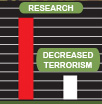
A follow-up study published in the Journal of Social Behavior and Personality found that the likelihood that these combined results were due to chance is less than one in a quintillion. A global-scale study published in the Journal of Offender Rehabilitation documented a 72% drop in international terrorism when IDT groups were large enough to affect the global population. Terrorism returned to previous levels after the experiment.
IDT’s causal mechanism is not completely understood. An explanation of the causality of IDT in biological terms was proposed in a study in the Journal of Social Behavior and Personality (Walton et al 2005, 17: 339-373). Serotonin, a powerful neurotransmitter, has been shown to produce feelings of happiness, contentment, and even euphoria. Research indicates that low levels of serotonin correlate with aggression, poor emotional moods and violence. The study indicated that when the size of a group of IDT experts changed, serotonin production of people in the nearby community changed correspondingly. Since results were statistically significant, this study offers a plausible neurophysiologic mechanism that may explain reduced aggression and hostility in a whole society.
An increase in serotonin activity and a decrease in cortisol appear to be associated with the experience of transcendental consciousness in the advanced individual TM practitioner. During the practice of TM, practitioners experience transcendental consciousness, a proposed fourth state of consciousness with brain activity distinctly different from waking, sleeping and dreaming. The state of transcendental consciousness produces coherence in the brain, and scientists speculate that this enlivens coherence within the unified field. Apparently, the effect is amplified through group practice. Theoretical physicists allude to the unified field as the basis of all laws of nature. IDT appears to work from this fundamental level. Therefore, through the unified field, there is increased coherence in the non-TM practitioner’s brain as well. This increased coherence materially involved serotonin.
The paper’s author is David R. Leffler, Ph.D., Executive Director of the Center for Advanced Military Science at the Institute of Science, Technology and Public Policy at Maharishi University of Management in Fairfield, Iowa, USA. “This paper introduces a new role for the military: ‘Prevention Wings’ whose purpose is to prevent enemies from arising,” said Dr. Leffler. “This new approach, derived from the ancient Vedic tradition of India, is supported by over 50 scientific studies. IDT can create victory before war, and can assist in peacemaking, peacekeeping, and peacebuilding.” The size of the Prevention Wing would usually be 2%-3% of a nation’s military personnel.
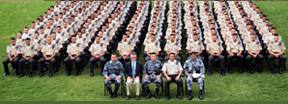
Land-based Prevention Wings were successfully field tested by the militaries of Mozambique and Ecuador in the 1990s. The paper explains that sea-based Prevention Wings are theoretically possible. For example, carrier battle groups supporting IDT experts could be deployed to the Persian Gulf to reduce tensions in the Middle East, without directly penetrating borders.
“Since the military’s primary job is to fully protect its country from attack by enemies, both foreign and domestic, all branches of the armed forces should also consider this approach,” said Dr. Leffler. The paper concludes that preventing enemies from arising is both doable and economical.
Military-related institutions have shown interest in Invincible Defense Technology. Dr. Leffler first presented his review paper at the “International Sociological Association Research Committee 01 Seoul National University & Korea Military Academy International Conference on Armed Forces & Conflict Resolution in a Globalized World” in Seoul, Korea, in 2008. He also presented the paper at the Korea Institute of Defense Analyses. Dr. Leffler also spoke at the “5th Annual Countering IEDs – Assessing the IED Threat and its Evolution on the Battlefield and in the Homeland” conference in Washington, DC. The title of his briefing was “Invincible Defense Technology (IDT) as a Means to Prevent the Implementation of IEDs.” Dr. Leffler has also given presentations at the Russian Air Force Academy, The Russian Academy of Sciences, and US defense-related institutions such as the Institute of Defense and Business.
*The Journal of Management & Social Science (JMSS) is published by the Institute of Business & Technology BIZTEK in Pakistan [Editor’s note: which is now known as ILMA University]. JMSS has published Dr. Leffler’s paper now because they were behind in their printing schedule. Here is the reference for the paper:
Dr. David R. Leffler (Fall 2009). A New Role for the Military: Preventing Enemies from Arising – Reviving an Ancient Approach to Peace. Journal of Management & Social Science (JMSS), Vol. 5, No. 2, pp. 153-162. http://dx.doi.org/10.46745/ilma.jbs.2009.05.02.06
A PDF of this paper is available on the ILMA website or by clicking here. Translations of the paper are available online (Italiano, Korean, Hungarian (part I) Hungarian (part II), Español, Deutsch, Français)
Since Dr. Leffler’s paper was submitted to JMSS in 2008, another paper about IDT was published on 29 June 2009 in the peer-reviewed Journal of Scientific Exploration by Dr. David Orme-Johnson. For more information on that paper, read: “Peace in the Middle East: Scientific solution to a political problem?” The article, published in Beirut-Online News, asserts that peace in this troubled region is easily within reach. It focuses on the topic of Invincible Defense Technology and features quotes and Internet links to publications by military-related leaders worldwide who support the implementation of Invincible Defense Technology.
For media responses to this press release please see:
https://davidleffler.com/military-application-TM-gaining-acceptance
 |
| Dr. David Leffler, a U.S. Air Force veteran, is the Executive Director of the Center for Advanced Military Science. He served as an Associate of the Proteus Management Group at the Center for Strategic Leadership of the U.S. Army War College. Dr. Leffler has published articles in over 100 media outlets worldwide about how Invincible Defense Technology could prevent terrorism and war. |
###
Combating PTSD in the Sri Lankan Military


Combating PTSD in the Sri Lankan Military
As published in LankaWeb on 15 August 2015. A similar article was published in the Sri Lanka Guardian on 6 March 2011 and also in Post Traumatic Stress Disorders: PTSD News & Information on 5 March 2011.
By Jerry Yellin and Dr. David Leffler
In their well-written articles published in the Daily News (“Post traumatic stress disorder” 11 December 2010 [Expired URL: http://www.dailynews.lk/2010/12/11/fea05.asp] and Challenge before post-war Sri Lanka 13 December 2010 [Expired URL: http://www.dailynews.lk/2010/12/13/fea16.asp], Dr. Neil J. Fernando and Dr. Ruwan M. Jayatunge estimate that “nearly 10 percent to 12 percent of the members of the [Sri Lankan] armed forces are suffering from combat related stress.” Their estimation is backed by an interview of 824 active duty Sri Lankan soldiers referred to the Psychiatric Ward at the Military Hospital in Colombo. It reveals that: “[a]lthough the War is over the psychological repercussions caused by the Eelam War can still hound the combatants.” Dr. Fernando and Dr. Jayatunge assert a “study would give an insight to the policy makers in the military and care providers in the mental health sector to deal with combat trauma in Sri Lanka effectively.”
The authors salute Dr. Fernando and Dr. Jayatunge for bringing attention to the combat stress–related problems of Sri Lankan soldiers and veterans. We agree with their assessment, a study is necessary to determine the PTSD rate so “screening, case identification, effective treatment and psychosocial support can be provided to the combatants.” In addition, we urge such a study also utilize a random assignment protocol to investigate not only the present modalities of PTSD treatment currently used by the Sri Lankan military, but also a modality, which has already been extensively scientifically validated to reduce stress – the Transcendental Meditation® (TM) technique.
TM involves a simple, non-religious, psychophysiological practice, demonstrated in over 600 research studies to reduce a wide variety of stress-related problems. It is practiced twice a day for twenty minutes and is so easy, anyone who can think a thought can to do it. It carries one’s awareness to a profound level of rest, clears out deep-seated stress, and revitalizes frazzled nervous systems. Meta-analyses published in peer-reviewed journals provide more evidence for the superior effectiveness of the TM technique over other practices in the areas of anxiety reduction, reduced high blood pressure, self-development, physiological relaxation, improved psychological outcomes, and decreased use of drugs, alcohol, and cigarettes.
Research shows all meditation practices are not the same. In recent studies these practices have been classified into three categories: Focused Attention, Open Monitoring, and Automatic Self-Transcending. Techniques in the Focused Attention category are techniques requiring concentration. Those forms of meditation show brain activity associated with focusing – fast EEG called gamma (20-50 Hz). Techniques in the Open Monitoring category include mindfulness or Vipassana. They are reported to activate brainwaves associated with internal mental processing – theta activity (4-8 Hz). Techniques in the Automatic Self-Transcending category transcend their own procedure – take the attention out of thinking, analyzing, controlling, or watching to a state of pure consciousness. The Transcendental Meditation technique is in this category. During TM synchronous alpha1 (8-10 Hz) activation is seen primarily in frontal executive areas as well as over the whole brain, indicating integrated functioning of the brain.
Different meditation techniques use different procedures, have different effects on brain functioning, and so lead to different benefits. The more focused the meditation procedure, the more focused the effects. Techniques of concentration such as Zen are found to activate attentional centers. Another technique in this category, Loving-Kindness Compassion, actives emotional centers of the brain. Techniques of Open Monitoring such as Vipassana are reported to decrease pain perception and have a small effect on anxiety. TM, a technique in the Automatic Self-Transcending, is reported to have a wider range of effects, perhaps owing to the experience of pure consciousness underlying all thought activity. For instance, meta-analyses report that TM practice results in higher levels of self-actualization and greater decreases in anxiety than other meditations. In the bigger picture, research on TM practice reports significant effects on psychological measures – improved moral reasoning, creativity, cognitive flexibility, coping and problem solving, improved health – reductions in blood pressure and in hospitalization, and significant improvement on social interactions.
The TM technique is also different because it turns one’s attention inward to experience deeper levels of thought, until one goes beyond active thought and the mind comes to a state of complete inner rest. But the mind is alert. There is an inner wakefulness, and a feeling of calm and peace. This is the state of restful alertness. The brain functions with significantly greater coherence and the body gains deep rest.
Research shows the deep rest gained during TM practice is more profound than deep sleep. This allows the body to rid itself of deeply-rooted stresses, especially the stress associated with traumatic conditions like PTSD. For instance, a peer-reviewed, random assignment study on Vietnam veterans who practiced TM (Journal of Counseling and Development, 1985: (64); 212-215), found the technique effectively influenced the neurobiological aspects specifically affected by PTSD. The University of Colorado School of Medicine researchers demonstrated that TM practice had positive effects on symptoms associated with PTSD. Instruction in the technique, followed by three months of regular TM practice, significantly reduced emotional numbness, anxiety, startle response, depression, alcohol consumption, insomnia, and family problems. The TM group also reported improvements in sleep and obtaining/keeping employment. Seventy percent of the TM practitioners reported that they no longer required the services of the veteran’s center.
 In a new pilot study (under review), Iraq and Afghanistan veterans experienced a 50% drop in PTSD symptoms by the fourth week of TM practice, and greater improvements by two months and three months. This study is summarized in the book The Resilient Warrior: Healing the Hidden Wounds of War (2011) by authors Jerry Yellin and Dr. Sarina Grosswald.
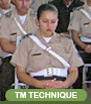
But even with impressive results like this, critics might argue that military personnel would not be willing to practice the TM technique. Initially this might be the case, but the results of the practice speak for themselves. For those concerned a perceived “machismo pushback” for meditation may prevent Sri Lankan warriors from learning to meditate, should think back through history to great examples of alert, ready and finely-tuned warriors. The ideal might be martial arts experts like the samurai. They represented the total integration, the total union, of mind and body – quick, clear thinking combined with a precise strong body, working as one. This intimate connection between mind and body is now beginning to be rediscovered in several militaries in Latin America. For instance, an Ecuadorian General was very receptive to the concept and decided to have his warriors instructed in the TM technique on 8 March 2010. As a test case, the General selected two units from training centers where young soldiers received their six months’ basic military training before they were sent to operational units. Each training unit had 300 soldiers who were taught the TM technique, and 200 among them who became advanced experts. The General set the time and place for the soldiers to practice their meditation program in a group in accordance with their duty routine.
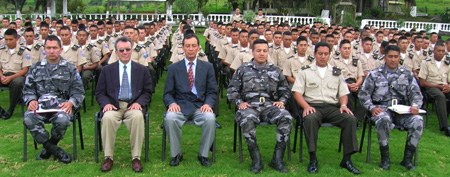
After one month of practice, a test was done together with military psychologists in order to check the validity of the TM program. Here is a summary of the warriors’ statements:
- 96 % thought it was a very practical activity
- 95 % said it was completely satisfying
- 92 % declared they improved dealing with stress and had better performance in their actions
- 96 % declared their relationships with others improved.
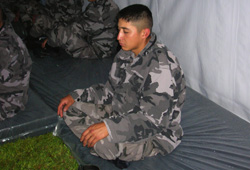 Wounded and traumatized military as well as healthy military personnel need – and deserve – every opportunity to regain and/or sustain their health. Research also shows that practitioners of the TM technique rise to a higher level of health. For instance, a 1987 study in Psychosomatic Medicine, a mainstream medical journal, monitored for five years the medical care utilization of 2,000 people who regularly practiced the TM technique. The findings: 50 percent fewer doctor visits and hospital admissions than non-meditators of comparable age, gender, profession, and insurance terms.
Multiple statistical reviews published in respected scientific journals provide powerful evidence for the superior effectiveness of the TM program in the areas of blood pressure and anxiety reduction, self-fulfillment, physiological relaxation, improved psychological outcomes, and decreased use of drugs, alcohol and cigarettes. If you are interested in the research, visit this web site http://www.tm.org/research-on-meditation.
Today’s warriors train their minds and bodies, but separately. They fill their minds with information about how to respond to every imaginable situation, and train their bodies for strength and endurance. Strong protective armor is provided to protect their bodies from physical harm, but nothing for their minds to protect them from stress. Research on the TM technique indicates that the practice produces beneficial effects for the mind and body, opposite to those of chronic stress. The TM technique is a portable strategy. After learning the technique, all one needs is a comfortable place to sit and close the eyes. No additional resources are needed. The self-reliance of this approach appeals to the “warrior mind-set.”
Why not try this innovative approach in Sri Lanka and conduct a randomized study comparing it to other modalities of treatment to find the best way to treat PTSD? If this proposed project is successful, military leaders could provide this innovative approach in the healing mix of services to more effectively and efficiently treat the wounded minds of the warriors who protected Sri Lanka. TM offers a do-less-and-accomplish-more approach that can not only help the precious minds and lives of Sri Lanka’s warriors, but also save money in the process.
About the Authors:
 Jerry Yellin was a P-51 Pilot in WWII who flew 19 missions over Japan. Jerry and Helene, his wife of 61 years, have four sons and six grandchildren – three living in America and three in Japan. Jerry is a member of the Military Writers Society of America, author of three award winning books, Of War and Weddings, The Blackened Canteen and The Letter; and is an honorary board member of the Iwo Jima Association of America. His new book is The Resilient Warrior: Healing the Hidden Wounds of War.

David Leffler, Ph.D. a United States Air Force veteran, is the Executive Director of the Center for Advanced Military Science (CAMS) http://www.StrongMilitary.org. Dr. Leffler later served as an Associate of the Proteus Management Group at the Center for Strategic Leadership, US Army War College. The Journal of Management & Social Science recently published his paper “A New Role for the Military: Preventing Enemies from Arising – Reviving an Ancient Approach to Peace,” indicating that the military application of the Transcendental Meditation is merited. Dr. Leffler is a certified teacher of the Transcendental Meditation technique.
Ending Political Tensions: What Nigeria Could Learn From Latin America

Various versions of this editorial were published in The Zimbawe Situation, The Will, (Nigeria), Point Blank News (Africa), Business Guide Ghana, The Ukpaka Reports, Tribune NGR World (Nigeria), The Nigerian Voice, Nairaland, The Zimbabwean, Modern Ghana, New Nigerian Politics, Business Ghana, Ethiopian This Week,China Today, The Seoul Times, Review Nepal, Pattaya Dailynews (Thailand), Cyrus News, OpEdNews, (USA), Kashmir Watch, (Pakistan) and Australia.to.